

Editor’s Note
Navigating natural metabolism boosters while managing prediabetes or tracking your continuous glucose monitor (CGM) can feel overwhelming. With countless wellness trends pushing spicy detox tonics, knowing whether a simple kitchen spice genuinely supports your metabolic health is tough. In this data-driven audit, we break down the clinical science behind cayenne pepper, helping you make an informed choice for your daily wellness routine.
Walking down the digital wellness aisle often feels like an obstacle course, especially when you are trying to balance thermogenic spices with stable blood sugar and digestive comfort. Everywhere you look, health blogs debate whether adding a pinch of red pepper to your meals can truly accelerate fat loss or improve insulin sensitivity. For millions managing prediabetes, tracking CGM metrics, or fighting chronic inflammation, finding a reliable, science-backed dietary addition is a daily challenge.
If you have ever asked yourself whether cayenne pepper lives up to its fiery reputation, you are definitely not alone. Traditional culinary routines often rely on heavy sodium or refined sugars for flavor, but modern metabolic research points to bioactive plant compounds that offer functional health benefits without the metabolic baggage.
Let us dive deep into the clinical facts. We will examine how cayenne pepper stacks up across every major metabolic, digestive, and cardiovascular health metric.
What Is Cayenne Pepper and What Makes It Bioactive?
Before examining its health impact, it helps to understand what makes this vibrant red chili pepper unique. Cayenne pepper is a type of chili pepper belonging to the Capsicum genus, widely used to add heat to dishes across global cuisines.
- The Power of Capsaicin: The primary active compound in cayenne pepper is capsaicin, which gives the spice its characteristic heat and triggers powerful physiological responses.
- Rich Antioxidant Profile: Cayenne is packed with carotenoids, flavonoids, and vitamins A, C, and E, which help neutralize cellular free radicals.
- Low Glycemic Impact: Because it is used as a concentrated spice, it introduces zero carbohydrates or sugars into your meals, making it completely safe for fasting windows and blood sugar management.
When consumed regularly, capsaicin interacts with sensory receptors in your body, initiating localized and systemic changes that support long-term metabolic vitality. Understanding this biochemical interaction is the first step toward leveraging the spice effectively.
Cayenne Pepper vs. Black Pepper & Ginger: Side-By-Side Comparison
To accurately evaluate its role in a wellness routine, we must look at how cayenne interacts with human biochemistry compared to other popular dietary spices like black pepper and fresh ginger. Review the comparison table below to visualize these differences:
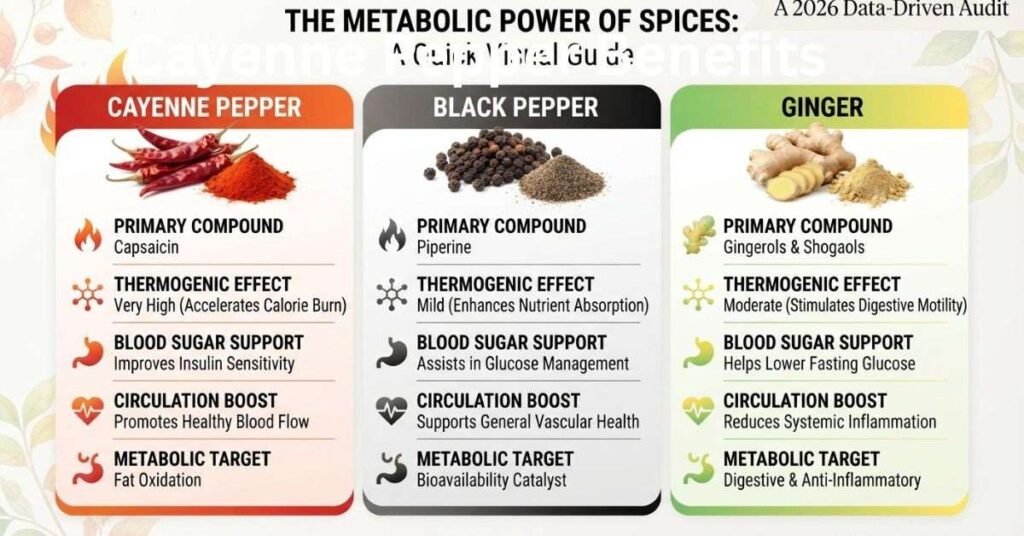
| Evaluation Metric | Cayenne Pepper (Capsaicin) | Black Pepper (Piperine) | Fresh Ginger (Gingerol) |
|---|---|---|---|
| Primary Active Compound | High concentration of capsaicin | Piperine | Gingerols and shogaols |
| Thermogenic Impact | Powerful metabolic and calorie-burning boost | Mild enhancement of nutrient absorption | Moderate support for digestive motility |
| Blood Sugar Support | Helps improve insulin sensitivity | Enhances bioavailability of other nutrients | Assists in lowering fasting blood glucose |
| Digestive Response | Stimulates gastric juices and enzymes | Enhances overall digestive efficiency | Relieves nausea and calms gut lining |
| Cardiovascular Profile | Promotes healthy circulation and blood pressure | Supports general vascular health | Helps manage systemic inflammation |
While each spice offers unique advantages, cayenne pepper holds a distinct edge when it comes to thermogenesis and targeted metabolic activation. To understand more about how heat-inducing spices interact with your metabolism, you can explore our detailed audit on Is Spicy Food Good for You? A 2026 Metabolic Audit.
How Thermogenesis and Capsaicin Support Metabolism
To appreciate the physiological reality of cayenne pepper, we must examine how capsaicin influences energy expenditure. When your body processes capsaicin, it triggers a process known as diet-induced thermogenesis.
- Cellular Heat Production: Capsaicin stimulates the nervous system to burn fat cells to produce energy, temporarily elevating your core body temperature.
- Metabolic Rate Acceleration: Clinical studies suggest that incorporating capsaicin into meals can slightly increase the number of calories your body burns throughout the day, closely mimicking principles discussed in our guide on The Thermic Effect of Food (TEF): How Your Body Burns Calories Just by Eating.
- Appetite Regulation: The spice can help promote satiety and curb overeating by modulating hunger hormones like ghrelin, making portion control easier.
Because of these profound metabolic hurdles, understanding how to incorporate thermogenic spices safely is crucial for long-term health. When used mindfully, cayenne complements an active lifestyle and supports steady energy balance.
Why Cayenne Pepper Wins for Blood Sugar and Circulation
For anyone keeping a close eye on their continuous glucose monitor or trying to manage metabolic fatigue, incorporating cayenne pepper offers a compelling biological advantage.

- Enhanced Insulin Sensitivity: Research indicates that regular capsaicin consumption may help improve how your cells respond to insulin, reducing post-meal glucose volatility.
- Healthy Blood Flow: Capsaicin promotes the release of nitric oxide, which helps dilate blood vessels, supporting optimal circulation and cardiovascular health.
- Pain and Inflammation Relief: Topical and dietary applications of capsaicin help deplete substance P, a neurotransmitter associated with joint discomfort and systemic inflammation.
By respecting your body’s tolerance and avoiding excessive irritation, you can harness these cardiovascular and glycemic perks safely.
Deep Dive: The Science of Gut Health and Digestion
A healthy gut microbiome acts as the gatekeeper for metabolic wellness. When your intestinal lining faces constant exposure to inflammatory foods, optimal nutrient absorption suffers.
- Stimulating Gastric Juices: Moderate amounts of cayenne pepper stimulate the stomach to produce digestive enzymes, helping break down food more efficiently.
- Microbiome Interaction: Plant compounds in chili peppers interact favorably with beneficial gut bacteria, supporting a diverse internal ecosystem.
- Clearing Sluggish Digestion: Natural spice compounds encourage gentle peristalsis, keeping your digestive tract moving smoothly.
Researchers studying metabolic biochemistry note that while very high doses of spicy foods can irritate sensitive stomachs, moderate culinary use acts as a positive physiological stressor that strengthens digestive resilience.
Navigating Safety, Quality, and Common Misconceptions
Although cayenne pepper is widely recognized as safe, many consumers still wonder about preparation myths, digestive risks, and quality standards.

- The Over-Spice Trap: Adding too much cayenne too quickly can cause heartburn or gastric distress. Start with a tiny pinch and build up your tolerance gradually.
- Beware of Low-Quality Powders: Always check product labels. Pure, organic cayenne powder ensures you avoid unnecessary anti-caking agents or artificial dyes.
- Balancing Your Daily Routine: If you enjoy spicy meals, balance them out with soothing, fiber-rich foods, similar to our Celery Juice Benefits: The Ultimate 2026 Metabolic and Gut Health Guide approach.
Clearing up these common misconceptions empowers you to enjoy functional spices without falling prey to digestive discomfort. Always listen to your body’s individual biofeedback.
Add Seaweed Salad to your daily carb limit in 30 seconds!
Frequently Asked Questions (FAQs)
1. Does cayenne pepper directly burn belly fat?
No single spice can spot-reduce fat on its own. However, cayenne pepper supports overall metabolic rate, thermogenesis, and fat oxidation when combined with a balanced diet and regular exercise.
2. Can cayenne pepper help lower blood sugar levels?
Yes, clinical research suggests that capsaicin can improve insulin sensitivity and help blunt post-meal glucose spikes, making it a supportive addition for prediabetes management.
3. Is cayenne pepper safe for people with sensitive stomachs?
In moderation, cayenne stimulates healthy digestion. However, individuals with severe acid reflux, ulcers, or irritable bowel syndrome should consume it cautiously or consult a healthcare provider.
4. How can I easily add cayenne pepper to my daily routine?
You can stir a small pinch into morning warm lemon water, blend it into savory vegetable soups, or sprinkle it over avocado and eggs to enhance flavor and metabolic support.
Conclusion: Making Smart Choices for Your Daily Wellness
Ultimately, when evaluating whether cayenne pepper belongs in your routine, the evidence points to a powerful, low-calorie spice that strongly supports thermogenesis, circulation, and blood sugar balance. If your primary goal is to protect your long-term metabolic health, enhance natural fat oxidation, and add functional flavor to your meals, incorporating pure cayenne pepper is a brilliant strategy.
For more data-driven insights and healthy lifestyle swaps designed for modern wellness seekers, continue exploring our latest articles right here at PureDietly!
About the Author
Gohar Fatima is the founder and lead metabolic health researcher at PureDietly, dedicated to translating complex nutritional science and practical wellness habits into easy-to-follow advice for everyday readers navigating prediabetes and metabolic wellness.
Medical Disclaimer
The content provided on PureDietly is for informational purposes only and is not intended as medical advice, diagnosis, or treatment. The team at PureDietly are not licensed medical physicians. Always seek the advice of your physician or qualified health provider with any questions regarding a medical condition or dietary changes. Individual metabolic responses and health results may vary.