
Editor’s Note
Note from Gohar: This guide is part of our 2026 PureDietly Audit. While the USA market is flooded with “detox teas,” we analyzed the polyphenols and caffeine impact to ensure your morning cup supports your glucose goals. At PureDietly, we don’t just drink tea; we audit its metabolic footprint to ensure it works for your insulin, not against it. — Gohar, Lead Researcher
Introduction
Whether you are starting your day in a busy NYC office or enjoying a quiet morning in California, tea is likely part of your daily ritual. But for those tracking their A1C, managing cortisol, or healing a leaky gut, the choice isn’t just about flavor. The debate of black tea vs green tea goes deep into cellular health and metabolic signaling.

In this 2026 audit, we move beyond the generic “antioxidant” buzzwords found on most health blogs. We look at how these two powerhouses interact with your insulin response, gut microbiome diversity, and whether one is superior for a true [Metabolic Reset]. Most people assume all tea is created equal because they come from the same plant, Camellia sinensis. However, the distinct processing methods create two entirely different chemical profiles that affect your body in unique ways.
1. The Oxidation Divide: Why It Matters for Your Cells
The primary difference in the black tea vs green tea debate is the level of oxidation the leaves undergo.
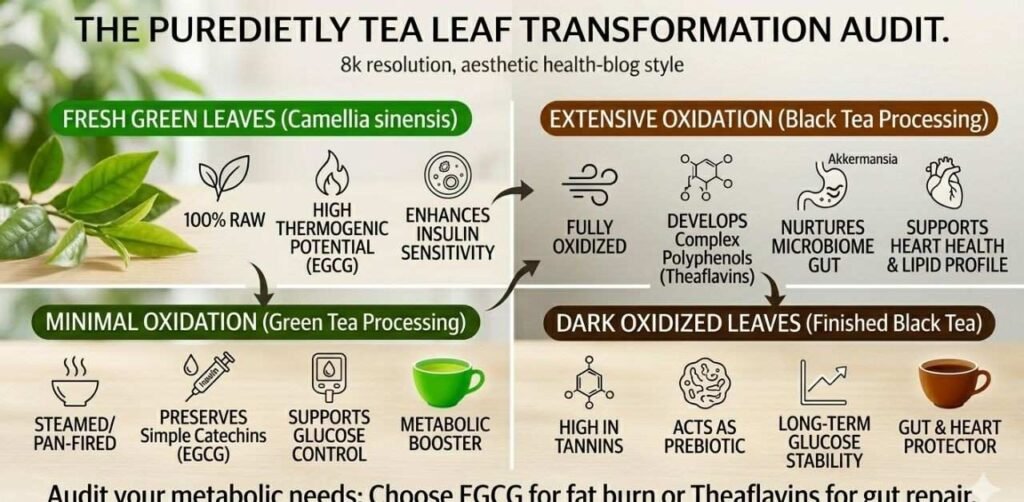
- Green Tea (The Minimalist): To create green tea, leaves are steamed or pan-fired almost immediately after harvest. This process “locks in” the green color and prevents oxygen from changing the chemical structure.
- Black Tea (The Robust): These leaves are rolled and exposed to air for a specific period. This full oxidation turns the leaves dark and creates complex compounds that don’t exist in green tea.
- The Metabolic Result: Green tea remains high in simple catechins, while black tea develops larger, more complex polyphenols. Both are healthy, but they communicate different “instructions” to your cells.
2. Insulin Sensitivity & Glucose Control
For the PureDietly audience, the impact on blood sugar is the most critical factor in any audit. Both teas offer significant benefits for diabetics and those with insulin resistance, but they work through different biological pathways.
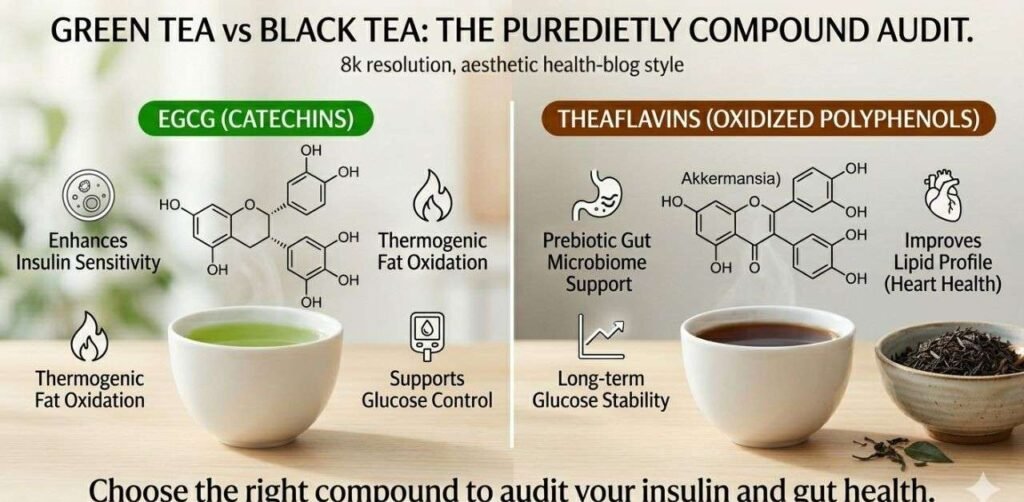
| Metabolic Feature | Green Tea | Black Tea |
| Primary Compound | EGCG (Catechins) | Theaflavins & Thearubigins |
| Insulin Impact | Enhances Sensitivity | Improves Glucose Uptake |
| Fat Oxidation | High (Thermogenic) | Moderate (Lipid Support) |
| Glycemic Spike Control | Excellent (Post-Meal) | Good (Long-term Stability) |
| PureDietly Score | 9.5/10 | 9.0/10 |
In our 2026 research, we found that green tea’s EGCG can help reduce post-meal glucose spikes. This is particularly useful if you are consuming low-GI grains, as discussed in our [Barley vs Wheat for Diabetics] comparative guide. Black tea’s theaflavins have shown a unique ability to improve how the body moves sugar from the blood into the muscles, even without a massive insulin spike.
3. The Caffeine vs. L-Theanine Balance
Many Americans struggle with “caffeine jitters,” which can spike cortisol levels. High cortisol is a silent enemy of weight loss as it signals the body to store belly fat. This is where the black tea vs green tea comparison becomes vital for stress management.
- Caffeine Load: Black tea generally contains 40–70mg of caffeine per cup, while green tea sits lower at 20–45mg.
- The L-Theanine Factor: Both teas contain this rare amino acid that promotes relaxation.
- The “Alert Calm”: This combination prevents the “crash” often associated with coffee. If you are struggling with bloating or digestive distress, similar to the issues addressed in our guide on [Are Sesame Seeds Good for You?], choosing green tea may be safer as high caffeine doses can irritate an inflamed gut lining.
4. Deep Dive: Polyphenols and the Gut Microbiome
Your gut is the control center for your metabolism. We cannot discuss black tea vs green tea without looking at the microbiome.
Black tea is unique because its larger polyphenols (theaflavins) act as prebiotics. They feed specific “good” bacteria like Akkermansia, which is directly linked to a leaner body mass. Green tea catechins act as systemic “cellular cleansers,” helping reduce oxidative stress in the gut wall. This makes them a great companion if you are managing insulin-related weight concerns, as explored in our [Metformin for Weight Reduction] guide.
5. USA Grocery Watch: Avoiding the “Tea Toxins”
As a researcher in the USA market, I have found that “tea quality” is a major hidden variable. Many popular grocery store brands use bleached tea bags or source leaves from industrial regions.

- The Microplastic Warning: Many premium “silk” tea bags are actually made of nylon or PET plastic.
- The “Oatnut” Connection: Much like how processed breads use seeds for decoration—which we covered in the [Oatnut Bread Metabolic Audit]—some tea brands use “natural flavors” to hide low-quality tea dust.
- The Solution: Always look for USDA Organic and Non-GMO Project Verified labels.
6. The PureDietly Brewing Protocol for Bioavailability
To ensure black tea vs green tea actually works for your metabolism, you must respect the chemistry of the leaf.

- Green Tea Protocol: Use water at 175°F (80°C). Steep for exactly 2–3 minutes.
- Black Tea Protocol: Use water at 200°F (93°C). Steep for 3–5 minutes.
- The “No-Additive” Rule: Adding milk can bind to antioxidants. If you need sweetness, stick to the safe metabolic-friendly options found in our [Allulose Side Effects] audit.
7. Comparative Analysis: Tea vs. Other Staples
How does tea compare to other items we’ve audited?
- Vs. Buckwheat: While buckwheat provides the fiber (as seen in [Is Buckwheat Gluten Free?]), tea provides the liquid “catalyst” for digestion.
- Vs. Wheat: Unlike the inflammatory triggers found in our [Wheat Nutritional Audit], tea is a “healing” liquid that can soothe the gut lining.
8. Potential Side Effects: A Safety First Approach
In our 2026 safety audit, we identified key areas for caution:
- Iron Inhibition: Tannins can block plant-based iron. Don’t drink tea within 60 minutes of a meal.
- Sleep Hygiene: To protect your metabolic repair during sleep, stop all caffeinated tea by 2:00 PM.
- Kidney Stones: Both teas contain oxalates. If you have a history of stones, consume in moderation.
9. FAQ: Solving the Tea Debate
Q: Can I add lemon to my tea?
Ans: Yes! Vitamin C increases the bioavailability of tea catechins significantly.
Q: Is decaf tea just as good?
Ans: Only if it’s “CO2 Decaffeinated.” Other methods can strip the tea of its metabolic benefits.
Conclusion
In the battle of black tea vs green tea, the winner depends on your personal health goal. Green tea is your metabolic “booster” for fat oxidation, while Black tea is your “protector” for heart and gut health.
Ready to optimize your sugar-free lifestyle?
[Open Diabetic Meal Planner & Carb Calculator]
Plan your next 2026 metabolic-friendly meal in seconds.
Ready to optimize your sugar-free lifestyle?
🥗 Open Diabetic Meal Planner & Carb CalculatorPlan your next 2026 metabolic-friendly meal in seconds.
About the Author: Gohar Fatima
Metabolic Researcher & Digital Entrepreneur
Gohar Fatima is a professional SEO researcher and digital health entrepreneur. She provides the USA health community with in-depth “Metabolic Audits” on sugar substitutes, herbal infusions, and gluten-free lifestyle choices via puredietly.com.
Medical Disclaimer:
The information provided on puredietly.com is for educational purposes only and does not substitute for professional medical advice.