
.
Editor’s Note
Editor’s Note: At PureDietly, we are committed to evidence-based metabolic research. This article is the result of a deep-dive audit into the biochemical differences between Chlorella and Spirulina. Unlike commercial blog posts that push products, our goal is to provide a data-driven framework to help you integrate these superfoods into your routine strategically. We prioritize metabolic efficiency and glycemic control, ensuring that every recommendation aligns with the long-term health objectives established in our [2026 Metabolic Audit] series.
Introduction: The Green Algae Revolution

In the ever-evolving world of modern wellness, navigating the sea of available green supplements can feel overwhelming. Two titans often dominate the conversation: Chlorella vs Spirulina. While both are aquatic superfoods, they are far from identical. As someone dedicated to metabolic health, I often see people mixing these two up, yet understanding their distinct profiles is essential for anyone focusing on Glycemic Index & Nutrition. Whether you are looking to support your metabolic reset or simply boost your daily nutrient intake, choosing the right algae depends entirely on your specific biological goals. In this comprehensive guide, we will break down the science behind these green powerhouses to help you make an informed decision for your metabolic vitality.
Understanding the Core Differences
At a glance, it is easy to mistake one for the other. However, their cellular structures and health benefits serve different functions in the body. Below is a quick breakdown to help you compare them easily.
Quick Comparison Table
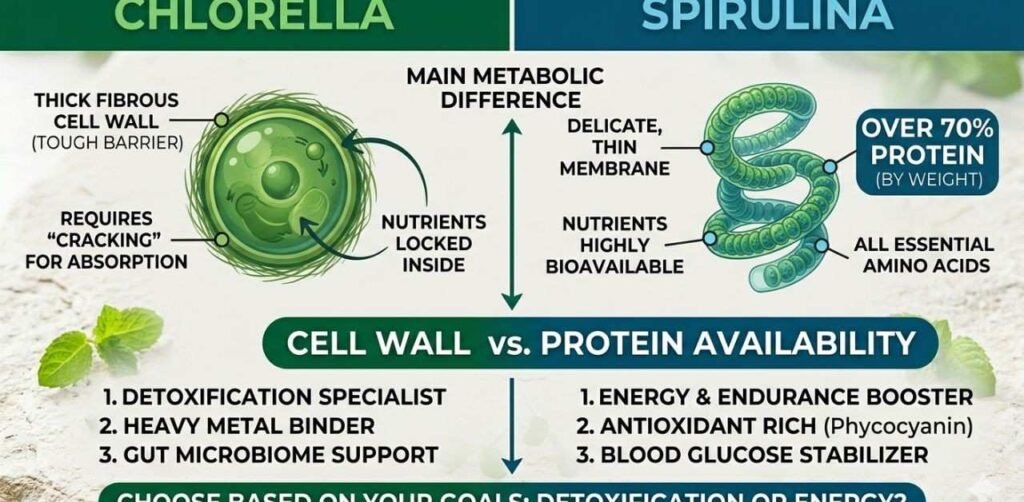
| Feature | Chlorella | Spirulina |
| Primary Benefit | Detoxification & Gut Health | High Protein & Energy Boost |
| Biological Structure | Single-celled (thick wall) | Multi-celled (spiral shape) |
| Key Nutrient | Chlorophyll | Phycocyanin |
| Best For | Heavy metal removal | Athletic performance |
What is Chlorella? (The Cellular Repair Specialist)
Chlorella is a single-celled, green freshwater algae. Because of its thick, fibrous cell wall, it is famous for its unique ability to bind to heavy metals and toxins, effectively helping your body eliminate them.
- Detoxification Support: Its structure acts like a natural sponge, making it a favorite for those undergoing a metabolic detox.
- Gut Microbiome: It supports the growth of beneficial gut bacteria, which is a cornerstone of my [Glycemic Index & Nutrition] research.
- Nutrient Profile: It is packed with iron, Vitamin C, and B12, making it a powerhouse for cellular repair.
Furthermore, because of its dense cell wall, it must be “cracked” during processing; otherwise, your body cannot absorb the nutrients inside. When choosing a supplement, always look for “broken cell wall” labels to ensure you are getting the full nutritional value.
The Power of Spirulina (The Metabolic Energy Booster)
Spirulina, a blue-green algae, is essentially a plant-based super-protein. Unlike Chlorella, Spirulina lacks a thick cell wall, which makes its nutrients highly bioavailable and easy for your system to digest immediately.
- Energy Density: It contains up to 70% protein by weight, including all essential amino acids.
- Blood Glucose Stabilization: Research suggests that Spirulina may assist in managing blood sugar levels, which is vital for maintaining steady glucose metrics.
- Phycocyanin Content: This unique pigment is a potent antioxidant that reduces oxidative stress throughout the body.
Consequently, if your primary goal is sustained energy or improving endurance during workouts, Spirulina is often the superior choice.
Deep-Dive: The Metabolic Breakdown
When we evaluate Chlorella vs Spirulina through the lens of metabolic efficiency, the choice becomes clearer.
1. Managing Systemic Inflammation
Both algae are excellent at reducing systemic inflammation. However, Spirulina’s high concentration of phycocyanin provides a more immediate anti-inflammatory response. In contrast, Chlorella works in the background by improving the gut-liver axis, which is essential for long-term hormonal balance.
2. Supporting Metabolic Health & Insulin Sensitivity
For those monitoring their glucose levels, Spirulina has shown potential in improving insulin sensitivity. In addition, Chlorella’s detoxification properties help clear the “metabolic noise” that can often lead to insulin resistance. Thus, many health enthusiasts choose to cycle both—using Chlorella for maintenance and Spirulina for active metabolic support.
3. Nutritional Density & Micronutrient Profile
- Spirulina: Exceptional for those dealing with fatigue or anemia due to its high iron and B-vitamin content. It helps in oxygenating the blood, which is crucial for metabolic function.
- Chlorella: Superior in chlorophyll content. Chlorophyll helps in blood purification and immune system stimulation, acting as a gentle cleanser for the digestive tract.
Safety and Quality: Why Sourcing Matters
Because algae are biological sponges, they can absorb contaminants from their environment, including lead, mercury, and pesticides. This is a critical area where many consumers go wrong.
- The Sourcing Audit: Always look for third-party lab-tested products. Organic certification is a good indicator of purity.
- The “Broken Cell Wall” Guarantee: Only purchase Chlorella with this label. Without this, your body is effectively passing the algae through your system without accessing the intracellular nutrients.
- Avoiding Heavy Metal Contamination: Spirulina grown in controlled, closed-loop systems is generally safer than algae harvested from wild lakes.
Strategic Integration: How to Incorporate Them Into Your Routine
Choosing the right supplement is only half the battle; knowing how to use it is equally important. Since I focus on research-based nutrition, I recommend starting with small doses to assess how your body reacts.

- Start Low: Begin with 1 gram daily. Some people experience digestive shifts when first introducing algae, so slow and steady is the best strategy.
- Hydration is Key: Because both are high in fiber and nutrients, ensure you are drinking plenty of filtered water to help your kidneys process the intake effectively.
- The “Morning vs. Night” Strategy: Many health enthusiasts use Spirulina in the morning to fuel their metabolic rate for the day, and Chlorella in the evening to assist the body’s natural nightly detoxification processes.
Who Should Exercise Caution?
While these superfoods are generally safe, certain individuals should proceed with care:
- Autoimmune Conditions: Because both algae stimulate the immune system, those with autoimmune issues should consult their healthcare provider first.
- Iodine Sensitivity: If you have thyroid conditions, ensure the product you choose has been tested for iodine content, as algae can be naturally high in it.
- Blood Thinners: Due to the vitamin K content, those on blood-thinning medication should consult their doctor before regular use.
Frequently Asked Questions (FAQs)
Q: Can I take both Chlorella and Spirulina at the same time?
A: Yes, many people cycle them. You might take Spirulina in the morning for energy and Chlorella at night to support gentle detoxification while you sleep.
Q: Which one is better for weight loss?
A: Spirulina is often favored for weight management due to its high protein content and ability to support blood sugar stability, which aids in satiety.
Q: Is Chlorella more effective than a typical detox tea?
A: Yes, because Chlorella physically binds to toxins in the gut, whereas many “detox” products simply act as diuretics.
Conclusion: A Strategic Addition to Your Diet
Deciding between Chlorella vs Spirulina does not have to be an “either-or” scenario. Depending on your personal metabolic needs, you might find that Spirulina helps you power through your morning tasks, while Chlorella serves your body’s deep-cleaning and gut-health requirements.
Ultimately, both are foundational tools in the Glycemic Index & Nutrition toolkit. By understanding how these superfoods interact with your specific biology, you can take a more proactive approach to your health. Remember, consistency is the true secret to metabolic vitality. If you are looking for further ways to stabilize your energy, be sure to check out my other articles on [metabolic reset protocols] and [natural sugar substitutes] to build a comprehensive plan.
Author Note
Author Note: The information provided here is based on nutritional science and metabolic research. This website does not sell products; the goal is to provide evidence-based insights to help you make the best decisions for your metabolic health. Always consult with your healthcare provider before adding new supplements to your routine.
Medical Disclaimer:
Medical Disclaimer: This content is for educational purposes only and is not medical advice. Always consult your healthcare provider before making dietary changes or starting new supplements, especially if you have a medical condition. Use this information at your own risk.