
Editor’s Note
“All information shared on PureDietly.com is grounded in research. Our mission is to provide you with high-quality, evidence-based insights into metabolic health and nutritional optimization. This content is intended for informational purposes only, empowering you to make informed decisions regarding your health.”

Are you looking for a simple, science-backed way to boost your energy and manage your weight effectively? Incorporating high-fiber foods into your daily routine is one of the most effective strategies for long-term metabolic health. Unlike refined carbohydrates that cause rapid blood sugar spikes, fiber acts as a stabilizer, helping your body process energy more efficiently. In this comprehensive guide, we’ll explore how to leverage these nutrient-dense options to support your metabolic goals naturally and sustainably.
Why Fiber Matters for Your Metabolic Health
Fiber is far more than just a tool for digestive regularity. It is a foundational element of metabolic health that influences everything from insulin sensitivity to systemic inflammation.
- Blood Sugar Control: High-fiber foods slow down the digestion process and the absorption of glucose, which is crucial for preventing dangerous insulin spikes after meals.
- Digestive Harmony: It feeds your gut microbiome, acting as a prebiotic that supports healthy bacteria, which in turn influences your metabolic rate.
- Sustainable Satiety: Fiber adds volume to your meals without adding excessive calories, keeping you feeling full longer and making it easier to maintain a healthy weight.
- Heart Health: Certain types of fiber help bind to cholesterol in the digestive system, promoting healthier lipid profiles.
The Science of Fiber: Soluble vs. Insoluble
To truly optimize your health, it is important to understand that not all high-fiber foods work the same way in your body.
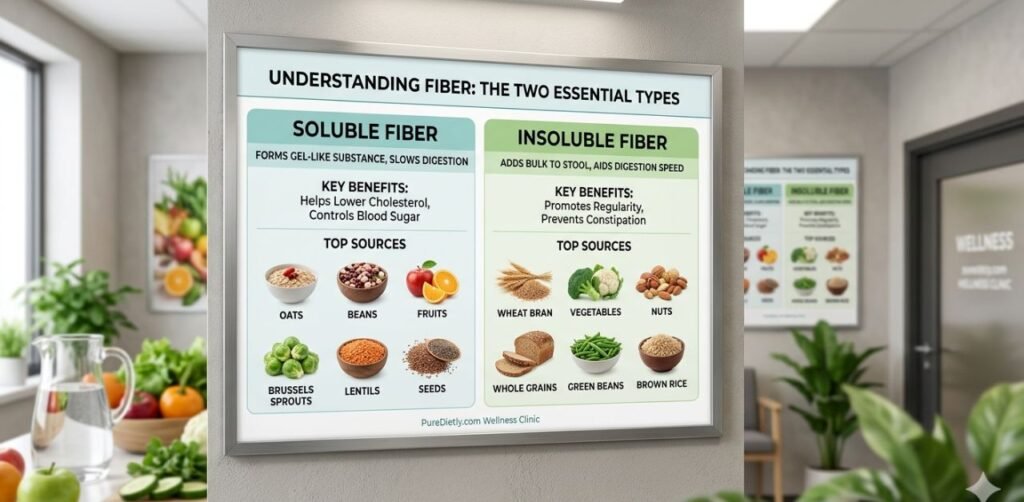
1. Soluble Fiber
This type of fiber dissolves in water to form a gel-like substance in your digestive tract. It is particularly effective at slowing down digestion and regulating blood sugar levels. Excellent sources include oats, peas, beans, apples, and citrus fruits.
2. Insoluble Fiber
This fiber adds bulk to your stool and helps food pass more quickly through the stomach and intestines. It is essential for preventing constipation and ensuring a healthy colon. You can find this in whole wheat flour, wheat bran, nuts, beans, and vegetables like cauliflower and green beans.
(Focus: Gut-Brain Axis & Microbiome):

“Recent research into the gut-microbiome confirms that fiber doesn’t just pass through; it undergoes fermentation by beneficial bacteria in the colon. This process produces Short-Chain Fatty Acids (SCFAs) like butyrate, which are essential for maintaining the integrity of your intestinal lining and reducing systemic inflammation. By focusing on a diverse range of plant-based fibers, you are actively cultivating a metabolic environment that resists insulin resistance and supports long-term weight management.”
“This process produces Short-Chain Fatty Acids (SCFAs)… [learn more about how to nurture your gut microbiome here]”.
Top High-Fiber Foods: A Quick Reference Table
To maximize your nutritional audit, aim to include a diverse variety of these sources in your daily meal plan.
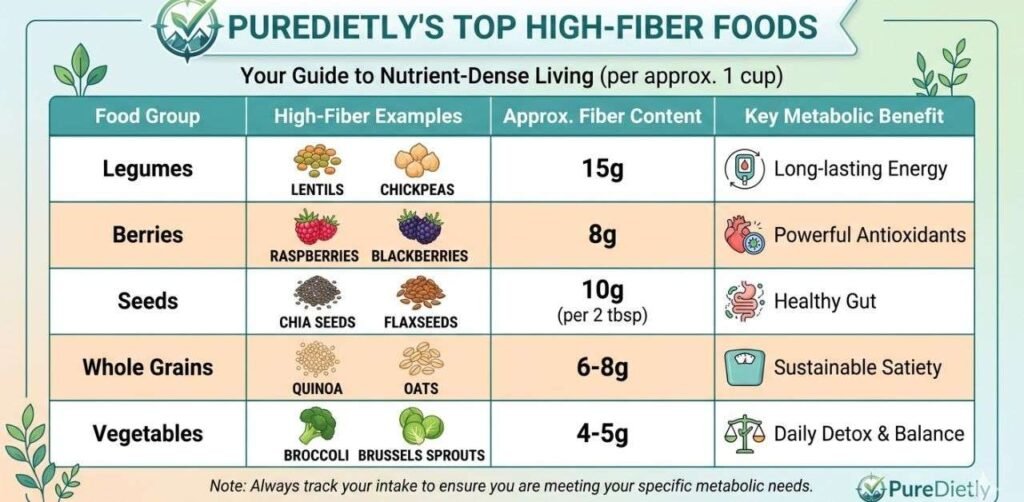
| Food Group | Examples | Fiber Content (approx. per cup) |
| Legumes | Lentils, Chickpeas | 15g |
| Berries | Raspberries, Blackberries | 8g |
| Seeds | Chia Seeds, Flaxseeds | 10g (per 2 tbsp) |
| Whole Grains | Quinoa, Oats | 6-8g |
| Vegetables | Broccoli, Brussels Sprouts | 4-5g |
Note: Always track your intake to ensure you are meeting your specific metabolic needs.
How to Increase Fiber Without the Bloat
Many people make the mistake of jumping into a high-fiber diet too quickly, which leads to gas and bloating. Increasing your intake of high-fiber foods should be a steady, calculated process to ensure your digestive system adapts smoothly.
- Hydrate, Hydrate, Hydrate: Fiber needs water to move through your system efficiently; without adequate fluids, fiber can actually cause the constipation you are trying to avoid.
- The “Start Slow” Rule: Add one serving at a time over several weeks to allow your gut microbiome to adjust to the new dietary patterns.
- Variety is Key: Rotate your sources to get both soluble and insoluble fiber for comprehensive metabolic support.
- Chew Thoroughly: Mechanical digestion starts in the mouth. Chewing your food well helps your body break down complex plant fibers more effectively.
“As we discussed in our previous post, [Can Too Much Fiber Cause Constipation?], it is vital to increase your intake slowly to avoid digestive discomfort.”
Your Daily Action Plan for PureDietly Success
Implementing high-fiber foods into your life doesn’t require a total kitchen overhaul. Small, consistent swaps are the secret to long-term success in metabolic optimization.

Breakfast Strategy
Instead of sugary cereals, opt for steel-cut oats. Top your morning oatmeal with a tablespoon of chia seeds or a handful of fresh raspberries to instantly boost your fiber count.
Lunch & Dinner Swaps
Swap refined white rice for fiber-rich grains like quinoa, farro, or barley. These grains provide a steadier release of energy, which is better for your insulin sensitivity throughout the afternoon. For dinner, aim to fill half your plate with non-starchy, high-fiber vegetables like broccoli, spinach, or Brussels sprouts.
Smart Snacking
Keep nuts and seeds nearby for a quick metabolic boost. A handful of almonds or pumpkin seeds provides not only fiber but also healthy fats that support brain health and satiety.
(Focus: Machine-Readable/Actionable Tip):
“To truly optimize your results, consider utilizing a ‘Food-Mood-Glucose’ log. Tracking how specific high-fiber meals affect your energy levels two hours post-consumption can reveal personal ‘metabolic triggers’ that generic diet plans often overlook. Use this data to audit your weekly intake, shifting away from sources that cause you discomfort toward those that provide sustained, stable glycemic release.”
The Metabolic Perspective: Beyond Fiber
At PureDietly, we emphasize that gut health is not just about the volume of fiber you consume; it is about overall metabolic stability. If your digestion is frequently sluggish despite a high-fiber diet, it might be time for a more comprehensive [Metabolic Health Audit]. Understanding how different foods affect your specific blood sugar response is just as important as the fiber content itself.
Physical Movement
Regular movement helps stimulate the natural contractions of your intestines, known as peristalsis, which works in tandem with your dietary fiber to keep your digestion on track.
Stress Management
Chronic stress can negatively impact your gut-brain axis, leading to slowed digestion and increased metabolic inflammation. Prioritizing rest and stress reduction is a crucial component of any healthy diet plan.
Add Seaweed Salad to your daily carb limit in 30 seconds!
When to Seek Professional Advice
While dietary adjustments help most people, you must remain vigilant regarding your body’s signals. If you experience unexplained weight loss, persistent blood in your stool, severe abdominal pain that does not resolve, or constipation that lasts for more than two weeks despite your best efforts, please seek professional medical advice immediately.
(Focus: Metabolic Age & Long-term Health):
“At PureDietly, we view fiber intake as a proactive investment in your ‘Metabolic Age.‘ Consistent, high-quality fiber consumption can improve your body’s metabolic flexibility—the ability to switch efficiently between burning glucose and stored fat for fuel. Remember, health is not a destination but a continuous process of auditing your internal data and adjusting your habits to better serve your long-term vitality.”
FAQs
Is this content medical advice?
No, this content is for informational purposes only and should not be considered or used as a substitute for professional medical advice, diagnosis, or treatment.
How is content researched?
All of our articles are based on the latest research, studies, and evidence related to metabolic health and nutrition.
How can I contact you?
You can reach out to us by visiting the ‘Contact Us’ page on our website, PureDietly.com.
Final Thoughts
Fiber is a powerful tool in your metabolic health arsenal, but it is not a universal cure-all. Your long-term success depends on a balanced approach—combining smart food choices, consistent hydration, and metabolic awareness. By auditing your food choices and making slow, intentional shifts, you can restore your gut motility and improve your overall well-being. Keep tracking your progress, listen to your body, and continue optimizing for a healthier you!
About the Author
“Gohar Fatima is an independent metabolic health researcher and a professional SEO digital entrepreneur. As the founder of PureDietly.com, she is a passionate health enthusiast dedicated to providing science-based information to help others achieve better metabolic health and nutritional balance.”
Medical Disclaimer
“Medical Disclaimer: The information provided on PureDietly.com is not intended to be a substitute for professional medical advice, diagnosis, or treatment. Always seek the advice of your physician or another qualified health provider with any questions you may have regarding a medical condition or dietary changes. Never disregard professional medical advice or delay in seeking it because of something you have read on this website.”