
By Gohar Fatima | Published on August 21, 2026
Editor’s Note: At PureDietly, we break down fast-food nutrition myths through an evidence-based metabolic lens. If you are managing blood sugar, insulin resistance, or type 2 diabetes, navigating US drive-thru lanes can feel like an unpredictable guessing game. Let’s look closely at the carbohydrate content of America’s favorite chicken sandwich and how it impacts your glucose levels.
Picture this: It’s a busy Friday afternoon on your commute home across town, traffic is bumper-to-bumper, and hunger hits hard. The iconic red-and-white Chick-fil-A drive-thru sign looms ahead, promising quick, crispy comfort food. But if you are managing pre-diabetes, type 2 diabetes, or simply trying to stick to a low-carb lifestyle, that sudden craving comes with a wave of hesitation.
You love the legendary crunch and savory flavor, but you instantly start calculating: How many carbs am I about to consume? Will this throw off my blood sugar for the rest of the day?
You are definitely not alone. Millions of Americans face this exact dilemma every single week. In this comprehensive 2026 guide, we are pulling back the curtain on Chick-fil-A’s nutrition facts, analyzing the exact carb breakdown, and showing you foolproof drive-thru hacks to enjoy your meal without a post-lunch glucose spike.
1. The Core Numbers: Total Carbohydrates in a Classic Chick-fil-A Sandwich
Let’s get straight to the facts that matter. When ordering the original, classic Chick-fil-A Chicken Sandwich across US locations, the nutrition metrics are standardized.
A single standard sandwich (weighing approximately 187 grams) contains roughly 39 to 41 grams of total carbohydrates.

To put that into perspective for your daily tracking, let’s look at the complete macro breakdown:
| Nutrient Metric | Value Per Sandwich | Metabolic Impact & Role |
| Total Carbohydrates | ~39.1 to 41 grams | Moderate-to-high; directly impacts blood glucose levels |
| Dietary Fiber | ~1.0 to 2.6 grams | Very low; minimal impact on slowing down glucose absorption |
| Total Sugars | ~6.0 to 6.8 grams | Includes natural and added sugars from the bun and breading |
| Protein Content | ~28 to 30.4 grams | High; helps provide satiety and slightly buffers digestion |
| Total Fat | ~18 to 21 grams | Moderate fat content from frying oil and buttered bun |
| Total Calories | ~420 to 466 kcal | High energy density requiring mindful portion planning |
For someone attempting to keep meals under 30 or 40 carbs total, eating the entire sandwich utilizes your entire allowance in one go—leaving little room for error.
2. Where Do the Carbs Come From? Breaking Down the Ingredients
Not all carbohydrates are created equal, and in a fast-food sandwich, they are distributed across specific components. Understanding where these carbs hide helps you make smarter choices at the counter:

- The White Flour Bun: The sweet, buttery white bun accounts for the majority of the simple carbohydrates. Highly refined wheat flour digests very rapidly, causing a quicker rise in blood glucose.
- The Breading and Batter: The signature crispy coating on the chicken breast uses a seasoned flour blend. This outer layer absorbs frying oils while adding refined starch directly to the protein.
- The Pickles and Sauces: While dill pickles contribute negligible carbs, adding sweet or honey-based signature sauces can instantly tack on an extra 10 to 15 grams of pure sugar.
To understand how refined starches compare to complex whole grains in your regular meal planning, check out our detailed guide on [Can Diabetics Eat Rice? The Shocking Truth About White vs Brown Rice!].
3. Anatomy of a Spike: Where Are Those 40 Carbs Hiding?
To outsmart the drive-thru, you need to understand where the carbohydrates are actually coming from. Not all food elements affect your system the same way:

- The Soft, Buttery White Bun: This is the primary culprit. Made from refined wheat flour, it breaks down into glucose almost instantly upon digestion, causing a rapid surge in your bloodstream.
- The Crispy Breading and Batter: That addictive, signature crunch comes from a heavy seasoned flour coating. This breading absorbs frying oils while adding dense refined starch directly to the lean chicken breast.
- Hidden Sugars in Sauces & Pickles: While dill pickles add negligible carbs, dipping your bites into signature sauces like Honey Mustard, Polynesian, or Chick-fil-A Sauce can secretly tack on an extra 12 to 15 grams of pure sugar per packet!
To understand how refined flours compare to wholesome, complex carbohydrate alternatives in your regular meal planning, check out our foundational guide on [Can Diabetics Eat Rice? The Shocking Truth About White vs Brown Rice!].
4. The Metabolic Reality: What Happens to Your Blood Sugar?
In the United States, where fast-food convenience is built into daily routines, frequent high-carb meals can take a toll on metabolic health. When you consume 40 grams of fast-food carbs with minimal dietary fiber (only 1 to 2.6 grams):
- The Rapid Post-Prandial Spike: Without enough fiber to slow gastric emptying, glucose floods your bloodstream rapidly, often triggering a sharp peak within 45 to 60 minutes after your last bite.
- The Insulin Surge: Your pancreas responds by pumping out a heavy dose of insulin to clear the sugar. Over time, recurring insulin spikes contribute to cellular insulin resistance.
- The Afternoon Slump: Many Americans experience reactive hypoglycemia shortly after—a sudden drop in energy that leaves you feeling fatigued, sluggish, and craving another quick sugar fix by mid-afternoon.
If you are actively monitoring your daily glycemic load to avoid these crashes, incorporating principles from [Glycemic Index Management] will help stabilize your energy levels.
4. The Ultimate US Drive-Thru Hacks: How to Modify Your Order
You don’t have to hand in your fast-food card or skip lunch meetings with coworkers. American fast-food chains are actually very accommodating with custom requests. Use these proven hacks next time you pull up to the speaker box:

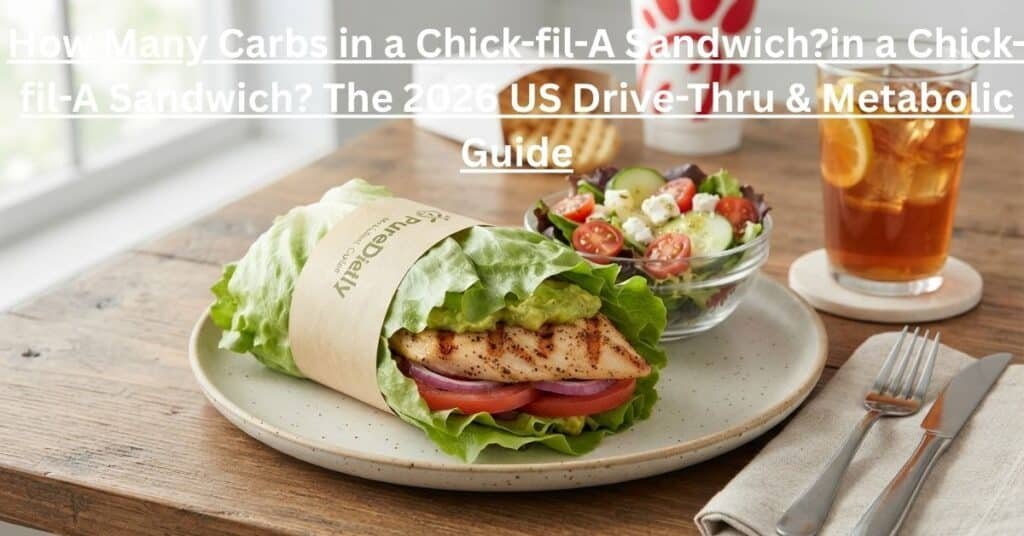
- Go Bunless (The Lettuce Wrap): Ask the team member to wrap your chicken breast in fresh, crisp leaf lettuce instead of the standard white bun. This single swap eliminates the heaviest source of refined carbohydrates instantly.
- Switch to Grilled: The Chick-fil-A Grilled Chicken Sandwich is an absolute game-changer for metabolic tracking. It contains only about 8 to 10 grams of total carbohydrates while offering clean, lean protein.
- Audit Your Condiments: Ditch the high-sugar dipping sauces. Instead, opt for buffalo sauce, yellow mustard, or simply rely on the natural savory spices of the chicken itself.
- Smart Side Swaps: Avoid the temptation of large waffle fries. Substitute them with a side green salad or fruit cup (eaten mindfully in small portions) to protect your blood sugar curve.
For structured weekly menu ideas that accommodate a busy American lifestyle and dining out, explore our tips on [Balanced Meal Planning].
Add Seaweed Salad to your daily carb limit in 30 seconds!
6.Is a Chick-fil-A Sandwich “Best” for Diabetics?
The Verdict To be completely transparent from a metabolic health perspective: No, the classic, original fried Chick-fil-A sandwich is not an ideal or “best” choice for managing diabetes due to its high refined carbohydrate count and breading. However, living with diabetes doesn’t mean a life of strict deprivation.
If you are dining at Chick-fil-A, you can transform it into a diabetes-friendly option by following these strict rules:
- Choose the Grilled Option: Switch the original fried fillet to the Grilled Chicken Sandwich. With only 8 to 10 total grams of carbohydrates, it drastically lowers the glycemic load.
- Ditch the Bun: Order your sandwich wrapped in lettuce instead of the white flour bun to completely eliminate the major source of blood sugar spikes.
- Pair with Protein or Fat, Not Sugar: Avoid sugary dipping sauces and high-carb waffle fries, opting instead for smart, blood-sugar-neutral choices.
7. Side Items & Beverage Choices: What to Pair and What to Avoid
When US consumers order a sandwich, it rarely travels alone. Let’s look at how popular add-ons alter your meal’s metabolic profile:

- Medium Waffle Fries: Adds an extra 40 to 45 grams of carbohydrates and high sodium, making it a double-hit for your blood sugar and blood pressure.
- Sweet Iced Tea (Southern Style): A staple across American drive-thrus, a medium sweet tea packs around 35 to 38 grams of pure liquid sugar from cane sugar. Switching to unsweetened iced tea with a zero-calorie sweetener saves you massive amounts of glucose volatility.
Frequently Asked Questions
How many net carbs are in a standard Chick-fil-A chicken sandwich?
A standard original sandwich contains roughly 38 to 40 net carbs, calculated by subtracting the minimal dietary fiber (around 1–2 grams) from the total 39–41g carbohydrate count.
Does the grilled chicken sandwich have fewer carbs?
Yes, the Chick-fil-A Grilled Chicken Sandwich has significantly fewer carbohydrates—typically around 8 to 10 grams total—making it a much more blood-sugar-friendly alternative to the original fried version.
Can diabetics eat a Chick-fil-A sandwich safely?
Individuals with diabetes can enjoy it safely by modifying the order such as ordering it bunless, choosing grilled chicken over fried, avoiding sugary sauces, and keeping total daily carbohydrate limits in mind.
Conclusion
Managing metabolic health and diabetes in a fast-paced environment doesn’t mean you have to live a life of strict deprivation or avoid social drive-thrus. While a classic Chick-fil-A sandwich carries around 40 grams of carbohydrates, knowing how to customize your order like going bunless or switching to grilled options empowers you to enjoy your meal without compromising your blood sugar stability. Make informed choices, drive mindfully, and keep your wellness goals on track every single day!
About Gohar Fatima
Gohar Fatima is the founder and lead health researcher at PureDietly, dedicated to translating complex metabolic science into practical, everyday dietary guidance.
Medical Disclaimer:
This content is for informational purposes only and does not substitute for professional medical advice. Always consult your physician or registered dietitian regarding diabetes management.