
If you have been trying to balance your daily nutrition while enjoying your favorite meals, understanding the true impact of white rice is essential for long-term vitality. When health-conscious shoppers across the United States browse the grain aisle, traditional white rice is often heavily criticized for causing rapid blood sugar spikes. However, modern nutritional science reveals that how you cook, cool, and pair your grains matters just as much as the grain itself. Fortunately, incorporating this staple correctly can fit seamlessly into a balanced metabolic lifestyle.
1. What is the Glycemic Index of White Rice?
The glycemic index (GI) measures how fast a carbohydrate-containing food raises blood glucose levels compared to pure glucose. Standard white rice generally falls into the high-GI category, typically ranging from 70 to 89 depending on the variety and cooking method.
- Jasmine and Short-Grain Rice: These varieties tend to have a higher sticky starch content, leading to a faster and steeper glycemic response.
- Basmati Rice: This long-grain aromatic option naturally features a lower, more moderate glycemic index, making it a preferred choice for steady blood sugar management.
- The Starch Breakdown: Standard white rice is rich in easily digestible amylopectin starches, which break down rapidly into glucose during digestion.
Furthermore, if you are monitoring your daily carbohydrate intake closely, you can review our foundational findings on Can Diabetics Eat Rice? The Shocking Truth About White vs Brown Rice! to understand how different processing methods alter your body’s response.
2. White Rice Glycemic Comparison Table
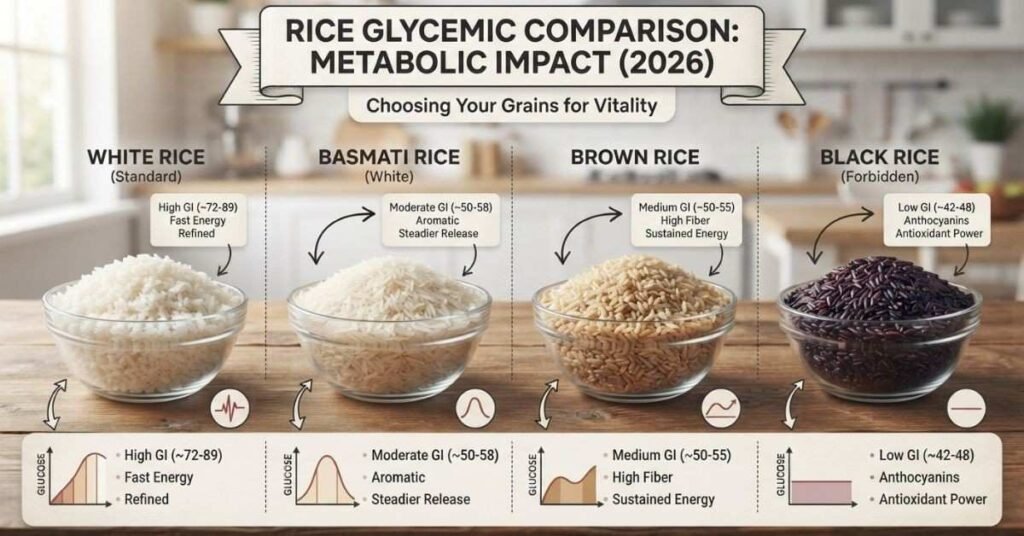
Evaluating how standard white varieties stack up against alternative grains helps you optimize your daily meal plan. Review this metabolic comparison table to evaluate your options.
| Grain Variety | Average Glycemic Index (GI) | Glycemic Load (GL) per Serving | Metabolic Impact |
| Standard White Rice | High (72–89) | High (~22) | Rapid glucose spike |
| Basmati White Rice | Moderate (50–58) | Moderate (~15) | Steady energy release |
| Brown Rice | Medium (50–55) | Moderate (~16) | Sustained fiber absorption |
| Black Rice | Low (42–48) | Low (~10) | Superior antioxidant flow |
While standard white options digest quickly, you can compare these metrics directly with our specialized insights in Brown Rice Glycemic Index: The Metabolic Truth to see how unrefined bran layers change nutrient absorption.
3. Top Strategies to Lower the Glycemic Impact of White Rice
You do not necessarily have to banish white rice from your plate to maintain healthy blood sugar levels. Implementing simple, science-backed kitchen techniques can dramatically alter how your body absorbs glucose.
- The Cooling and Reheating Trick (Resistant Starch): When you cook white rice and let it cool in the refrigerator for 12 to 24 hours, a portion of its digestible starch turns into resistant starch. This resistant starch acts like dietary fiber, lowering the overall glycemic response even if you reheat it later.
- Smart Protein and Healthy Fat Pairing: Never eat plain grains in isolation. Always pair your serving with healthy fats, fiber-rich vegetables, or lean proteins to slow down gastric emptying.
- Portion Control: Keep your serving size to a controlled half-cup or three-quarters of a cup to prevent overwhelming your metabolic pathways.
Pro Tip: Adding a teaspoon of healthy fat like extra virgin olive oil or ghee, along with a splash of apple cider vinegar to your cooking water, can further blunt post-meal glucose spikes.
4. Comparing White Rice to Specialty Grains
Many health enthusiasts wonder how standard white varieties compare to ancient or pigmented grains on the market today.
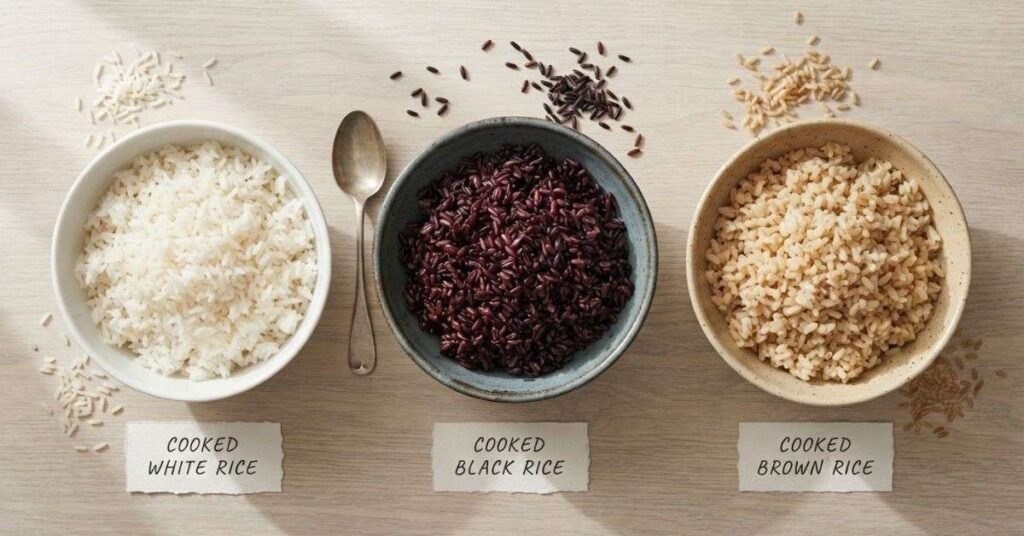
- The Superfood Contrast: White rice lacks the rich antioxidant anthocyanin profile found in our deep-dive analysis of What Is Black Rice? The Forbidden Superfood Your Diet Needs.
- Diabetic Alternatives: Before choosing standard refined grains for everyday meals, it is worth exploring whether Is Bamboo Rice Better Than White Rice for Diabetics? The 2026 Clinical Review offers a safer, chlorophyll-rich alternative for your specific goals.
- Weight Management Goals: For those focusing strictly on metabolic fat loss, contrast your grain intake with the benefits outlined in our expert guide on Red Rice: The Weight Loss Secret You’ve Been Missing.
See how overall grain choices influence your cellular energy pathways by reading our comprehensive assessment in Quinoa vs. Rice: The Metabolic Health Verdict (2026).
5. The Role of Digestion and Postprandial Glucose
When you consume carbohydrates, your body breaks them down into simple sugars, entering the bloodstream as glucose. Understanding postprandial (after-meal) glucose responses allows you to fine-tune your meals.
- Gastric Emptying: High-fiber or high-fat foods stay in your stomach longer, delaying the entry of glucose into the small intestine.
- Insulin Sensitivity Dynamics: Frequent sharp spikes from high-GI refined grains can strain pancreatic beta-cells over time. Balancing white rice with vinegar or lemon juice slows down salivary amylase activity, providing a flatter glucose curve.
6. Practical Kitchen Tips for Busy American Kitchens
Integrating healthy habits into a busy weekly schedule requires meal-prepping efficiency. Here is how you can manage your rice cooking habits:
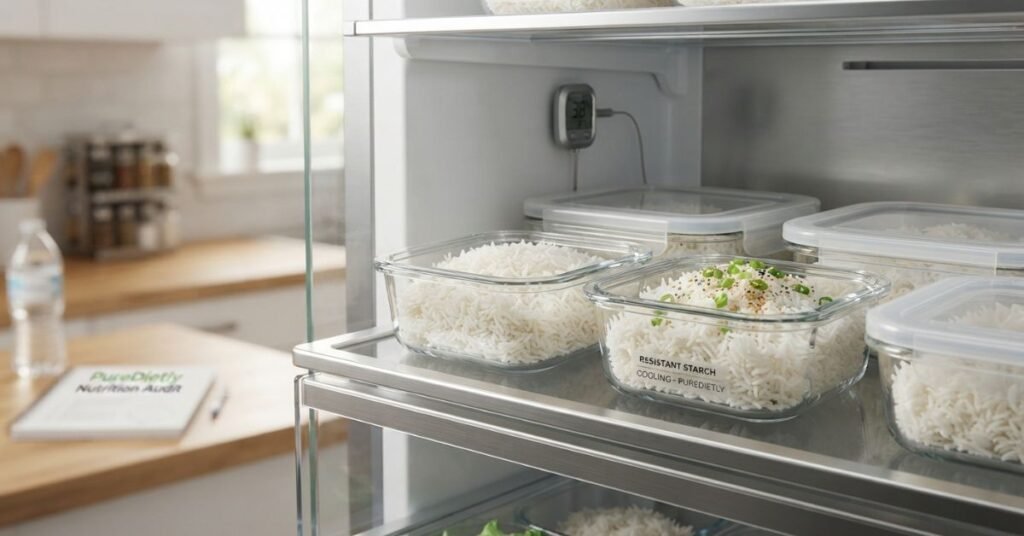
- Batch Cooking on Sundays: Cook a large pot of basmati or long-grain white rice, portion it into glass meal-prep containers, and refrigerate immediately.
- Transforming Leftovers: Use your chilled rice to make a healthy post-workout protein bowl or a vegetable-packed fried rice using sesame oil and eggs, leveraging the power of resistant starch.
- Mindful Seasoning: Incorporate spices like Ceylon cinnamon or turmeric, which are known to support healthy metabolic function and insulin receptor sensitivity.
7. Deep-Dive: The Biochemical Impact of Amylase and Starch Gelatinization
To truly master your grain consumption, it helps to understand what happens inside the pot and inside your digestive tract. When rice is boiled, water penetrates the starch granules, causing them to swell and burst in a process called gelatinization.
- The Impact of Overcooking: If you cook your rice until it becomes overly soft or sticky, the starch becomes fully gelatinized. This means digestive enzymes can break it down almost instantly upon consumption, leading to a sharp surge in blood glucose.
- Cooking Al Dente: Preparing your rice slightly firm (al dente) preserves the structural integrity of the starch matrices, slowing down the enzymatic breakdown.
- Retrogradation: When cooked rice cools down, the starch molecules realign into a crystalline structure that resists easy digestion—this is the formation of the beneficial resistant starch mentioned earlier.
8. Tailoring Your Grain Intake for Long-Term Metabolic Fitness
Achieving sustainable metabolic health is never about restriction; it is about strategic inclusion. White rice can serve as an accessible, easily digestible source of clean carbohydrates, especially for athletes or individuals with high daily physical activity levels.
- Post-Workout Recovery: After an intense workout session, your muscle glycogen stores are depleted. Consuming a fast-digesting carbohydrate like white rice can rapidly replenish these energy reserves.
- Pairing with Soluble Fiber: Combine your rice with copious amounts of leafy greens, cruciferous vegetables, or legumes to introduce viscous soluble fiber into your meal matrix. This creates a gel-like consistency in the gut that further blunts any sharp insulin excursions.
9. Semantic Keywords (LSI) & Related Terms
Glycemic index of white rice, blood sugar spikes, resistant starch formation, high-GI carbohydrates, insulin response, refined grains nutrition, postprandial glucose, low-GI alternatives, healthy meal pairing, metabolic balance, starch gelatinization.
Ready to Check Your Levels?
Use our Free Diabetic Calculators to track your A1C, Sugar Spikes, and Fasting Progress.
OPEN ALL CALCULATORS ➔Fast • Accurate • Free for Puredietly Readers
10. Frequently Asked Questions
Can I eat white rice if I am managing my blood sugar?
Yes, you can enjoy white rice in moderation if you use the cooling method to create resistant starch and always pair it with healthy fats, fiber, and lean proteins to slow down digestion.
How does white rice compare to brown rice for daily energy?
While white rice digests faster for immediate energy, brown rice retains its outer bran layer, providing more fiber and a steadier, lower-GI release throughout your busy workday.
Does the cooking method change the glycemic index?
Absolutely. Overcooking white rice makes the starches more gelatinous and easier to digest, which raises its glycemic index, whereas cooking it al dente keeps the impact slightly lower.
Is instant white rice worse than regular white rice?
Yes, instant or pre-cooked parboiled white rice has usually undergone structural breakdown during industrial processing, making it digest even faster and leading to higher postprandial glucose peaks.
Conclusion: Mastering Your Carbohydrate Intake
Understanding the true white rice glycemic index empowers you to make informed, flexible choices without feeling restricted. By utilizing smart cooking hacks like cooling your grains, prioritizing proper food pairing, and selecting quality varieties, you can enjoy your meals while keeping your metabolic health completely on track.
Take charge of your wellness journey today! Explore our related expert resources on Balanced Meal Planning and Glycemic Index Management to keep your nutrition optimized.
About Gohar Fatima
Gohar Fatima is the founder and lead health researcher at PureDietly. With a deep passion for evidence-based nutrition, dietary science, and wellness, Gohar translates complex nutritional data into practical, easy-to-understand guides for everyday readers. Dedicated to promoting healthier lifestyles, she meticulously researches topics ranging from glycemic indices and superfoods to balanced meal planning, ensuring all content meets high standards of accuracy and reliability.
Medical Disclaimer
The content provided on PureDietly is for informational and educational purposes only and is not intended as a substitute for professional medical advice, diagnosis, or treatment. Always seek the advice of your physician or other qualified health provider with any questions regarding a medical condition or dietary changes. Never disregard professional medical advice or delay in seeking it because of something you have read on this website.