
By Gohar Fatima / September 28, 2026
Editor’s Note
Navigating life with an underactive thyroid often feels like driving with the handbrake engaged. Although traditional treatments provide synthetic hormones, finding a sustainable dietary protocol remains essential for managing daily fatigue. Furthermore, if you track your metabolic health or look to support your endocrine function naturally, understanding the science behind a targeted hypothyroidism diet is crucial. In this guide, we break down key clinical facts, vital micronutrients, and daily habits required to protect your long-term vitality.
Introduction: Why Your Thyroid Needs a Specialized Nutritional Approach
Walking through wellness hubs across the United States, you will notice a massive surge in people looking for natural ways to reignite a sluggish metabolism. If you feel constantly frustrated by unexplained weight gain, brain fog, or low energy, transitioning to a structured hypothyroidism diet brings a complete lifestyle transformation.
However, before jumping blindly into restrictive eating plans, look closely at the clinical science. Your thyroid gland relies heavily on specific trace minerals to synthesize hormones efficiently. Instead of relying on over-processed fad diets, incorporating clean, nutrient-dense foods into your routine supports your metabolic health safely. Consequently, by focusing on balanced components, you boost physical resilience without risking unwanted side effects. To explore more about gut health and natural cellular support, check out our guide on [Can Too Much Fiber Cause Constipation? The Truth About Your Gut Health].
The Core Nutritional Breakdown: Essential Elements for Thyroid Health
Evaluating the physiological impact of dietary changes requires clear metrics. Review the breakdown below to understand how key nutrients influence your thyroid function:
| Evaluation Metric | Standard American Diet (SAD) | Optimized Hypothyroidism Diet |
|---|---|---|
| Iodine Source | Processed foods & excess table salt | Clean sources (seaweed, iodized salt, wild fish) |
| Mineral Focus | Low selenium & zinc levels | Rich in Brazil nuts, pumpkin seeds, and lean proteins |
| Inflammatory Load | High in refined sugars and gluten | Anti-inflammatory whole foods, healthy fats, and complex carbs |
| Metabolic Impact | Slows metabolism and triggers fatigue | Supports steady energy production and hormonal balance |
How Selenium, Zinc, and Iodine Influence Metabolic and Thyroid Function
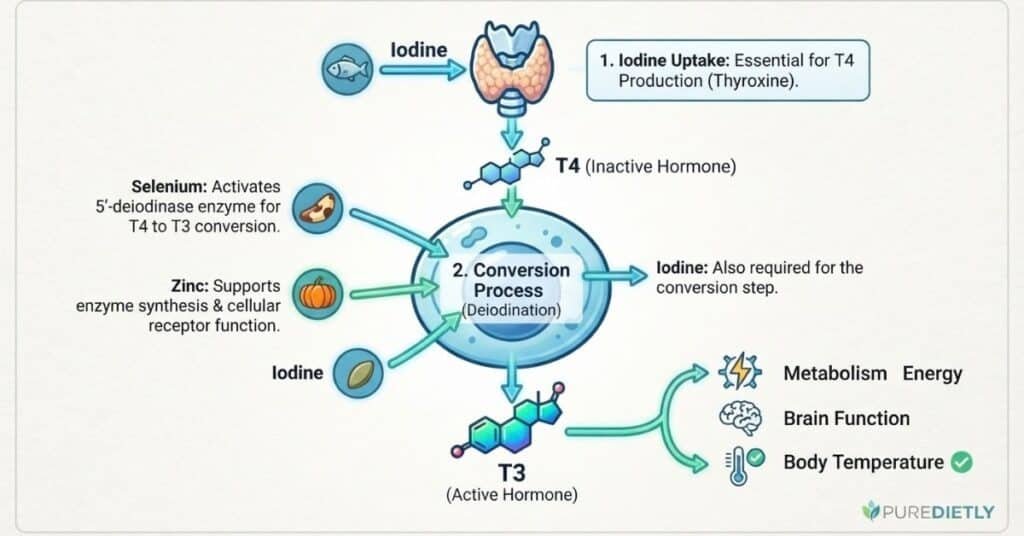
Understanding how your body processes micronutrients is vital for long-term vitality. When you consume a targeted hypothyroidism diet, your body receives the exact building blocks required for hormone conversion.
- Supporting Hormone Conversion: Selenium acts as a powerful catalyst that converts inactive thyroid hormone (T4) into its active form (T3). Without adequate selenium levels, your body struggles to utilize hormones effectively. If you want to explore whole-food strategies that support cellular cleansing, check out our guide on [Natural Detox Diets: Do They Actually Work? A 2026 Metabolic Cleanse Guide].
- Protecting the Thyroid Gland: Antioxidants and trace minerals help reduce oxidative stress and inflammation within your endocrine system. For deeper insights into cellular protection, review our breakdown on [Is Gelatin Good For You? The Ultimate 2026 Gut, Skin & Metabolic Health Guide].
- Maintaining Stable Energy Levels: By balancing your macronutrients and avoiding blood sugar spikes, you prevent deep energy crashes. For more on supportive hydration during your daily routine, explore our insights on [Sugar-Free Isotonic Drinks: The Ultimate 2026 Metabolic & Hydration Guide].
Foods to Eat vs. Foods to Avoid on a Hypothyroidism Diet
Navigating grocery store aisles in the US can feel overwhelming when managing thyroid health. To simplify your meal planning, keep this practical guide in mind:

- Top Foods to Embrace: Incorporate lean proteins (wild-caught salmon, organic chicken, pasture-raised eggs), selenium-rich foods (Brazil nuts, sunflower seeds), and gluten-free complex carbohydrates (quinoa, sweet potatoes, brown rice) to sustain daily energy.
- Foods to Consume with Caution (Goitrogens): Cruciferous vegetables like broccoli, cauliflower, cabbage, and kale contain goitrogens. These can interfere with iodine uptake if eaten raw in massive quantities. Fortunately, cooking these vegetables neutralizes goitrogens almost entirely, allowing you to enjoy them safely.
- Items to Limit: Minimize ultra-processed snack foods, excessive soy products, and refined sugars. These ingredients trigger systemic gut inflammation, impair liver function, and disrupt delicate hormone balance.
The “Over-Restriction Trap”: Why Balanced Nutrition Matters Most
While managing food intake supports metabolism, how you approach your diet changes everything. Many wellness seekers mistakenly believe that starving themselves accelerates weight loss.
- Avoiding Severe Caloric Restriction: Drastically cutting calories forces an underactive thyroid to slow your metabolic rate down further, making weight loss virtually impossible. Consequently, this harms your long-term health and hormonal stability.
- Prioritizing Clean Third-Party Testing: Instead of relying on cheap supplement shortcuts, opt for certified organic, lab-tested micronutrients or pure herbal supports like those covered in our deep-dives on clean nutrition.
- Balancing Fiber and Medication Timing: Fiber-rich foods can bind to synthetic thyroid medication (like Levothyroxine) in your digestive tract and block proper absorption. Therefore, maintaining a strict 4-hour window between your morning medication and high-fiber meals is vital.
A Sample Weekly Meal Framework to Start Safely
Instead of changing your entire kitchen cabinet overnight, you can seamlessly transition by adopting this clean daily framework:

- Monday – Protein & Fiber Balance: Start your week with a warm breakfast of scrambled eggs, fresh spinach, and antioxidant-rich berries, ensuring steady morning energy. If you enjoy soothing morning options, look at our insights on [Celery Juice Benefits: The Ultimate 2026 Metabolic and Gut Health Guide].
- Mid-Week Metabolic Boost: Incorporate a satisfying lunch featuring grilled wild salmon, organic quinoa, and lightly steamed asparagus, maximizing your intake of healthy omega-3 fatty acids.
- Weekend Wind-Down: Take time over the weekend to prep batch meals using roasted sweet potatoes and lean turkey, giving your digestive and metabolic systems a consistent rhythm.
Frequently Asked Questions (FAQs)
What is the primary goal of a hypothyroidism diet?
The primary goal of a hypothyroidism diet is to support optimal hormone production, boost a sluggish metabolism, reduce systemic inflammation, and manage weight naturally.
Can eating raw cruciferous vegetables damage my thyroid?
Eating moderate amounts of cooked cruciferous vegetables is completely safe; however, consuming them raw in very large quantities can interfere with iodine uptake due to goitrogens.
How does selenium help people with an underactive thyroid?
Selenium is a vital trace mineral concentrated in the thyroid gland that helps protect it from oxidative damage and assists in converting T4 hormones into active T3 hormones.
Should I avoid gluten entirely if I have hypothyroidism?
Many individuals with hypothyroidism also experience non-celiac gluten sensitivity or Hashimoto’s, making a gluten-free approach helpful for reducing chronic gut inflammation.
Conclusion: Making Smart Choices for Your Daily Wellness
Ultimately, when evaluating a hypothyroidism diet, clinical evidence shows that balanced, nutrient-dense eating combined with proper medical management offers wonderful metabolic support. If your primary goal is to protect your vitality, committing to wholesome, anti-inflammatory ingredients is a fantastic strategy.
For more data-driven insights and healthy lifestyle swaps designed for modern wellness seekers, continue exploring our latest articles right here at PureDietly!
About the Author
Gohar Fatima is the founder and lead metabolic health researcher at PureDietly, dedicated to translating complex nutritional science and practical wellness habits into easy-to-follow advice for everyday readers navigating metabolic wellness.
Medical Disclaimer
The content provided on PureDietly is for informational purposes only and is not intended as medical advice, diagnosis, or treatment. The team at PureDietly are not licensed medical physicians. Always seek the advice of your physician or qualified health provider with any questions regarding a medical condition or dietary changes. Individual responses to dietary protocols may vary.