

By Gohar Fatima / September 30, 2026
Editor’s Note
Navigating modern health trends in the United States often feels overwhelming, especially when quick fixes fail to deliver lasting vitality. Although conventional nutrition focuses heavily on calorie counting, finding a holistic, time-tested dietary protocol is essential for long-term well-being. Furthermore, if you track your metabolic health or look to support your endocrine function naturally, understanding the ancient wisdom behind a targeted ayurvedic diet is crucial. In this guide, we break down key clinical facts, vital dosha principles, and daily eating habits required to protect your vitality.
Introduction: Why Your Body Needs an Ayurvedic Dietary Approach
Walking through wellness hubs across the United States, you will notice a massive surge in people looking for natural ways to reignite a sluggish metabolism and restore inner balance. If you feel constantly frustrated by chronic fatigue, persistent digestive issues, or unexplained stress, transitioning to a structured ayurvedic diet brings a complete lifestyle transformation.
However, before jumping blindly into restrictive eating plans, look closely at the foundational science of Ayurveda. Your body relies heavily on balancing your unique mind-body constitution, known as doshas (Vata, Pitta, and Kapha), to function efficiently. Instead of following generic fad diets, incorporating clean, mindful eating habits into your daily routine supports your metabolic health safely. Consequently, by focusing on balanced nutritional components, you boost your physical resilience without risking unwanted side effects. To explore more about gut health and natural cellular support while managing your daily wellness, check out our guide on [Can Too Much Fiber Cause Constipation? The Truth About Your Gut Health].
Ayurvedic Diet PlanEssential Elements of an Ayurvedic Diet
Evaluating the physiological impact of dietary changes requires clear, objective metrics. Review the breakdown below to understand how Ayurvedic principles compare to standard modern eating habits:
| Evaluation Metric | Standard American Diet (SAD) | Optimized Ayurvedic Diet |
|---|---|---|
| Meal Approach | Rushed eating, cold foods, erratic timing | Mindful eating, warm freshly cooked meals, regular routine |
| Digestive Focus | Often ignores gut fire (Agni) | Focuses heavily on strengthening digestion and metabolism |
| Inflammatory Load | High in processed sugars, cold drinks, and additives | Anti-inflammatory whole foods, healing spices, and herbal teas |
| Metabolic Impact | Can cause sluggishness and energy crashes | Supports steady energy production and dosha harmony |
How Doshas, Agni, and Mindful Eating Influence Metabolic Health
Understanding how your human body processes food is vital for long-term vitality. When you consume meals aligned with an ayurvedic diet, your body receives the exact energetic and nutritional support required for optimal metabolic function.

- Strengthening Digestive Fire (Agni): Ayurveda teaches that strong digestion is the root of all health and metabolic power. Without a balanced internal fire (Agni), your body struggles to extract nutrients efficiently, leading to toxic buildup (Ama). If you want to explore whole-food strategies that support cellular cleansing, check out our guide on [Natural Detox Diets: Do They Actually Work? A 2026 Metabolic Cleanse Guide].
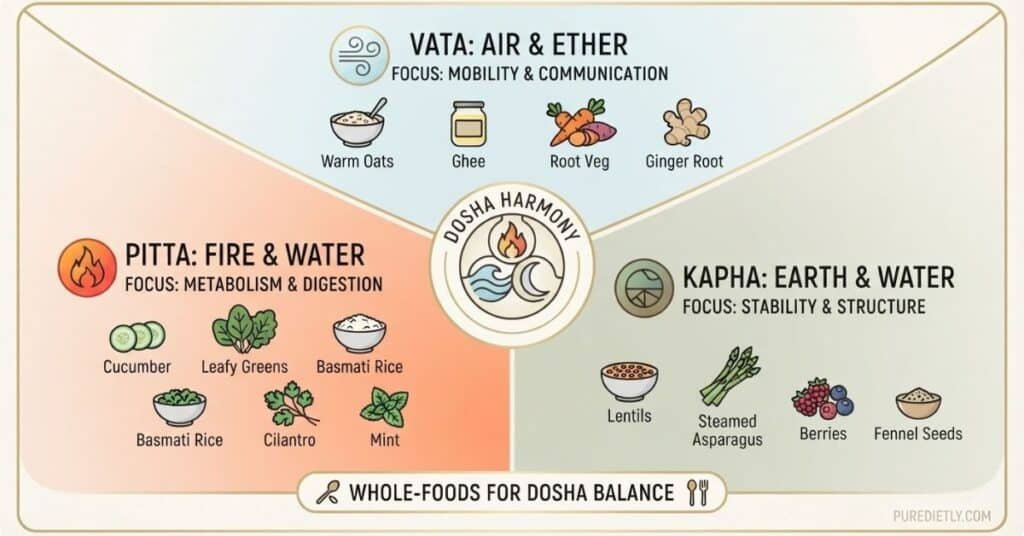
- Balancing Your Unique Dosha Constitution: Whether you are predominantly Vata (Air/Ether), Pitta (Fire/Water), or Kapha (Earth/Water), tailoring your food choices helps reduce chronic inflammation and systemic stress. By eating to balance your specific dosha, you optimize cellular function and energy production. For deeper insights into cellular protection, review our breakdown on [Is Gelatin Good For You? The Ultimate 2026 Gut, Skin & Metabolic Health Guide].
- Maintaining Stable Energy Levels: By eating warm, nutrient-dense foods and avoiding iced beverages with meals, you prevent deep digestive slumps and energy crashes. For more on supportive hydration and clean swaps during your daily routine, explore our insights on [Sugar-Free Isotonic Drinks: The Ultimate 2026 Metabolic & Hydration Guide].
Foods to Embrace vs. Foods to Limit on an Ayurvedic Diet
Navigating the grocery store aisles in the US can feel overwhelming when shifting toward holistic wellness. To simplify your meal planning and ensure optimal cellular nourishment, keep this practical guide in mind:

- Top Foods to Embrace: Incorporate freshly cooked whole grains (such as quinoa, basmati rice, and millet), a wide variety of seasonal vegetables (steamed or sautéed), healthy fats (especially organic ghee), and digestive-supporting spices like turmeric, ginger, cumin, and fennel to sustain daily energy and balance metabolism.
- Foods to Consume with Caution: While nutrient-dense, heavy, cold, or overly raw foods can dampen your digestive fire (Agni) and lead to sluggishness. Ayurveda generally advises minimizing excessive iced drinks, raw heavy salads late at night, and processed refined sugars, which disrupt metabolic rhythm.
- Items to Limit: Minimize ultra-processed snack foods, packaged convenience meals, and artificial additives. These ingredients trigger systemic gut inflammation, impair liver function, and disrupt delicate hormonal balance, which is foundational to an ayurvedic diet.
The “Over-Restriction Trap”: Why Balanced Holistic Nutrition Matters
While mindful eating supports metabolism, how you approach your diet changes everything. Many wellness seekers mistakenly believe that starving themselves or cutting out entire food groups accelerates healing.
- Avoiding Severe Caloric Restriction: Drastically cutting calories forces your body into a stress response, slowing your metabolic rate down further and making sustainable weight loss virtually impossible. Consequently, this can seriously harm your long-term health and hormonal stability.
- Prioritizing Mindful Pacing: Instead of eating on the run, while driving, or staring at a screen, opt for a quiet, seated meal environment. This simple shift dramatically improves nutrient assimilation and digestion.
- Balancing Warmth and Hydration: Integrating warm herbal teas (like ginger or CCF tea) between meals rather than chugging large amounts of ice-cold water during food intake protects your digestive enzymes and encourages smooth metabolism.
A Sample Daily Routine for Ayurvedic Wellness
Instead of changing your entire lifestyle overnight, you can seamlessly transition by adopting this clean, balanced daily framework:

- Morning Warmth and Gentle Cleansing: Start your day not with coffee, but with a cup of warm water and fresh lemon or ginger tea. This practice gently wakes up your digestive system and supports natural detoxification. If you enjoy soothing morning options, you can also look at our insights on [Celery Juice Benefits: The Ultimate 2026 Metabolic and Gut Health Guide].
- Mid-Day Nourishment (Main Meal): Make lunch your largest, most nutrient-dense meal of the day, ideally eaten between 12 PM and 2 PM. This is when your digestive fire (Agni) is naturally strongest, maximizing your ability to digest complex carbohydrates, cooked grains, and healthy proteins.
- Evening Wind-Down: Eat a lighter, warm, and easily digestible dinner at least a few hours before bedtime, ideally by 7 PM. This practice gives your digestive and metabolic systems a consistent, restorative nightly rhythm.
Unique Paragraphs for US Audience (Addressing Common Problems)
Problem: Constant Brain Fog and Afternoon Crashes

Solution: Many Americans suffer from a mid-afternoon slump, often reaching for sugary snacks or more coffee. According to Ayurveda, this crash indicates a weak Agni (digestive fire) or a lunch that was too heavy to digest properly. Instead of caffeine, try sipping on warm tulsi (holy basil) or ginger tea. By making lunch your biggest meal—featuring warm, well-spiced, cooked foods—and eating a very light dinner, you provide your body with sustained energy rather than blood sugar spikes and crashes. This balanced approach naturally clears brain fog and supports mental clarity throughout the day.
Problem: Chronic Bloating and Digestive Discomfort
Solution: The standard American habit of eating on the go, combined with consuming ice-cold water with meals, is a primary cause of chronic bloating. Ayurveda emphasizes that ice extinguishes the digestive fire (Agni), leading to fermentation and gas. To fix this, stop drinking cold water with meals; instead, sip small amounts of warm water or CCF (cumin, coriander, fennel) tea to aid digestion. Furthermore, incorporating digestive spices like freshly grated ginger with every meal and ensuring you are seated calmly while eating will significantly reduce discomfort and improve nutrient absorption.
Frequently Asked Questions (FAQs)
What is the primary goal of an ayurvedic diet?
The primary goal of an ayurvedic diet is not just weight loss, but to balance your unique mind-body constitution (doshas), strengthen digestive fire (Agni), reduce systemic inflammation, and promote natural, long-term wellness.
Do I have to become a strict vegetarian on an ayurvedic diet?
Not necessarily; while plant-based eating is heavily promoted in Ayurveda due to its sattvic (pure) quality, animal proteins are sometimes recommended depending on an individual’s specific dosha imbalances, metabolic strength, and lifestyle needs.
How does Agni affect my overall health?
Agni represents your metabolic and digestive fire; when it is strong, you absorb nutrients effectively and eliminate toxins efficiently, whereas a weak Agni leads to fatigue, toxic buildup (Ama), and weight imbalances.
Can beginners easily follow an ayurvedic diet in the US?
Yes, absolutely. By focusing on warm, freshly prepared whole foods (which are readily available), incorporating healing digestive spices like turmeric and ginger into everyday meals, and eating mindfully, anyone can successfully integrate Ayurvedic principles into a busy US lifestyle.
Conclusion: Making Smart Choices for Your Daily Wellness
Ultimately, when evaluating an ayurvedic diet, clinical and traditional evidence shows that mindful, nutrient-dense eating combined with a balanced lifestyle offers wonderful metabolic support without risking your long-term health. If your primary goal is to protect your vitality while managing your daily wellness, committing to wholesome, anti-inflammatory ingredients is a fantastic strategy.
For more data-driven insights and healthy lifestyle swaps designed for modern wellness seekers, continue exploring our latest articles right here at PureDietly!
About the Author
Gohar Fatima is the founder and lead metabolic health researcher at PureDietly, dedicated to translating complex nutritional science and practical wellness habits into easy-to-follow advice for everyday readers navigating metabolic wellness and holistic self-care.
Medical Disclaimer
The content provided on PureDietly is for informational purposes only and is not intended as medical advice, diagnosis, or treatment. The team at PureDietly are not licensed medical physicians. Always seek the advice of your physician or qualified health provider with any questions regarding a medical condition or dietary changes. Individual responses to dietary protocols may vary.