
Editor’s Note
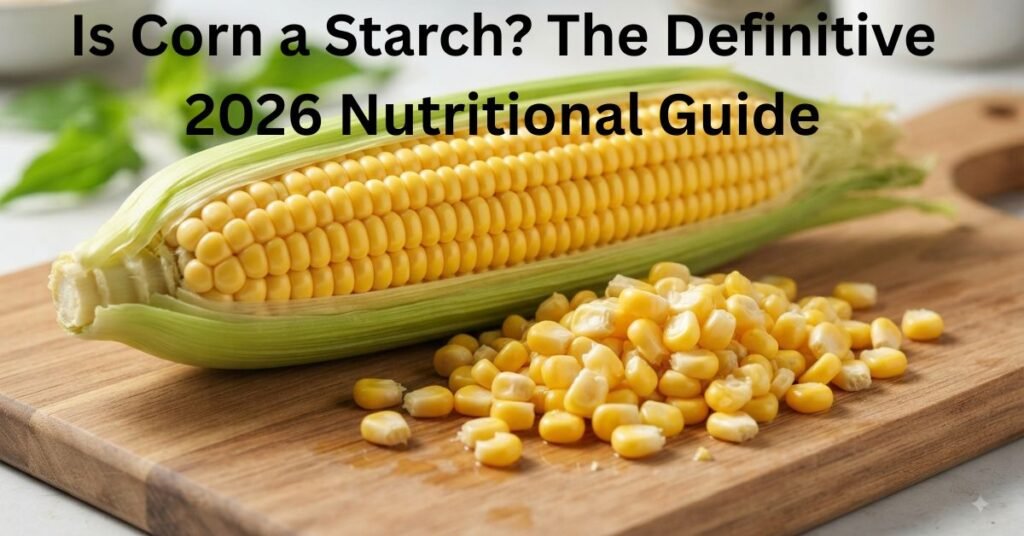
Is Corn a Starch? The Definitive 2026 Nutritional Guide
Editor’s Note: As modern nutritional science continues to evolve, distinguishing between whole-food classifications—like grains, starches, and vegetables—is vital for anyone focused on metabolic wellness. At Pure Dietly, our editorial team prioritizes rigorous, data-driven research to help you navigate the complexities of modern food labels and dietary trends. This guide on corn is designed to provide you with the necessary clarity to integrate this energy-dense food into your lifestyle mindfully, ensuring you make informed choices that align with your health and glucose-management goals.
Introduction: Decoding the Nature of Corn in Modern Diets
As health-conscious Americans constantly evaluate their daily carbohydrate intake and blood sugar patterns, a common question frequently arises in the kitchen: is corn a starch?
While many people casually toss canned corn into a green salad or view it as a simple side vegetable, its botanical classification and macronutrient profile tell an entirely different story. Understanding how corn functions in your body is essential for anyone aiming to:
- Maintain stable energy levels
- Manage metabolic wellness
- Follow a balanced nutritional framework
In this comprehensive guide, we examine the science behind corn, its starch content, and how it impacts your overall health.
The Botanical vs. Nutritional Reality of Corn
To understand why people often get confused about corn, we have to look at how it is grown versus how it is processed and digested by the human body.
- Botanical Classification: Scientifically and botanically, sweet corn is classified as a cereal grain when harvested at full maturity, but it is typically grown and harvested as a vegetable when picked early for fresh consumption.
- Carbohydrate Density: Unlike leafy greens or non-starchy vegetables that consist mostly of water and fiber, corn is densely packed with complex carbohydrates and natural plant sugars.
- Dietary Grouping: From a dietary and nutritional standpoint, government and health organizations categorize sweet corn firmly under the starchy vegetable and grain category rather than non-starchy greens.
The Evolutionary and Agricultural Background of Sweet Corn
Understanding how corn evolved from wild grass into a modern nutritional staple sheds light on its heavy carbohydrate density. For centuries, indigenous populations across the Americas cultivated maize not merely as a side dish, but as a primary caloric anchor. Because the plant converts solar energy into stored starches within its kernels so efficiently, it naturally developed into an energy-dense crop.
In contemporary agriculture, sweet corn is harvested during the milk stage—long before it turns into hard field corn used for animal feed or industrial processing. At this premature stage, the kernels contain high concentrations of water-soluble polysaccharides and sugars, giving them their characteristic sweetness. However, this moisture loss and starch conversion happen rapidly after picking, which is why the macronutrient distribution leans heavily toward complex starches rather than simple fibrous plant tissue.
Nutritional Profile of Corn
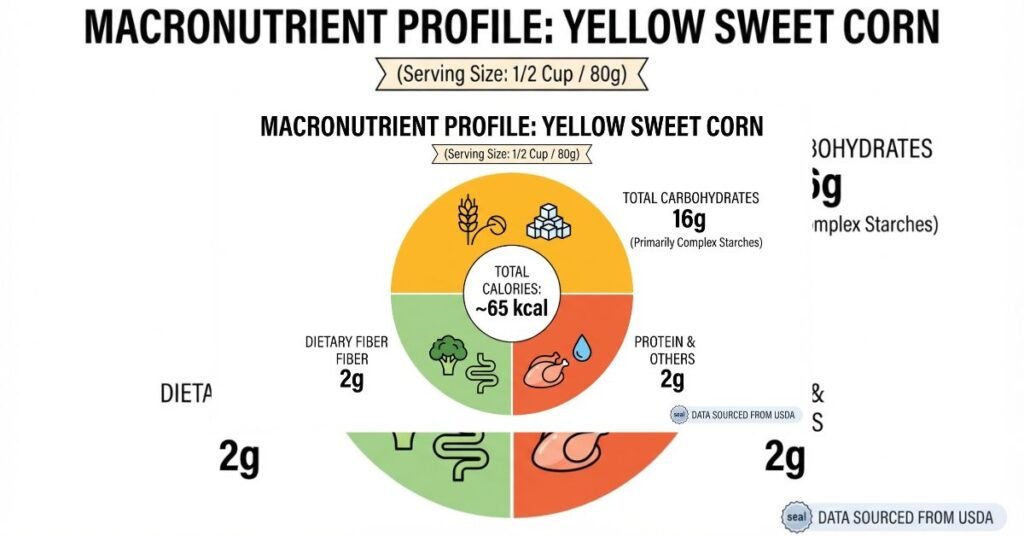
Evaluating the hard data behind your food helps you make informed choices about your daily macros. A standard serving of yellow sweet corn (approximately one medium ear or half a cup of kernels) provides a concentrated source of energy.
| Nutrient Component | Amount per Serving (Approx. 1/2 Cup / 80g) |
|---|---|
| Calories | ~60 to 70 kcal |
| Total Carbohydrates | ~15g to 17g |
| Dietary Fiber | ~2g |
| Sugars | ~3g to 5g (Naturally occurring) |
| Protein | ~2g |
- Antioxidant Power: Corn is naturally rich in lutein and zeaxanthin, powerful antioxidants that support long-term eye health and visual clarity.
- Cellular Support: It provides a reliable source of B-complex vitamins, particularly folate and thiamine, which assist in cellular energy production.
- Macronutrient Behavior: Because of its significant carbohydrate concentration, it acts more like a grain or starchy side than a low-carb vegetable like spinach or broccoli.
Starchy vs. Non-Starchy Vegetables: Where Does Corn Fit?
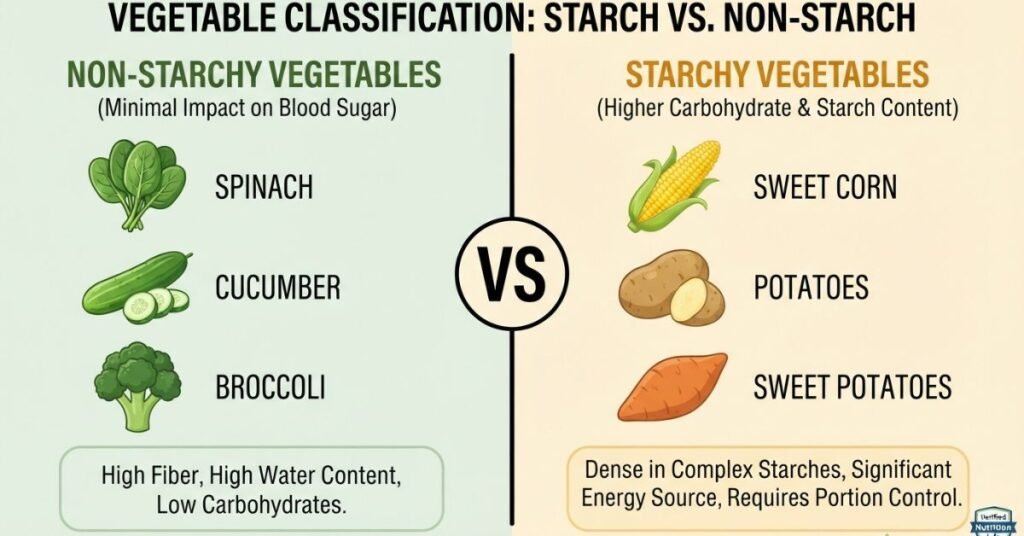
Navigating the produce aisle requires understanding the fundamental physiological differences between various plant foods. Vegetables are broadly divided into two main categories based on their starch and sugar content.
- Non-Starchy Choices: Options like zucchini, cauliflower, leafy greens, asparagus, and cucumbers contain minimal carbohydrates and virtually negligible impact on blood sugar, allowing for generous portion sizes.
- Starchy Choices: Foods like potatoes, green peas, winter squash, and corn contain significantly higher amounts of complex carbohydrates and starches, which convert into glucose during digestion.
- The Verdict: Because of its high starch content, answering whether is corn a starch is addressed affirmatively when designing balanced, blood-sugar-conscious meal plates where portion control becomes necessary.
Deep Dive: How Corn Affects Blood Sugar and Metabolic Health
Beyond basic macro counts, the impact of starchy foods on post-prandial (post-meal) glucose levels is a major focal point in modern nutritional science. When you consume corn, the complex starches break down into glucose during digestion. For individuals monitoring their metabolic index or striving to prevent insulin resistance, understanding this process is crucial.
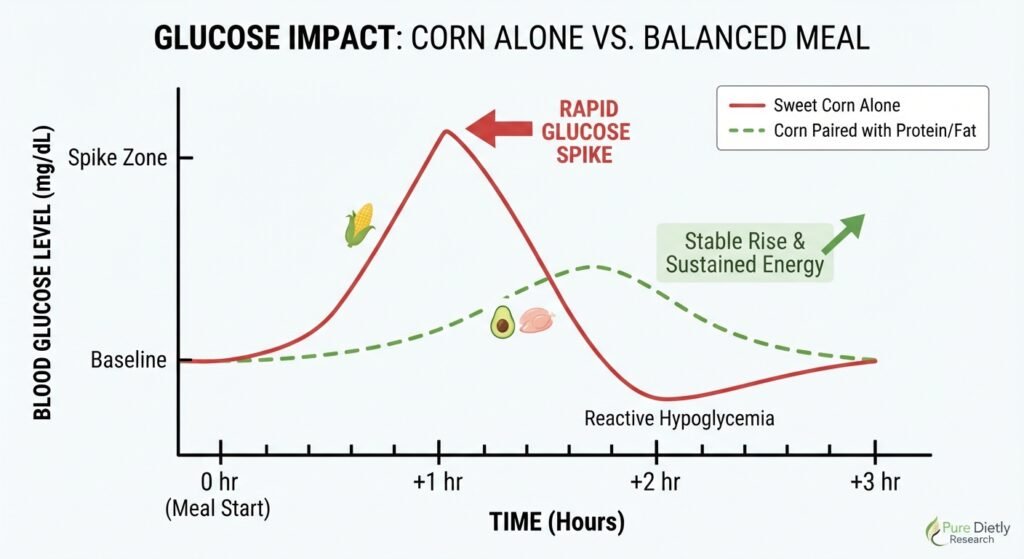
Furthermore, sweet corn possesses a moderate glycemic index (GI), meaning it causes a faster rise in blood sugar compared to non-starchy alternatives, though it typically ranks lower than refined white bread or sugary snacks. When integrated into a clean, whole-food dietary framework, pairing corn with healthy fats, fiber, or lean proteins helps buffer the digestive absorption rate. This strategic combination prevents the sharp glucose spikes that often disrupt daily energy curves. For deeper insights on evaluating everyday meal choices and managing daily glucose responses, check out our detailed guide on Is Shredded Wheat Spiking Your Blood Sugar? The 2026 Metabolic Truth.
Practical Kitchen Strategies: Enjoying Corn Mindfully
You do not need to banish corn from your kitchen entirely, but managing how you incorporate it ensures your nutritional goals stay on track:

- Smart Portions: Treat corn as your carbohydrate serving for the meal—similar to quinoa, brown rice, or sweet potatoes—rather than treating it like an unlimited green vegetable.
- Whole-Food Focus: Opt for fresh or frozen whole-kernel sweet corn rather than highly processed corn syrups, corn starches, or heavily fried snacks, which lack natural fiber and trigger aggressive metabolic volatility.
- Strategic Pairings: Combine corn with healthy fats and fiber-rich greens to slow down carbohydrate digestion and support sustained satiety.
Ready to Check Your Levels?
Use our Free Diabetic Calculators to track your A1C, Sugar Spikes, and Fasting Progress.
OPEN ALL CALCULATORS ➔Fast • Accurate • Free for Puredietly Readers
Frequently Asked Questions (FAQs)
Q1: Is corn considered a vegetable or a starch?
- A: Botanically, it is a grain, but nutritionally, it is classified as a starchy vegetable due to its high carbohydrate and starch content.
Q2: Can diabetics eat corn safely?
- A: Yes, in moderation. Because is corn a starch means it impacts blood sugar, individuals managing diabetes should count it as part of their daily carbohydrate allowance and pair it with proteins or healthy fats.
Q3: Is corn gluten-free?
- A: Pure corn is naturally gluten-free, making it a safe alternative for individuals with celiac disease or gluten sensitivities, provided it is not cross-contaminated during manufacturing.
Conclusion
Recognizing that is corn a starch helps you make smarter, more empowered decisions at the dinner table. By treating corn as a wholesome source of starchy carbohydrates rather than a free-food green vegetable, you can easily maintain metabolic balance while enjoying its rich flavor and nutritional benefits.
About the Author
Gohar is a dedicated nutrition researcher specializing in metabolic health and dietary optimization for the modern lifestyle. With a focus on data-driven wellness, Gohar translates complex clinical and nutritional findings into actionable, everyday dietary strategies. At Pure Dietly, the mission is to help readers look beyond standard food labels to discover the real impact of everyday whole foods on long-term vitality, metabolic balance, and overall well-being.
Medical Disclaimer
The information provided in this article is for educational and informational purposes only and is not intended as medical advice. While we use up-to-date nutritional insights, individual metabolic responses and dietary needs vary. Always consult with a qualified healthcare professional or your doctor before making significant changes to your diet, especially if you are managing a medical condition, taking medications, or have underlying health concerns. Pure Dietly does not provide medical diagnoses or treatment plans.