

Editor’s Note
At PureDietly, we are dedicated to exploring the intersection of traditional nutrition and modern metabolic science. In this 2026 guide, our lead health researcher Gohar Fatima breaks down the exact science of kefir milk, its superior probiotic profile, and a foolproof home-brewing protocol to help you heal your gut naturally. Have questions or feedback? Reach out to us on our Contact Us page.
If you have been looking for a powerful way to upgrade your daily wellness routine, discovering kefir milk can completely transform how you approach digestive health. When health-conscious shoppers browse the dairy aisle searching for effective ways to heal their guts, traditional yogurt often takes the spotlight. However, this fermented powerhouse offers a much deeper level of probiotic diversity. Fortunately, adding this nutrient-dense beverage to your daily schedule provides a simple path toward better metabolic balance.
1. Beyond Traditional Yogurt: Understanding the Science of Kefir Milk
While most commercial yogurts contain only two to three strains of bacteria, authentic kefir milk is a complex ecosystem. It is a cultured, fermented dairy drink created by introducing specific bacterial and yeast cultures—known as kefir grains—into fresh milk.
- The Fermentation Marvel: Friendly microbes consume the natural milk sugar (lactose) during fermentation, transforming the liquid into a tangy, highly digestible, and nutrient-dense tonic.
- The Texture Profile: It features a refreshing, pourable consistency that works brilliantly on its own, blended into post-workout smoothies, or poured over clean-label breakfast bowls.
- The Modern Relevance: Rooted in centuries of traditional wellness practices, modern USA health enthusiasts now embrace it as a vital tool for sustained metabolic health, immune defense, and cellular longevity.
2. Kefir Milk Nutrition Profile vs. Regular Milk
Understanding the exact macronutrient breakdown helps you see why this fermented beverage outperforms standard dairy options. Review this nutritional comparison table to evaluate your daily macros.
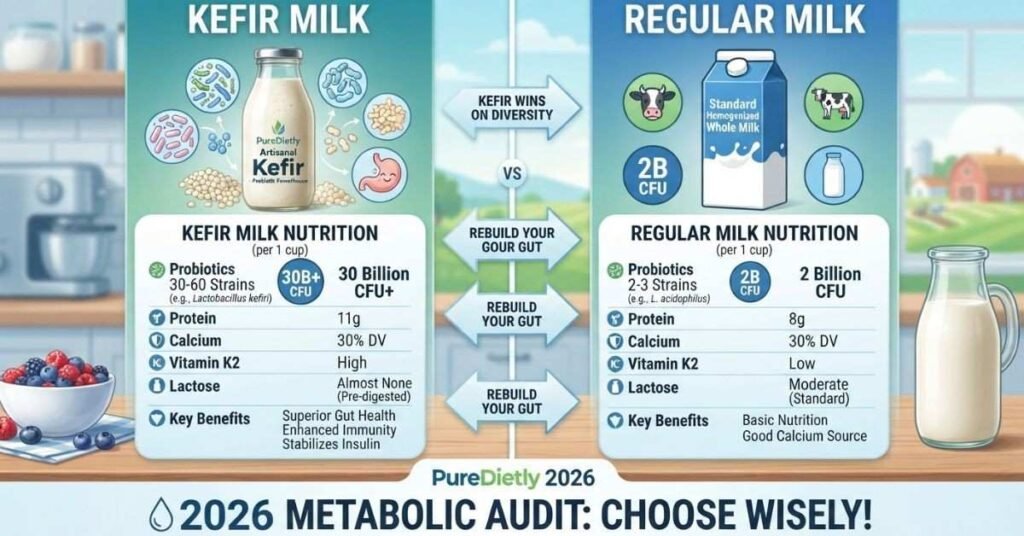
| Nutrient Component | Whole Milk Kefir (1 Cup) | Standard Whole Milk (1 Cup) |
| Calories | ~150 kcal | ~150 kcal |
| Protein | 8g to 11g | 8g |
| Probiotic Count | Billions of live active cultures | Zero natural probiotics |
| Lactose Content | Extremely low (pre-digested by bacteria) | High (standard milk sugar) |
| Calcium | ~300mg (30% Daily Value) | ~300mg (30% Daily Value) |
| Vitamin B12 & K2 | High bioavailability | Moderate to low |
Furthermore, while lean proteins build muscle tissue, integrating fermented options cleans the gut environment so those amino acids can actually be absorbed efficiently by your cells. To explore how fermented tonics interact with overall metabolic pathways, read our deep-dive analysis in the Kefir Benefits Metabolic Audit.
3. Top Health Benefits of Drinking Kefir Milk Daily
Integrating this fermented tonic into your nutrition plan yields powerful physiological advantages that extend far beyond basic digestion.
- Superior Gut Microbiome Diversity: A diverse microbiome supports better immune function, clear skin, and efficient nutrient absorption.
- Natural Lactose Tolerance: Because the active cultures consume nearly all the lactose during fermentation, many people with mild dairy sensitivities enjoy it completely bloating-free.
- Enhanced Insulin Sensitivity: Balanced gut flora actively helps regulate metabolic hormones like leptin and GLP-1, supporting steady blood sugar levels throughout a busy workday.
- Stronger Bone Density: Packed with bioavailable calcium, magnesium, and Vitamin K2, it actively protects skeletal health as you age.
Pro Tip: For maximum probiotic survival, consume your serving on an empty stomach first thing in the morning or right before bedtime to let the live cultures colonize undisturbed.
4. How to Make Kefir Milk at Home (Step-by-Step Protocol)
Brewing your own batch at home is surprisingly simple, cost-effective, and gives you total control over the fermentation process. Follow this straightforward USA kitchen protocol:

- Gather Your Supplies: Acquire active live milk kefir grains, organic whole or low-fat milk, a clean glass mason jar, and a plastic mesh strainer. Avoid metal utensils, as grains can react poorly to them.
- Combine Ingredients: Place one tablespoon of active kefir grains into the glass jar and pour in two cups of fresh, cold milk.
- Cover and Ferment: Secure a breathable cloth or paper towel over the top with a rubber band. Let the jar sit at room temperature out of direct sunlight for 24 to 36 hours.
- Strain the Grains: Once the milk thickens and develops a pleasant tart aroma, pour the mixture gently through your plastic strainer to separate the liquid kefir from the reusable grains.
- Store and Enjoy: Pour your finished beverage into a sealed glass bottle and store it in the refrigerator for up to two weeks, or use the strained grains to start your next batch immediately.
5. Avoiding Common Commercial Traps in the USA Market
When shopping at major American grocery stores, finding a clean product requires reading labels carefully. Many commercial options are heavily processed.
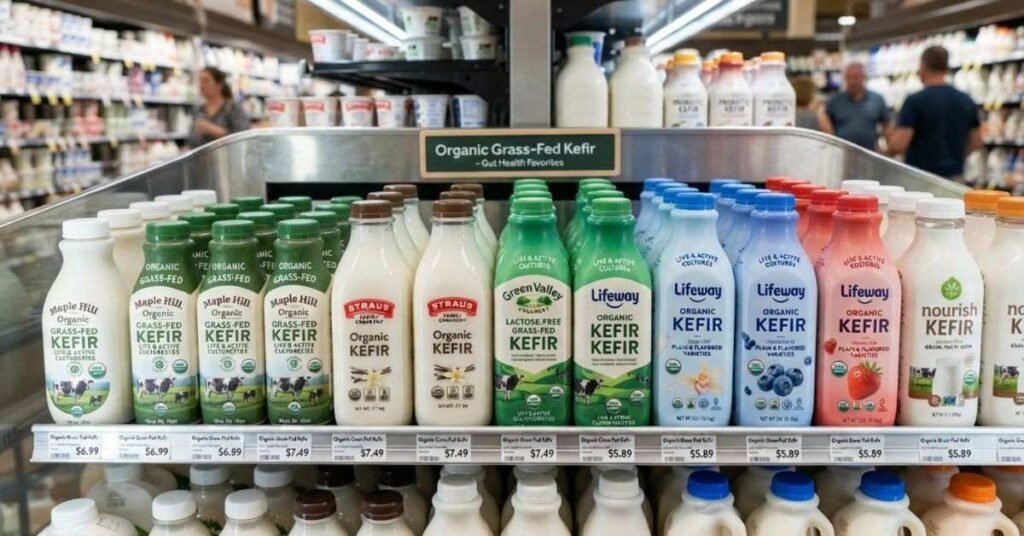
- Beware of “Fruit-on-the-Bottom”: These flavored varieties are often packed with added sugars and artificial syrups that feed bad gut bacteria, completely canceling out the probiotic advantages.
- Check for Pasteurized After-Fermentation: If a brand heat-treats the beverage after fermentation to extend shelf life, the heat kills all live active cultures. Look explicitly for labels stating “Live and Active Cultures.”
- Choose Grass-Fed Options: Whenever possible, select organic grass-fed milk kefir, which offers higher concentrations of anti-inflammatory Omega-3 fatty acids and Conjugated Linoleic Acid (CLA).
6. Semantic Keywords (LSI) & Related Terms
Fermented dairy, probiotic beverage, live active cultures, gut microbiome support, homemade kefir grains, lactose-free milk alternative, healthy gut bacteria, metabolic wellness drinks, digestible dairy options, artisanal fermentation.
7. Frequently Asked Questions
Can I drink kefir milk if I am strictly lactose intolerant?
Yes, most people with mild lactose sensitivities tolerate kefir exceptionally well. The active bacteria consume almost all the lactose during the fermentation process before you ever take a sip.
How does kefir milk compare to the deep insights in your metabolic guides?
While our comprehensive Kefir Benefits Audit focuses heavily on cellular insulin pathways and visceral fat reduction, this guide details the exact nutritional breakdown and home-brewing steps.
Should I choose store-bought or homemade kefir?
Homemade options provide significantly more live bacterial strains and zero added sugars. If you buy commercial brands, always check the ingredient list to ensure they contain pure cultures without hidden additives.
Conclusion: Take Control of Your Gut Health Today
Adding kefir milk to your daily nutrition plan is one of the easiest ways to cultivate a thriving gut microbiome, stabilize your metabolism, and support overall vitality. Whether you brew it fresh on your kitchen counter or select a clean-label store option, your body will thank you for the upgrade.
Take charge of your wellness journey today! Explore our related expert resources on Balanced Meal Planning and Glycemic Index Management to keep your nutrition completely on track.
Ready to Check Your Levels?
Use our Free Diabetic Calculators to track your A1C, Sugar Spikes, and Fasting Progress.
OPEN ALL CALCULATORS ➔Fast • Accurate • Free for Puredietly Readers
About Gohar Fatima
Gohar Fatima is the founder and lead health researcher at PureDietly. With a deep passion for evidence-based nutrition, dietary science, and wellness, Gohar translates complex nutritional data into practical, easy-to-understand guides for everyday readers. Dedicated to promoting healthier lifestyles, she meticulously researches topics ranging from glycemic indices and superfoods to balanced meal planning, ensuring all content meets high standards of accuracy and reliability.
Medical Disclaimer
The content provided on PureDietly is for informational and educational purposes only and is not intended as a substitute for professional medical advice, diagnosis, or treatment. Always seek the advice of your physician or other qualified health provider with any questions regarding a medical condition or dietary changes. Never disregard professional medical advice or delay in seeking it because of something you have read on this website.