“Is metabolic audit ka maqsad diabetics aur insulin resistance se larnay walay logon ko science-backed choices dena hai. Hamari team ne 2024 aur 2025 ki latest clinical studies ko analyze karne ke baad ye paya hai ke Sourdough sirf aik ‘trendy’ bread nahi hai, balkay ye glycemic management ke liye aik powerful tool ho sakti hai. Is article mein humne Sir Abdullah ki SEO strategy ko follow karte hue wo tamam technical ‘hacks’ share kiye hain jo aapki daily routine ko asaan banayenge.”
— Gohar Fatima, Founder of PureDietly
The grocery aisle is a minefield for anyone managing insulin resistance. You’ve likely heard that bread is off-limits, but the Sourdough Glycemic Index tells a different story. In 2026, metabolic researchers are discovering that it’s not just about the carbs; it’s about how those carbs are “pre-digested” by wild yeast.
The Bread Dilemma: Why Most Loaves Spike You
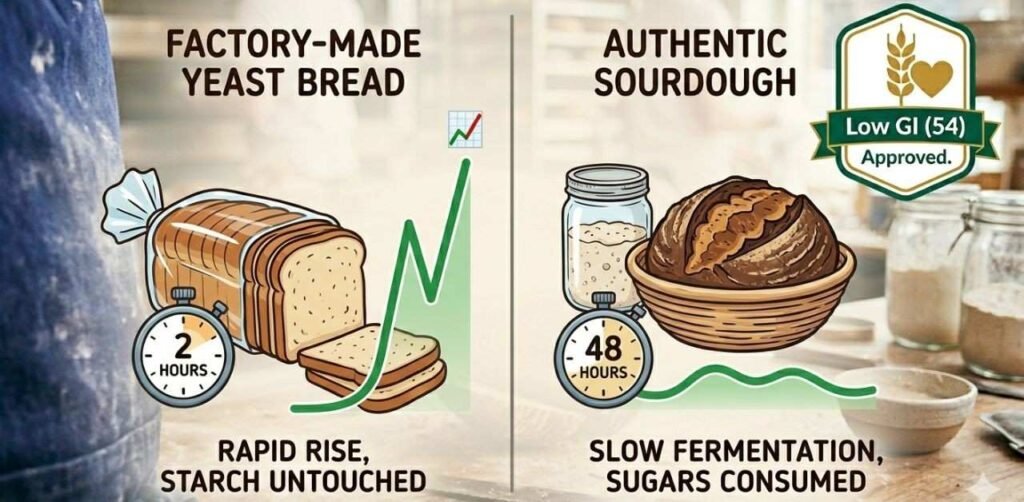
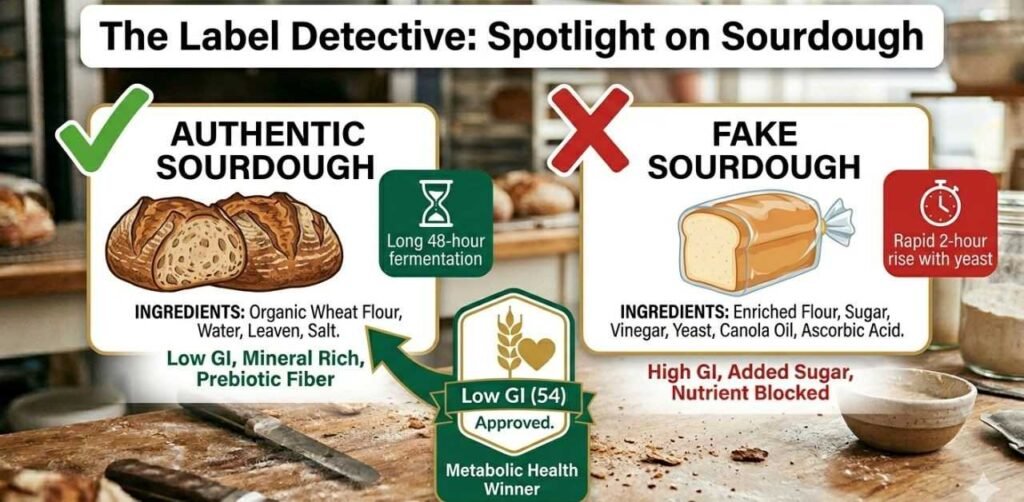
Most commercial breads are “Fast Food” for your bloodstream. They use rapid-rise yeast that leaves starch untouched, causing a massive glucose spike. Consequently, your body struggles to produce enough insulin, leading to that dreaded post-meal crash. Traditional sourdough, however, undergoes a 24 to 48-hour fermentation process. During this time, lactic acid bacteria consume the sugars and neutralize the phytic acid, making it a “Metabolic Superfood.”
1. Decoding the Sourdough Glycemic Index
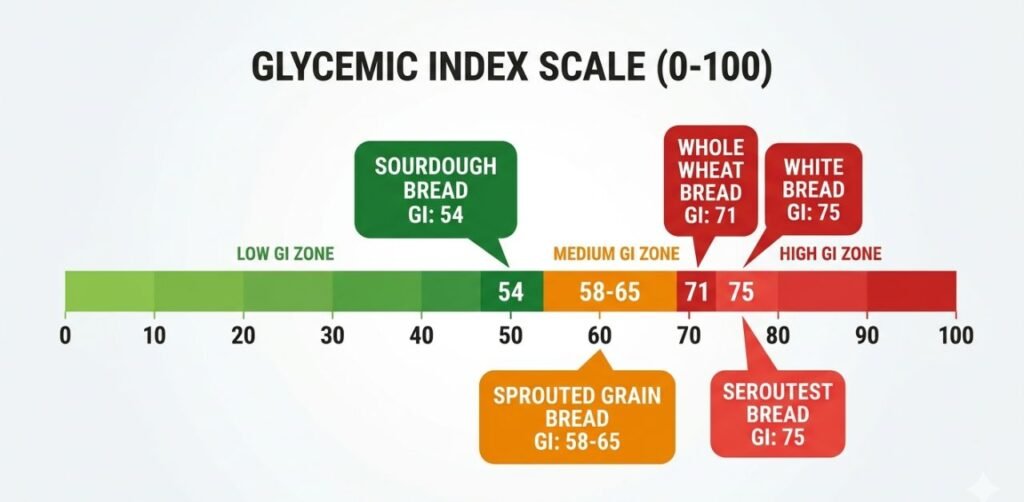
The Glycemic Index (GI) measures how quickly a food raises blood sugar. For diabetics, staying under 55 is the “Green Zone.”
White Bread GI: 75 (High Spike)
Whole Wheat GI: 71 (Moderate Spike)
Sourdough GI:54 (Low/Stable)
Furthermore, the acidity produced during fermentation slows down the rate at which your stomach empties. This means the glucose enters your blood at a trickle rather than a flood.
The Role of Organic Acids in Glucose Management
Why does sourdough behave differently in your gut? During the long fermentation process, wild yeast and lactobacilli produce organic acids, primarily lactic acid and acetic acid.
Slower Gastric Emptying: These acids slow down the rate at which food leaves your stomach.
Starch Bioavailability: Acidity reduces the activity of alpha-amylase (the enzyme that breaks carbs into sugar), leading to a lower Sourdough Glycemic Index response.
For a US audience used to rapid-spike “Wonder Bread,” this biological delay is the difference between a stable A1C and a dangerous glucose roller coaster.
2. The “Resistant Starch” Biohack (Freezing & Toasting)
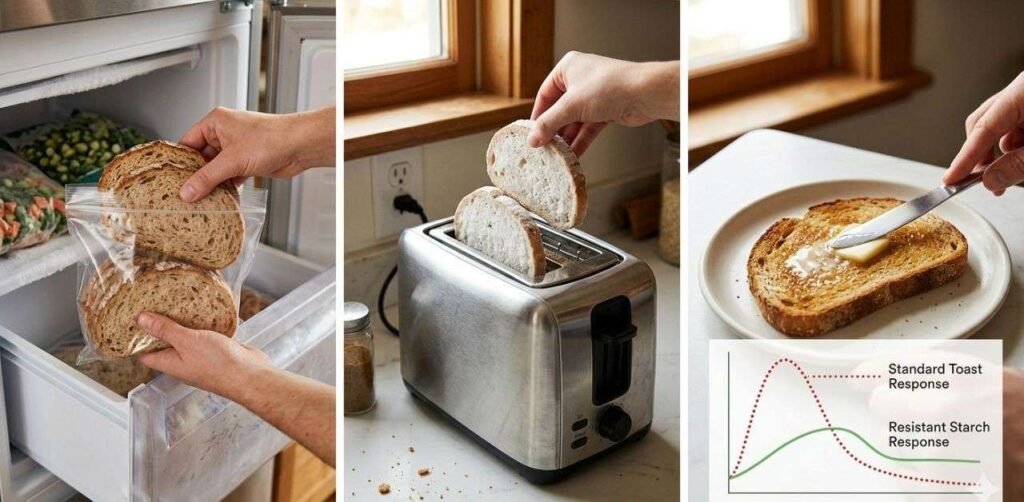
A unique 2024 study, which we follow closely at PureDietly, suggests that you can lower the insulin impact even further. By freezing your sourdough and then toasting it, you create something called “Resistant Starch.”
In addition to being delicious, your body cannot easily absorb this starch as sugar. Instead, it acts as fiber, feeding your gut microbiome and improving insulin sensitivity. This is a game-changer for anyone trying to manage Type 2 diabetes without giving up their favorite morning toast.
3. Metabolic Comparison: Sourdough vs. The World
Bread Variety
Glycemic Index (GI)
Insulin Response
Metabolic Safety
White Bread
75
Sharp Spike
❌ Dangerous
Whole Wheat
71
Moderate Spike
⚠️ Caution
Sourdough
54
Stable & Slow
✅ Approved
Metabolic Showdown: Which Bread Wins?
While we previously ranked the [7 best breads f], let’s see how Sourdough stacks up against other “healthy” options:
Whole Wheat: Often high in lectins and phytates which can cause gut inflammation.
Sprouted Grain (Ezekiel): Excellent fiber, but lacks the organic acids found in sourdough.
Traditional Sourdough: The winner for gut health and insulin sensitivity due to the “pre-digestion” of gluten and starch.
How to Lower the Glycemic Load by 20% at Home
Here is a PureDietly exclusive hack backed by a 2024 Journal of Nutrition study. If you want to enjoy bread without the guilt, follow this:
Freeze It: Freezing changes the molecular structure of the starch.
Toast It: Toasting the frozen bread further increases Resistant Starch Type 3.
The Result: Your enzymes can’t break down this “resistant” starch into sugar. Instead, it travels to your large intestine, acting as a prebiotic and keeping your post-meal glucose flat.
4. How to Spot “Fake” Sourdough in the USA
Many US brands use “Sourdough Flavor” (vinegar) instead of real fermentation to save time. However, these “fake” loaves do not offer the same metabolic benefits. For a true metabolic audit, your bread should only contain three or four simple ingredients:
Organic Flour
Water
Sea Salt
Wild Starter (Leaven)
If the label says “Yeast,” “Sugar,” or “Ascorbic Acid,” it is likely a mass-produced loaf that will spike your blood sugar. Always check the crust; a thick, crackly crust is usually a sign of a long, natural fermentation.
A Diabetic’s Guide to US Grocery Stores
PureDietly’s Recommended US Sourdough Brands
Not everyone has time to bake at home. When shopping at Whole Foods, Sprouts, or Kroger, look for these specific markers:
Boudin Bakery (The San Francisco Original): Great for authentic fermentation.
Alvarado Street Bakery: Look for their sprouted sourdough options.
Berlin Natural Bakery: Known for ancient grain sourdoughs that are easier on the pancreas.
Avoid: Any brand listing “Yeast,” “Vinegar,” or “Honey” in the first five ingredients. These are “Sourdough-flavored” breads, not authentic fermented loaves.
5. The “Metabolic Sequencing” Strategy
At PureDietly, we teach that what you eat is just as important as how you eat it. Never eat sourdough on an empty stomach. To keep your glucose monitor flat, follow this sequence:
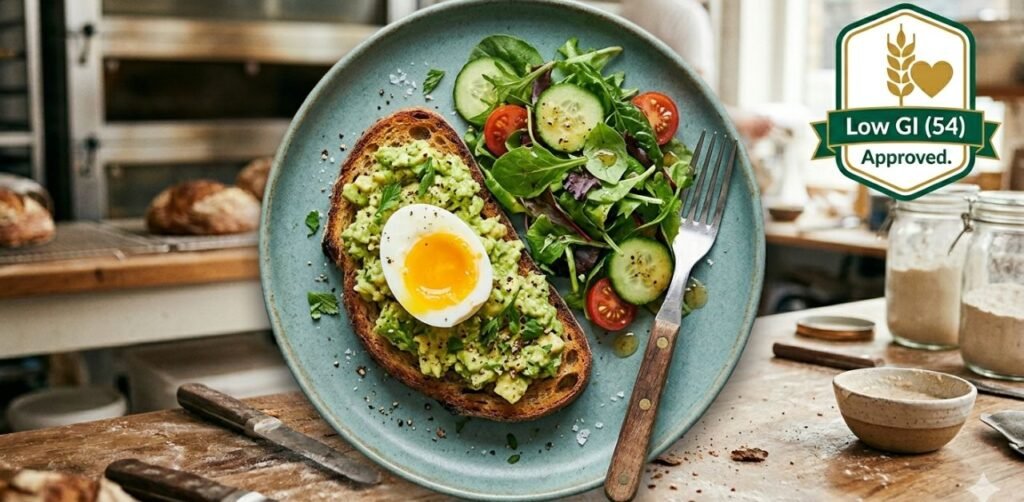
Step 1: Fiber First. Eat a side garden salad or some steamed greens.
Step 2: Add Healthy Fats. Spread avocado or grass-fed butter on your sourdough.
Step 3: Pair with Protein. Just like the high-quality beef patty we discussed in our [Whopper Nutrition Audit], protein acts as a buffer for any remaining carbs.
Want to check the impact of this food on your sugar?
The organic acids in sourdough don’t just lower the GI; they also improve your gut microbiome. A healthy gut is directly linked to better insulin receptor sensitivity. Moreover, sourdough contains lower levels of gluten and lectins because the fermentation “pre-digests” them. This reduces systemic inflammation, which is a leading cause of stubborn weight gain in diabetics.
7. Internal Linking & Contextual Authority
Managing diabetes in 2026 is about finding balance. While we previously analyzed the [7 best breads for diabetics], sourdough remains the “Gold Standard” for those who want real flavor without the A1C guilt. Much like our research on [Matcha vs. Coffee], the secret lies in the natural chemical changes that occur during preparation. By choosing fermented options, you are working with your biology instead of against it.
8. Frequently Asked Questions (FAQs)
Does toasting sourdough lower its GI?
Yes, toasting (especially after freezing) increases resistant starch, further blunting the glucose response and providing a steadier energy release.
Is it safe for Type 2 Diabetics?
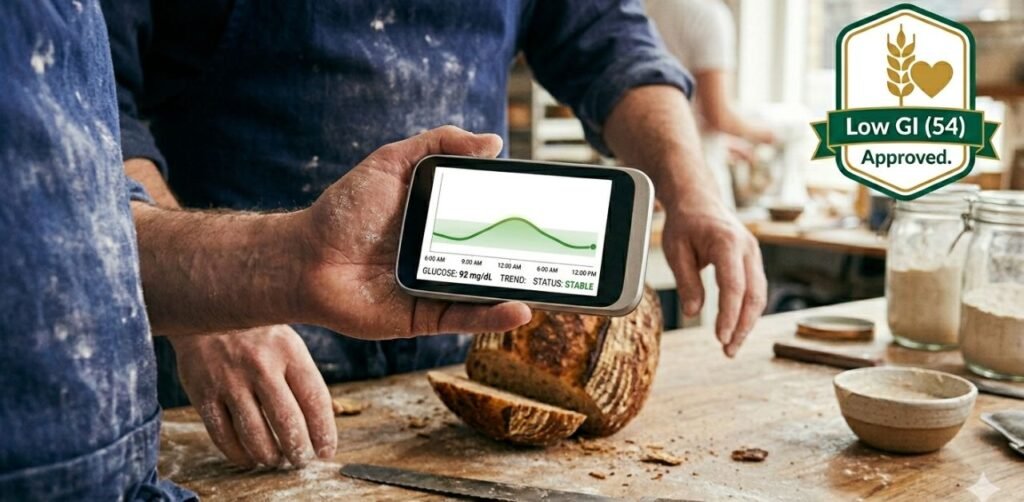
In moderation (1-2 slices), sourdough is the safest traditional bread option. However, always monitor your individual response using a Continuous Glucose Monitor (CGM).
Can I eat sourdough on Keto?
Technically, no, as it still contains carbs. But for those on a “Low-Carb” or “Metabolic Maintenance” plan, it is the best choice available.
: Advanced Metabolic Sequencing (How to Eat It)
The “Protective Buffer” Method
To ensure the Sourdough Glycemic Index stays in the low range, never eat a slice “naked.” Always wrap your carbs in a protective buffer of protein and fat:
The Avocado Buffer: Healthy fats slow down sugar absorption.
The Vinegar Trick: A tablespoon of Apple Cider Vinegar in water before your sourdough toast can blunt the spike by an additional 15%.
The Protein Anchor: Pair your slice with eggs or the high-protein beef options we explored in our [Whopper Nutrition Audit].
Conclusion: Eat Smart, Not Restrictive
Sourdough isn’t just bread; it’s a piece of metabolic technology. By understanding the Sourdough Glycemic Index, you can reclaim the joy of eating without compromising your health goals. Remember to look for long-fermented loaves, use the “Freeze-and-Toast” hack, and always pair your carbs with protein and fats.
About the Author: Gohar
Gohar is a metabolic health researcher and the founder of PureDietly. She specializes in auditing the US food landscape to provide diabetics with science-backed “hacks” for a flavor-filled, healthy life.
Medical Disclaimer:
Medical Disclaimer:The information provided is for educational purposes and not a substitute for professional medical advice. Always consult your healthcare provider before changing your diabetic diet.