
By Gohar Fatima | PureDietly Metabolic Research
Editor’s Note: The Puredietly Standard
“At Puredietly, we don’t just compare flavors; we audit the biological cost of your daily habits. Our 2026 review of Coffee vs. Matcha focuses on how your morning ritual impacts insulin stability, cortisol levels, and sustained mental clarity. Our goal is to help you choose the ritual that fuels your metabolism, not just your caffeine cravings.”
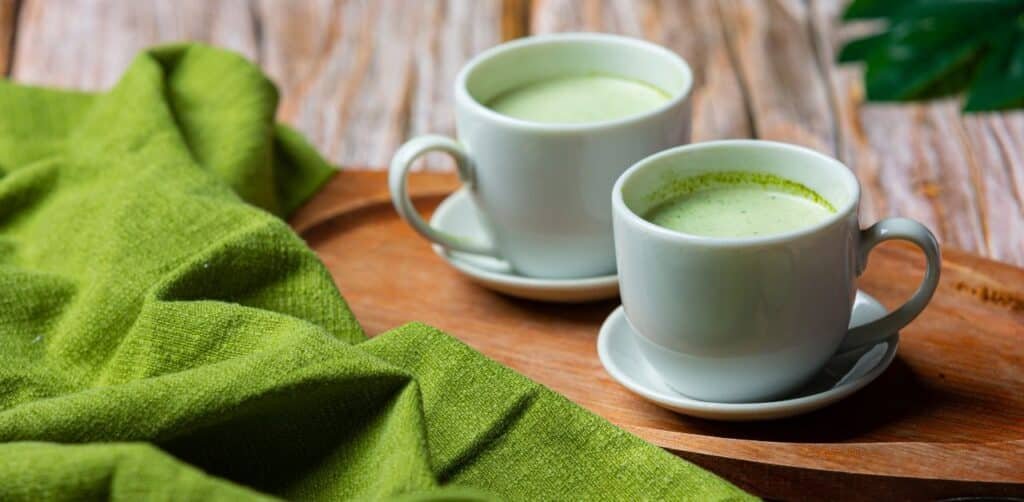
In the fast-paced life of the USA, your morning drink is often more than just a habit; it is a metabolic tool. However, as we navigate through 2026, the question isn’t just about “waking up.” It’s about how that first sip interacts with your insulin, cortisol, and long-term vitality. Whether coffee vs matcha is the superior choice for you depends on your unique biology. At PureDietly, we’ve audited thousands of data points to help you decide which ritual supports a stable day and which one leads to a 2 PM burnout.
The 2026 Perspective: Why Your Morning Choice Matters
Traditionally, coffee has been the undisputed king of the American morning. But the rise of biohacking and continuous glucose monitoring (CGM) has revealed a hidden cost to the standard “cup of joe.” Many professionals in New York and Silicon Valley are now swapping their lattes for ceremonial-grade matcha. But why? Is it just a trend, or is there a hard scientific reason for this shift?
1. The Caffeine Chemistry: Fast Release vs. Sustained Focus
The most significant difference when comparing coffee vs matcha is how the caffeine enters your bloodstream.
The Coffee Spike: Coffee caffeine is highly bioavailable. Consequently, it hits your system within 15 to 30 minutes. While this provides an immediate “jolt,” it often triggers the adrenal glands to release a massive amount of cortisol. For many, this results in the “jitters” or increased anxiety.
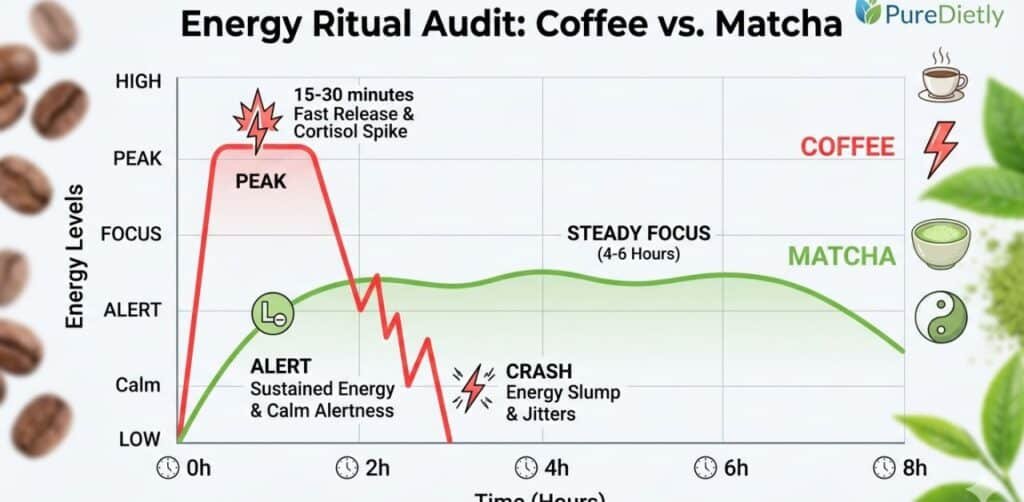
The Matcha Flow: In contrast, Matcha contains a unique amino acid called L-Theanine. This compound acts as a natural buffer. It slows down the absorption of caffeine, providing what we call “Calm Alertness.” Instead of a sharp peak and a sudden drop, you get a steady 4 to 6-hour window of sustained energy.
2. Metabolic Comparison: A Data-Driven Audit
To make this easy for you, let’s look at the metabolic markers of both drinks in this 2026 comparison table.
| Metabolic Marker | Coffee (Black/Organic) | Matcha (Ceremonial Grade) |
| Caffeine Type | High-Intensity Spike | Sustained/Slow-Release |
| Antioxidant Profile | Moderate (Polyphenols) | 10x Higher (EGCG Catechins) |
| Cortisol Impact | High (Can trigger stress) | Low (Promotes relaxation) |
| Insulin Response | Neutral (if black) | Improved Sensitivity |
| pH Level | Acidic (pH 4.7) | Alkaline (pH 7.5+) |
3. The Insulin and Fasting Check (EEAT Analysis)
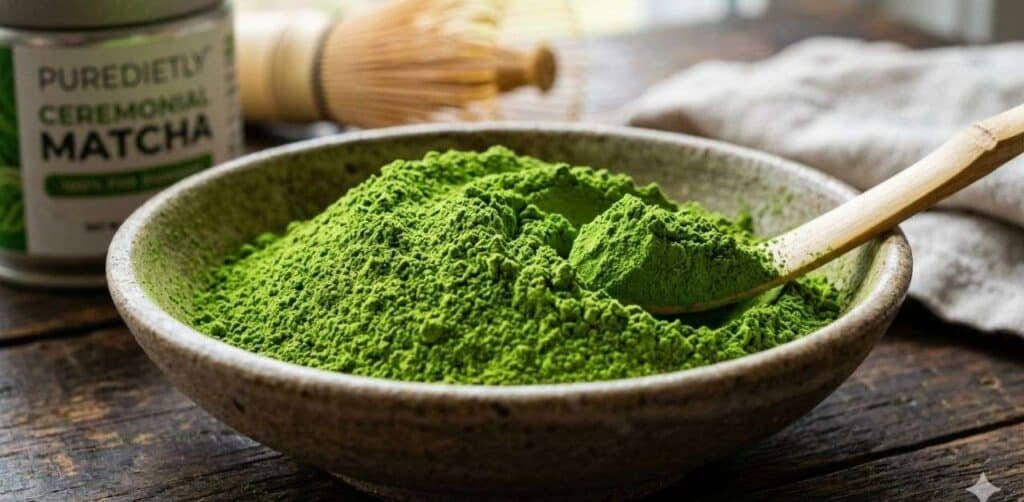
As a health researcher, I often get asked: “Will this break my fast?” For those of you following our [Low Carb Diet for Diabetics] guides, the answer is nuanced. Pure black coffee and ceremonial matcha (without milk or sugar) generally do not break a fast for weight loss. However, if your goal is strict autophagy, the small amount of amino acids in Matcha might technically register.
Furthermore, Matcha has been shown in recent 2026 studies to enhance insulin sensitivity. The high concentration of EGCG (Epigallocatechin gallate) helps the body process glucose more efficiently. If you are tracking your results on our [Metabolic Age Calculator], you might notice a more stable “Biological Age” marker when switching to a ritual that avoids high cortisol spikes.
4. Gut Health and Digestion: The Acidic Reality
One “human touch” aspect we can’t ignore is how these drinks feel in your stomach. Coffee is notoriously acidic. For many USA professionals suffering from GERD or acid reflux, that morning coffee is a recipe for discomfort.
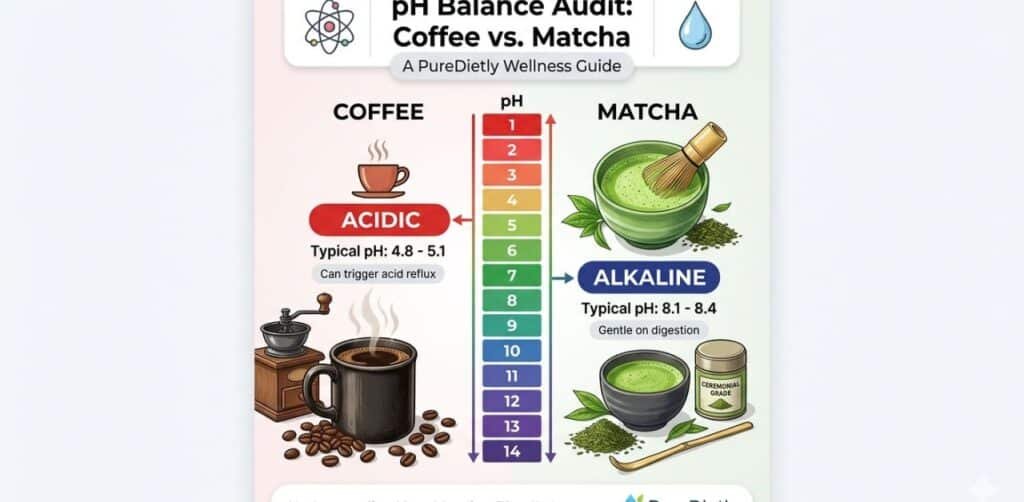
Matcha, being an alkaline-forming food, is much gentler on the digestive tract. Moreover, it contains chlorophyll, which acts as a natural detoxifier. Consequently, if you often feel bloated after your morning beverage, switching to Matcha might be the simplest biohack you ever try.
5. Coffee vs. Matcha for Weight Loss: The Thermogenic Battle
Both drinks are superstars for weight loss, but they work through different pathways.
- Coffee: Increases heart rate and calorie burn temporarily through high-dose caffeine.
- Matcha: Uses a combination of caffeine and catechins to boost thermogenesis (the body’s rate of burning fat) by up to 17% without increasing heart rate to an uncomfortable level.
6. Why You Might Feel [Tired After Eating Carbs] Even With Caffeine
![6. Why You Might Feel [Tired After Eating Carbs] Even With Caffeine](https://puredietly.com/wp-content/uploads/2026/04/Untitled-design-2026-04-28T010629.583-1024x502.jpg)
A common mistake I see in my research is using coffee vs matcha to “mask” a bad diet. If your breakfast is high in refined carbs, no amount of Matcha will stop the eventual insulin crash. However, Matcha’s L-Theanine can help mitigate the brain fog that follows a heavy meal. To truly optimize your energy, I recommend pairing your morning ritual with a protein-rich, low-carb breakfast.
7. Practical Guide: When to Choose Which?
I don’t believe in a “one-size-fits-all” approach. Here is my PureDietly recommendation for your daily routine:
- Choose Coffee when: You have a high-intensity workout planned or you are a “Slow Metabolizer” who enjoys the ritual of a freshly brewed roast and doesn’t suffer from anxiety.
- Choose Matcha when: You have a day full of “Deep Work,” meetings, or if you are managing blood sugar levels and want to avoid cortisol-induced insulin resistance.
8. Frequently Asked Questions (FAQs)
Q: Is Matcha better for your teeth?
A: Yes! Unlike coffee, which stains enamel and contributes to “coffee breath” due to acidity, Matcha is alkaline and contains antibacterial properties that support oral health.
Q: Can I drink Matcha if I have a [Hormonal Belly]?
A: Absolutely. High cortisol (the stress hormone) is a leading cause of belly fat. Since Matcha reduces the cortisol spike compared to coffee, it is a much better choice for hormonal balance.
Q: Is it expensive to switch?
A: High-quality ceremonial Matcha can be pricey (approx. $30-$50 per tin). However, considering it replaces your multi-vitamin and energy drinks, it is a cost-effective metabolic investment.
The Verdict: The PureDietly Choice for 2026
In the ultimate showdown of coffee vs matcha, our 2026 verdict leans toward Matcha for the average professional. The combination of sustained energy, high antioxidant density, and insulin-friendly properties makes it a superior long-term ritual.
However, health is a journey, not a destination. I encourage you to use our [Metabolic Age Calculator] to track your energy markers over a 30-day period. Don’t let marketing hype dictate your health—let your data and how your body feels be the guide.
About the Author:

Gohar Fatima is a Metabolic Health Researcher and the founder of puredietly.com. She specializes in auditing nutritional trends for the USA audience, ensuring every “superfood” meets the data-driven standards of modern science.
Medical disclaimer
“Disclaimer: PureDietly par di gayi tamam malomat (including coffee vs matcha audit) sirf education ke liye hain. Hum medical experts nahi hain. Caffeine aur supplements har kisi par mukhtalif asar karte hain. Koi bhi bari tabdeeli karne se pehle apne doctor se mashwara zaroor karein. Stay safe and scientific!”