
By Gohar Fatima | Published on August 22, 2026

Editor Note
At PureDietly, we love exploring creative culinary trends that bring restaurant-quality flavors into your kitchen without derailing your metabolic health. If you love sushi night but want a fun, shareable, and blood-sugar-conscious twist, the viral sushi cake trend is about to become your new favorite recipe. Let’s dive into how you can enjoy this showstopping dish while keeping your glucose levels stable.
Imagine walking into a weekend dinner party or family gathering, expecting the usual sliced rolls or a traditional baked casserole. Instead, the host places a stunning, multi-layered masterpiece right in the center of the table vibrant pink salmon, creamy avocado slices, bright green cucumber ribbons, toasted sesame seeds, and delicate sheets of nori.
It looks like an elegant, frosted celebration cake at first glance. However, as you take a closer look, you realize it is entirely built out of your favorite fresh sushi ingredients.
Welcome to the world of Sushi Cakes (sometimes called sushi lasagna or stack cakes). In this comprehensive guide, we are exploring what a sushi cake is, why it is taking over social media and modern American kitchens, and how you can craft a healthy, low-glycemic version that satisfies your cravings while protecting your metabolic health.
To explore more ways of keeping your nutrition balanced during social gatherings, you can also check out our guide on healthy meal planning for busy lifestyles.
1. What Exactly Is a Sushi Cake?
At its core, a sushi cake is a deconstructed sushi roll packed and layered into a cake pan, springform pan, or serving dish, then sliced and served just like a traditional dessert or casserole.
Instead of rolling individual pieces with a bamboo mat, you layer ingredients sequentially:
- The Base: Typically seasoned sushi rice, cauliflower rice, or a tightly pressed blend of whole grains.
- The Protein Core: Fresh, sushi-grade raw salmon or tuna, cooked and flaked crab meat (surimi or imitation crab, or real lump crab), or spicy shrimp.
- The Creamy Layer: Sliced or mashed ripe avocados, cream cheese, or a light Japanese mayo-sriracha drizzle.
- The Garnish & Wrap: Crumbled nori sheets (seaweed), black and white sesame seeds, fresh cucumber slices, microgreens, and a drizzle of low-sodium tamari or coconut aminos.
It delivers all the complex umami flavors of a high-end restaurant sushi platter with a fraction of the rolling effort making it the ultimate party showstopper.
2. The Metabolic Reality: Traditional Sushi vs. A Healthier Sushi Cake
While sushi is often perceived as inherently “clean” and healthy, traditional restaurant rolls can sometimes catch you off guard metabolically:
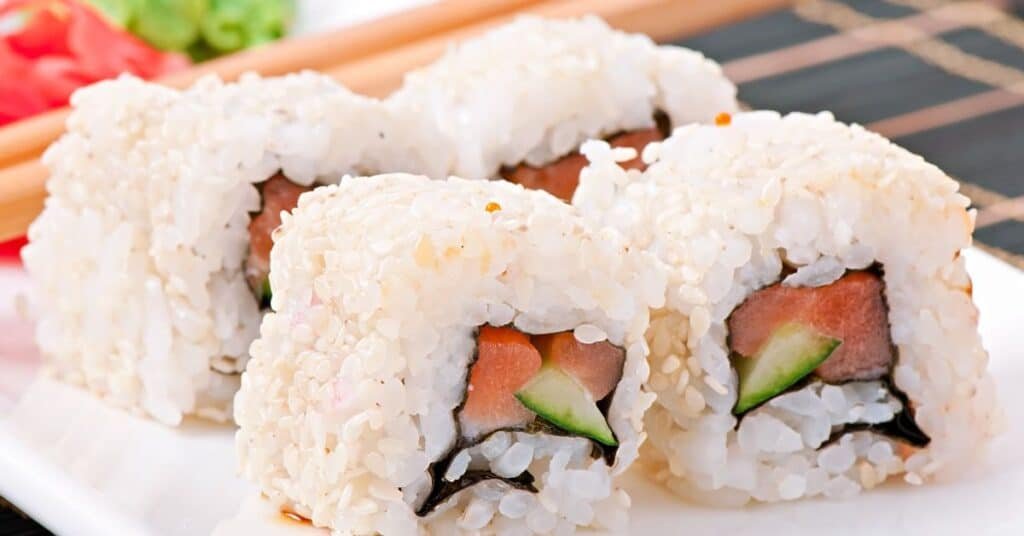
- Hidden Sugars in Sushi Rice: Authentic sushi rice is seasoned with a mixture of rice vinegar, salt, and significant amounts of cane sugar to give it that sticky, sweet texture.
- Carbohydrate Density: A standard restaurant sushi roll relies heavily on refined white rice, which can cause a rapid post-meal glucose spike if consumed in large quantities. To understand how refined grains compare to wholesome alternatives in your everyday meals, read our detailed guide on [Can Diabetics Eat Rice? The Shocking Truth About White vs Brown Rice!].
- Tempura and Sauces: Deep-fried tempura crunches and heavy, sugar-laden eel sauces or spicy mayo drizzles add hidden fats and refined sugars.
The Sushi Cake Advantage
When you make a sushi cake at home, you take complete control of every single layer. You can easily adapt it into a low-glycemic, high-protein masterpiece by:
- Swapping standard white sushi rice for brown rice, wild rice, or seasoned cauliflower rice.
- Utilizing healthy fats like fresh avocado instead of processed heavy spreads.
- Boosting clean lean protein with fresh salmon, tuna, or shrimp.
For a deeper dive into controlling post-meal glucose responses and carbohydrate management, review our clinical resource on [Glycemic Index Management].
3. Nutritional Comparison: Traditional Sushi vs. Homemade Sushi Cake
To understand how smart ingredient swaps impact your metabolic health, examine the nutritional breakdown below:
| Feature / Ingredient | Traditional Restaurant Sushi Roll | Homemade Metabolic-Friendly Sushi Cake |
| Primary Grain | Refined white sushi rice with added cane sugar | Brown rice, wild rice, or seasoned cauliflower rice |
| Fats & Spreads | High-fat spicy mayo, cream cheese blends | Fresh avocado, heart-healthy monounsaturated fats |
| Glycemic Impact | Moderate to high; rapid glucose absorption | Low to moderate; balanced by fiber and protein |
| Portion Flexibility | Fixed rolls; easy to overeat hidden carbs | Controlled slicing; highly customizable macro balance |
4. How to Build Your Own Low-Glycemic Sushi Cake at Home
Creating a stunning sushi cake doesn’t require professional culinary school training. Follow this simple layering blueprint for your next gathering:
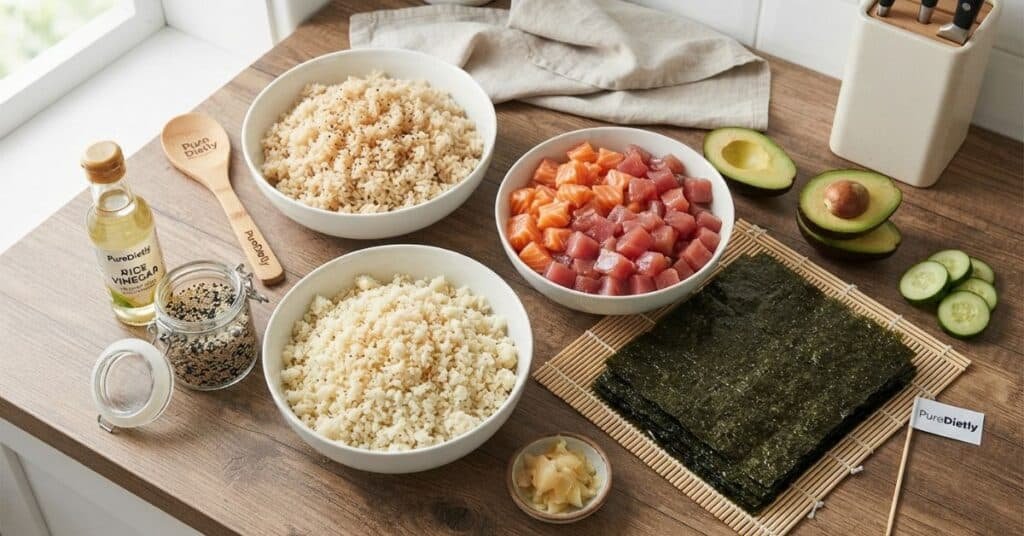
- Step 1: Prep Your Base Cook your chosen base grain (such as brown rice or a cauliflower-rice blend seasoned lightly with rice vinegar and a touch of monk fruit or allulose instead of sugar). If you want to explore grain options further, check out our breakdown on [Can Diabetics Eat Rice? The Shocking Truth About White vs Brown Rice!]. Press a firm, even layer into the bottom of a parchment-lined springform pan or glass dish.
- Step 2: Lay Down the Nori & Protein Cover the base layer with finely cut sheets of toasted nori (seaweed), which adds that authentic ocean umami flavor and valuable micronutrients. Add your first protein layer—such as diced raw sushi-grade salmon or cooked shrimp tossed in light sriracha.
- Step 3: Add the Creamy Avocados Layer thinly sliced or mashed avocado across the protein. Avocado provides rich, heart-healthy monounsaturated fats that slow down digestion and stabilize your blood sugar response.
- Step 4: Frost and Decorate Add a final top layer of rice or keep it protein-and-avocado heavy. Garnish the top creatively with cucumber ribbons, black sesame seeds, and a drizzle of low-sodium soy sauce or tamari right before slicing.
To complement your home-cooked meals with supportive beverage choices and digestive support, consider pairing your meal with a soothing cup of tea, and learn more via our [Ginger Tea Benefits Guide]. Furthermore, to keep your overall weekly eating plan stable, refer back to our tips on [Glycemic Index Management].
5. Frequently Asked Questions (FAQs)
- Q1: What is a sushi cake made of?
- Answer: A sushi cake is made by layering ingredients like seasoned rice, nori seaweed, fresh seafood (salmon, tuna, or crab), avocado, cucumber, and Japanese seasonings into a mold, then slicing it like a cake.
- Q2: Can I make a low-carb sushi cake?
- Answer: Yes! You can make a low-carb version by substituting traditional sushi rice with cauliflower rice and keeping the focus heavily on proteins, healthy fats like avocado, and sea vegetables.
- Q3: Is raw fish required for a sushi cake?
- Answer: Not at all. While sushi-grade raw salmon or tuna is popular, you can make equally delicious cooked sushi cakes using baked salmon, boiled shrimp, or imitation crab.
- Q4: How does a sushi cake help with blood sugar control?
- Answer: By replacing refined white rice with high-fiber grains or cauliflower rice as detailed in our analysis on [Can Diabetics Eat Rice?]—and packing the layers with healthy fats and lean proteins, you significantly lower the glycemic load of the meal.
Add Seaweed Salad to your daily carb limit in 30 seconds!
Conclusion: Elevating Your Healthy Dining Experience
Whether you are hosting a weekend dinner party or looking for a creative, interactive meal prep idea, the sushi cake trend offers the perfect blend of visual elegance and savory flavor.
By customizing your ingredients with a metabolic-conscious mindset—focusing on healthy fats, clean proteins, and smart grain swaps—you can enjoy all the joys of sushi night without compromising your wellness goals!
About the Author
Gohar Fatima is the founder and lead health researcher at PureDietly, dedicated to translating complex metabolic science, glycemic research, and dietary data into practical, everyday dietary guidance for individuals seeking sustainable wellness.
Medical Disclaimer
The content provided on PureDietly is for informational and educational purposes only and is not intended as a substitute for professional medical advice, diagnosis, or treatment. Always seek the advice of your physician or other qualified health provider with any questions regarding a medical condition or dietary changes.