

By Gohar Fatima | Published on August 28, 2026
Editor’s Note At PureDietly, we believe true metabolic wellness means looking past rigid food fears. If you are avoiding crisp, juicy apples because you worry they will spike your A1C, you might be missing out on one of nature’s best metabolic allies.
Introduction: The Everyday Apple Panic
Let’s face it: walking through the grocery aisle with diabetes or insulin resistance turns a simple snack choice into an exhausting mental negotiation. When you hear the word “sugar,” your mind instantly flashes to spiked glucose monitors, mid-afternoon energy crashes, and frustrating doctor visits. At this exact moment, you might find yourself staring at a bright red Gala or Granny Smith apple, wondering if taking a single bite will instantly wreck your metabolic progress.
You want something refreshing, crisp, and nutrient-dense to satisfy your sweet tooth without ruining your day. However, diet culture often warns against fruit carbs, leaving you confused about what is actually safe. Fortunately, you do not have to guess or give up fruit completely. By understanding the true apple glycemic index, you can enjoy your favorite snacks while keeping your blood sugar entirely stable.
1. What Is the Apple Glycemic Index and Why It Matters
To understand how fruit impacts your body, we must look at how quickly carbohydrates convert into glucose. The Glycemic Index (GI) measures this speed on a scale from 0 to 100, comparing foods against pure glucose.

Fortunately, standard fresh apples sit comfortably in the low-GI category, typically scoring between 35 and 39 depending on the exact variety. Because your body digests these structured carbs slowly, you avoid the violent spikes caused by processed snacks. You can explore more about slow-release sugars by visiting our [The Glucose Revolution: 5 Proven Hacks to Stop Energy Crashes & Balance Your Blood Sugar] guide.
2. The Science of Fiber: Why Whole Apples Protect Your Metabolism
Have you ever wondered why eating a raw apple feels completely different than drinking a processed fruit beverage? The secret lies entirely inside its natural cellular matrix.
- Pectin Power: Apples are rich in soluble fiber called pectin, which slows down stomach emptying and delays sugar absorption into your bloodstream.
- Glycemic Load (GL): While the GI looks at speed, the Glycemic Load factors in portion size. An average apple has a very low GL of around 6, meaning it contains very little total carbohydrate impact per serving.
- Insulin Response: Because the fiber buffer prevents a sudden rush of fructose, your pancreas does not have to release massive waves of emergency insulin.
Therefore, recognizing how fiber protects your system helps you stay in complete control of your daily metabolic health.
3. Nutritional Comparison: Popular Apple Varieties & Their Impact
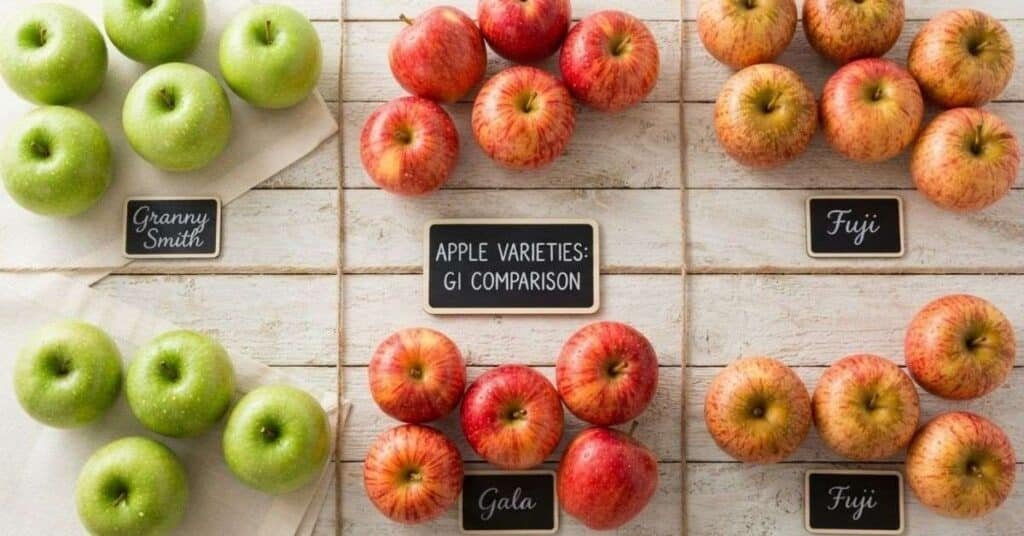
To help you visualize how different types of apples affect your glycemic response, review the detailed breakdown below:
| Apple Variety | Typical GI Score | Glycemic Load (GL) | Fiber Content | Metabolic Impact |
| Granny Smith | ~38 (Low) | ~5 (Low) | High (~4.4g) | Exceptional for steady blood sugar |
| Fuji | ~39 (Low) | ~6 (Low) | Moderate (~4.0g) | Great balanced snack option |
| Gala | ~38 (Low) | ~6 (Low) | Moderate (~3.5g) | Sweet taste with safe low-GI profile |
| Red Delicious | ~40 (Low) | ~6 (Low) | Moderate (~3.6g) | Slower digestion, minimal crash risk |
As illustrated in this table, choosing crisp tart varieties delivers reliable stability for your long-term wellness goals.
4. Essential Factors for Pairing Your Fruit Wisely
Creating a stable snack routine requires smart combinations, especially if your body is sensitive to carbohydrates. Here is everything you need to evaluate before eating an apple:
- The Protein Buffer: Never consume fruit naked on an empty stomach; instead, pair it with healthy fats or proteins. Explore our [Healthy Fats Guide] for optimal pairing ideas.
- Skin-On Consumption: Always eat the peel, because discarding the skin strips away half of the valuable fiber and antioxidants.
- Portion Control: Stick to one medium-sized fruit per sitting to keep your total carbohydrate intake well within safe metabolic limits.
5. Step-by-Step Strategy: How to Eat Fruit Like a Pro
Achieving healthy snacking without causing blood sugar volatility is all about smart timing and smart formulation. Follow these simple steps for a foolproof routine:

- Step 1 – Choose Tart Varieties: Pick green or tart apples like Granny Smith, which feature lower sugar profiles and higher acidity to slow digestion.
- Step 2 – Leave the Skin On: Wash the exterior thoroughly and consume the peel to maximize your daily soluble fiber intake.
- Step 3 – Add Healthy Fats: Pair your fruit slices with a tablespoon of natural almond butter, raw walnuts, or a side of string cheese.
- Step 4 – Time It Right: Eat your snack after a protein-rich lunch or before a light walk to let your muscles utilize the incoming glucose naturally.
6. Overcoming Common Clean-Eating Challenges
Even the most enthusiastic wellness seekers encounter hurdles when trying to maintain stable energy during a chaotic work week. Here is how you can troubleshoot common challenges:
- Challenge 1: Fearing All Fruit Because of Natural Sugar
- Solution: Understand that whole fruit comes packaged with water and fiber, making it entirely different from refined table sugar or high-fructose corn syrup.
- Challenge 2: Experiencing Spikes After Apple Juice
- Solution: Immediately switch from strained juices to whole, crisp fruits to restore your digestive fiber buffer. For more details, check out our [Pure Juice Cleanse: Are Bottled Cold-Pressed Juices Secretly Wrecking Your Blood Sugar?] analysis.
- Challenge 3: Finding Quick, Portable Diabetic Snacks
- Solution: Slice an apple ahead of time and pack it with a small handful of raw nuts for an effortless, blood-sugar-safe snack on the go.
Add Seaweed Salad to your daily carb limit in 30 seconds!
7. Frequently Asked Questions (FAQs)
- Q1: Do apples raise blood sugar levels for diabetics?
- Answer: Because apples have a low glycemic index and high fiber content, they typically cause a slow, gradual rise in blood sugar rather than a sharp, dangerous spike.
- Q2: Which apple variety has the lowest sugar impact?
- Answer: Tart green apples like Granny Smith generally contain slightly less sugar and more firm fiber, making them a favorite choice for metabolic management.
- Q3: Is it better to eat apples with the skin on or peeled?
- Answer: You should always eat the skin, as a massive portion of the fruit’s blood-sugar-stabilizing fiber and antioxidants are concentrated right in the peel.
- Q4: Can apples fit into a strict low-carb or keto lifestyle?
- Answer: While strict keto diets limit fruit, an occasional small apple can often fit into flexible low-carb meal plans when paired with adequate healthy fats.
Conclusion: Take Control of Your Daily Nutrition
Mastering your snack choices empowers you to take complete control of your metabolic health without unnecessary food fear. By selecting the right apple glycemic index options and pairing them with wholesome fats, you can enjoy vibrant, steady energy all afternoon long! Additionally, you can check out our [Better Than Takeout: The Ultimate Healthy Chicken and Soy Sauce Stir-Fry Recipe] for a delicious dinner option that complements your clean-eating goals.
About the Author
Gohar Fatima is the founder and lead metabolic health researcher at PureDietly, dedicated to translating complex nutritional science into practical, easy-to-follow guidance for everyday wellness.
Medical Disclaimer
The content provided on PureDietly is for informational purposes only and is not a substitute for professional medical advice, diagnosis, or treatment. Always consult your physician regarding any health conditions or dietary modifications.