
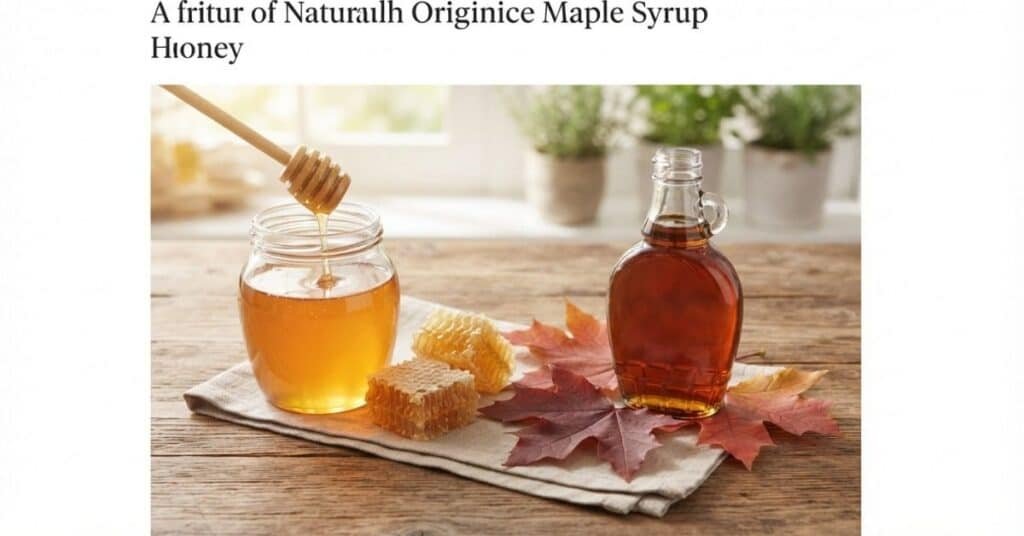
By Gohar Fatima | Published on August 29, 2026
Editor’s Note
At PureDietly, we know completely banning sweetness from your daily routine feels exhausting. When you live with insulin resistance or diabetes, choosing between natural sweeteners like honey and maple syrup feels like walking through a minefield. Let’s look at the actual metabolic science.
Introduction: The Natural Sweetener Trap
Switching away from refined white sugar feels like a massive win for your metabolic health. You swap out processed white packets for natural alternatives, assuming your body will process them smoothly without a hitch. However, when you watch your continuous glucose monitor closely, standing in your pantry holding a jar of raw honey or pure maple syrup triggers instant anxiety.

You want to drizzle something delicious over your morning pancakes or stir a hint of sweetness into your afternoon herbal tea without watching your glucose spike dangerously. Diet culture constantly labels all natural sugars as “healthy,” leaving you completely confused about what is safe for your A1C. Fortunately, you do not have to guess anymore. By exploring the true Honey vs. Maple Syrup Glycemic Index, you can make a smart, science-backed choice that satisfies your sweet tooth while keeping your blood sugar entirely stable.
1. Understanding the Glycemic Index of Liquid Sweeteners
To evaluate how these popular liquid sweeteners impact your system, we must examine how rapidly your body breaks down their specific carbohydrates. The Glycemic Index (GI) measures carbohydrate absorption speed on a scale from 0 to 100 compared against pure glucose.
- Honey’s GI Score: Raw and commercial honey typically averages around 58. This places it securely in the medium-GI category due to its balanced blend of natural fructose and glucose.
- Maple Syrup’s GI Score: Pure grade-A maple syrup sits slightly lower, averaging around 54. This makes it a marginally slower-absorbing choice for sensitive metabolic systems.
- The Fructose Factor: Both sweeteners contain high levels of fructose. Fructose processes differently than glucose, but it still requires strict portion control to avoid liver strain.
You can explore more about how liquid sugars behave in your body by visiting our [Pure Juice Cleanse: Are Bottled Cold-Pressed Juices Secretly Wrecking Your Blood Sugar?] guide.
2. Chemical Breakdown: What’s Inside Your Sweetener?
Have you ever wondered why two sticky liquids sourced from completely different parts of nature affect your energy levels in distinct ways? The answer lies entirely inside their unique biochemical matrix.

- Honey Composition: Bees craft honey from flower nectar. This results in roughly 40% fructose, 30% glucose, water, and trace amounts of beneficial amino acids, enzymes, and antioxidants.
- Maple Syrup Composition: Maple syrup is boiled down directly from the sap of sugar maple trees. It consists primarily of sucrose alongside over 24 different polyphenols, manganese, and zinc.
- Trace Nutrients: Both options contain minor antioxidants. However, neither provides enough vitamins to justify heavy daily usage, remaining concentrated sources of dietary carbohydrates.
Looking past clever marketing hype helps you recognize that these natural sweeteners are still potent sources of active energy.
3. Side-by-Side Comparison: Honey vs. Maple Syrup
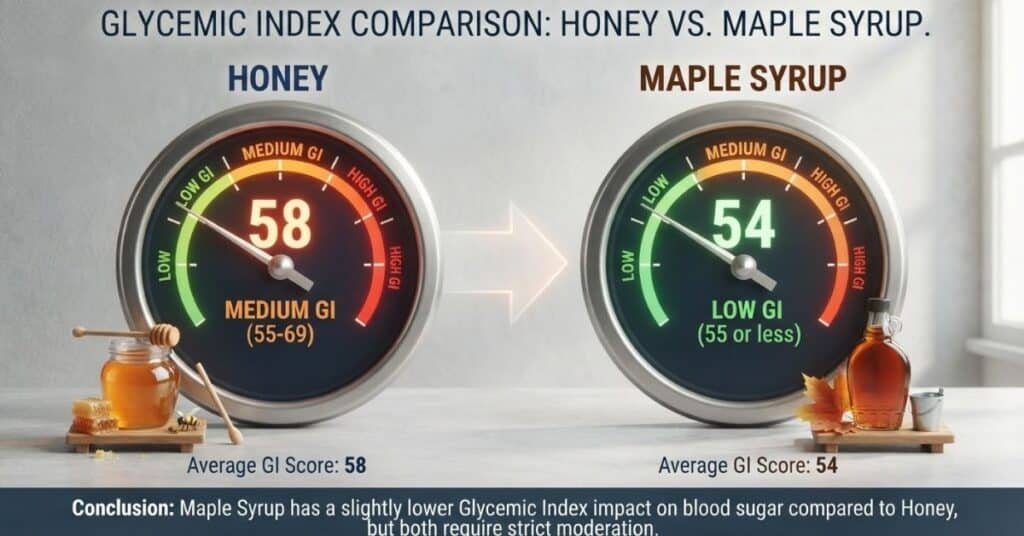
To help you visualize how these two popular sweeteners stack up against each other, review the detailed breakdown below:
| Feature / Metric | Pure Raw Honey | Pure Maple Syrup | Metabolic Winner |
|---|---|---|---|
| Glycemic Index (GI) | ~58 (Medium) | ~54 (Medium-Low) | Maple Syrup (Slightly lower score) |
| Primary Sugar Type | Free Fructose & Glucose | Sucrose (Glucose + Fructose) | Tie (Similar overall sugar load) |
| Calorie Count (per tbsp) | ~64 calories | ~52 calories | Maple Syrup (Fewer calories) |
| Antioxidant Profile | High (flavonoids and phenolic acids) | High (polyphenols like quebecol) | Tie (Both offer unique compounds) |
| Best Culinary Use | Tea, dressings, raw pairing | Baking, oatmeal, warm dishes | Dependent on recipe |
As illustrated in this table, maple syrup holds a minor advantage in overall glycemic score and calorie count, though both require strict daily moderation.
4. Essential Factors for Using Sweeteners Wisely
Incorporating liquid sweeteners into a blood-sugar-conscious routine requires careful strategy rather than total restriction. Here is everything you need to evaluate before pouring:
- The Protein and Fat Buffer: Never consume sweeteners on an empty stomach. Always pair them with healthy fats or proteins to blunt the glucose spike. Explore our [Healthy Fats Guide] for optimal pairing ideas.
- Strict Portion Control: Limit your serving size to a single teaspoon rather than a generous tablespoon to keep your total glycemic load minimal.
- Quality Matters: Always choose 100% pure grade-A maple syrup and raw, unfiltered honey, avoiding commercial blends cut with cheap high-fructose corn syrup.
5. Step-by-Step Strategy: How to Sweeten Smartly
Achieving stable metabolic energy while enjoying occasional sweetness is all about smart timing and formulation. Follow these simple steps for a foolproof routine:
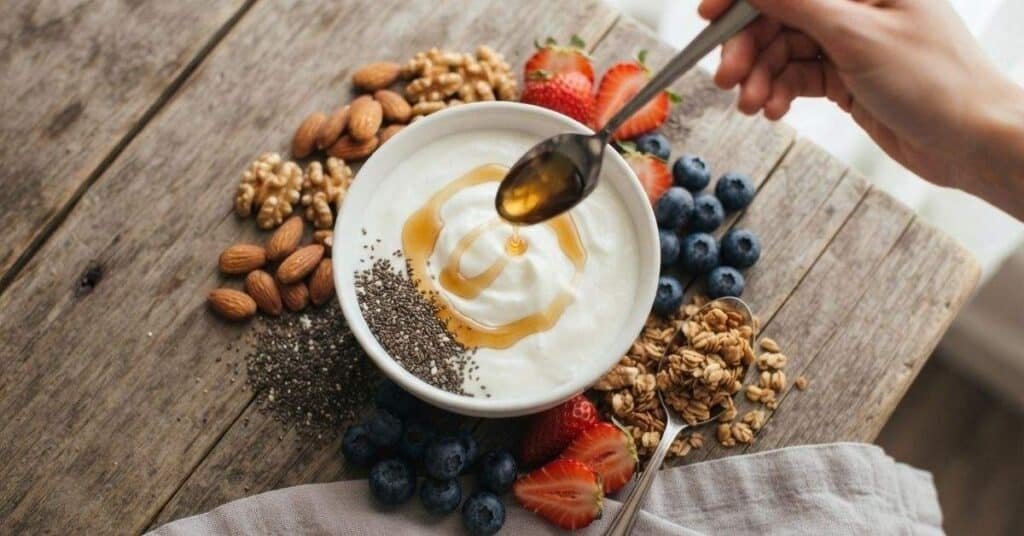
- Step 1 – Measure Your Portions: Never pour straight from the bottle. Use a measuring spoon to cap your intake at one teaspoon per serving.
- Step 2 – Pair with Fiber or Fat: Mix your sweetener into plain Greek yogurt, oatmeal topped with chia seeds, or a protein shake to slow down absorption.
- Step 3 – Choose Maple for Baking: Opt for pure maple syrup in warm recipes where its lower GI score and lighter calorie profile work to your advantage.
- Step 4 – Time Your Intake: Consume your sweet treat immediately after a protein-dense meal when your muscles absorb incoming glucose efficiently.
6. Overcoming Common Clean-Eating Challenges
Even dedicated wellness enthusiasts stumble when navigating sweetener alternatives during daily meal prep. Here is how you can troubleshoot common challenges:

- Challenge 1: Believing “Natural” Means “Sugar-Free”
- Solution: Remind yourself that raw honey and pure maple syrup are still concentrated sugars that trigger insulin release, regardless of how natural their origins are.
- Challenge 2: Experiencing Afternoon Crashes After Sweetened Tea
- Solution: Cut your honey portion in half and add a splash of heavy cream or plant-based fat to create a stabilizing buffer. For more inspiration, review our [The Glucose Revolution: 5 Proven Hacks to Stop Energy Crashes & Balance Your Blood Sugar] guide.
- Challenge 3: Finding Low-GI Baking Alternatives
- Solution: Swap out liquid sweeteners entirely for low-glycemic options like monk fruit or allulose when baking high-volume treats.
7. Frequently Asked Questions (FAQs)
- Q1: Which has a lower glycemic index, honey or maple syrup?
- Answer: Pure maple syrup generally has a slightly lower glycemic index (around 54) compared to honey (around 58), making it marginally slower to impact blood sugar.
- Q2: Can diabetics safely use honey or maple syrup?
- Answer: Both sweeteners raise blood sugar because they consist primarily of carbohydrates and sugars. Diabetics must use them in very strict, sparing quantities.
- Q3: Is raw honey healthier than regular commercial honey?
- Answer: Raw honey retains natural enzymes and antioxidants that are often destroyed during high-heat processing, though its impact on blood sugar remains similar.
- Q4: How can I minimize blood sugar spikes when using these sweeteners?
- Answer: Always pair your honey or maple syrup with healthy fats, fiber, or protein to slow down digestion and prevent rapid glucose absorption.
Conclusion: Mastering Your Sweetener Choices
Navigating the sweet side of life while protecting your metabolic health is entirely achievable when you understand the numbers. Recognizing that maple syrup holds a slight edge in glycemic index over honey—while keeping portions tight and pairing principles in place—lets you enjoy delicious meals without sacrificing your wellness goals. For a savory dinner option that fits your clean-eating lifestyle, check out our [Better Than Takeout: The Ultimate Healthy Chicken and Soy Sauce Stir-Fry Recipe] guide.
About the Author
Gohar Fatima is the founder and lead metabolic health researcher at PureDietly, dedicated to translating complex nutritional science into practical, easy-to-follow guidance for everyday wellness.
Medical Disclaimer
The content provided on PureDietly is for informational purposes only and is not a substitute for professional medical advice, diagnosis, or treatment. Always consult your physician regarding any health conditions or dietary modifications.