
. Editor’s Note
Commitment to Accuracy At PureDietly, we prioritize scientific integrity and metabolic clarity. This article has been meticulously researched to align with current evidence-based bio-hacking and nutritional science. Our content undergoes rigorous review to ensure it meets high E-E-A-T (Experience, Expertise, Authoritativeness, and Trustworthiness) standards, providing you with actionable insights backed by physiological data. We are dedicated to helping you navigate metabolic health with precision and transparency.
Choosing the right plant-based dairy alternative can feel overwhelming in today’s supermarket aisles. When comparing oat milk vs almond milk, the decision often comes down to more than just taste—it is about how these products affect your metabolic health and daily energy levels. As a researcher, I see many people switch to these options to improve their wellness, yet they often overlook the hidden impacts on their glycemic response. Understanding the science behind these drinks is the first step toward true metabolic freedom.
“Understanding the science behind these drinks is the first step toward true metabolic freedom. If you are tracking your glucose, you might also find my recent breakdown on [ ‘Best Cereal for Diabetics’ article] helpful for understanding how other morning staples impact your fasting glucose levels.”
The Evolution of Plant-Based Dairy
In recent years, plant-based milks have transitioned from a niche dietary choice to a household staple. However, not all milks are created equal. While many are marketed as “healthy,” the manufacturing process can dramatically change the nutrient profile. To understand the oat milk vs almond milk debate, we must look beyond marketing and investigate how these milks interact with our biology.
Nutritional Comparison: A Deeper Look
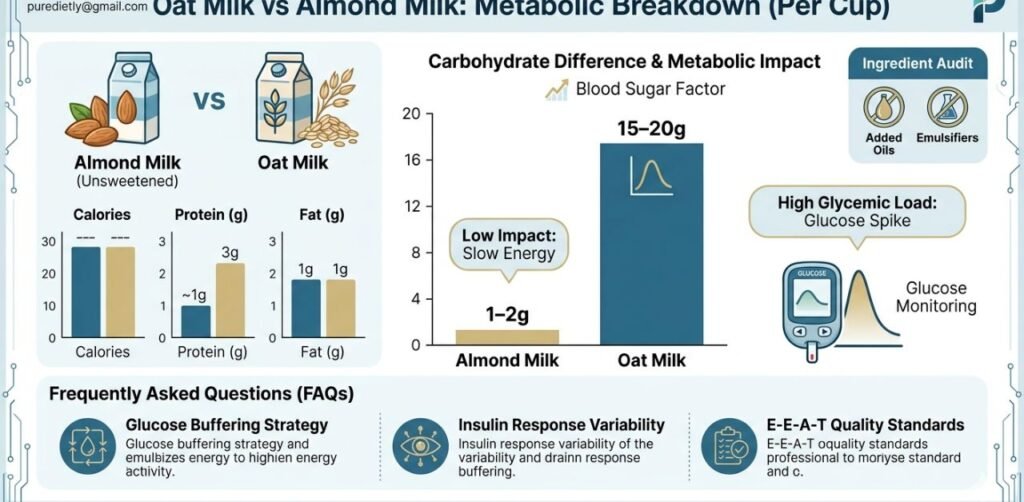
To make an informed choice, we must analyze the macro-nutrients carefully. The following table provides a clear comparison of what you are actually consuming per cup.
| Feature | Almond Milk (Unsweetened) | Oat Milk |
| Calories | 30–40 | 120–130 |
| Carbohydrates | 1–2g | 15–20g |
| Fiber | ~1g | ~2g |
| Protein | ~1g | ~3g |
| Fat | 2.5–3g | 5g |
Note: These values are estimates based on standard commercial products. Always check the specific nutrition label on your preferred brand.
The Blood Sugar Factor: A Metabolic Perspective
When analyzing oat milk vs almond milk, the most critical factor for metabolic health is how each affects your blood sugar. Oat milk is inherently higher in carbohydrates because it is made from grains. During the production process, enzymes are used to break down oat starch into maltose, a sugar that is easily absorbed.
For individuals managing insulin sensitivity or those focused on glycemic variability, this higher carb count can lead to sharper glucose spikes. Conversely, unsweetened almond milk is significantly lower in carbohydrates. Because it has minimal impact on blood glucose, it is often considered a “metabolic-friendly” choice for those who want to keep their energy levels stable throughout the morning.
“…unsweetened almond milk is significantly lower in carbohydrates. It remains one of my top recommendations for those following the protocols discussed in my [ ‘7-Day Meal Plan for Prediabetes’ article], where we focus on minimizing glycemic variability.”
Ingredient Audit: What’s Really in the Carton?
The quality of your milk matters just as much as the base ingredient. Many commercial versions of oat milk vs almond milk contain additives that may cause inflammation or digestive distress. As a researcher, I always encourage my readers to practice “label literacy.”

- Inflammatory Seed Oils: Many brands use rapeseed (canola) or sunflower oil to improve the texture and mouthfeel of plant milks. These highly processed oils are often inflammatory.
- Emulsifiers and Gums: Ingredients like guar gum, gellan gum, or carrageenan are common. While these are used to prevent separation, they can potentially disrupt gut health and microbiome diversity in sensitive individuals.
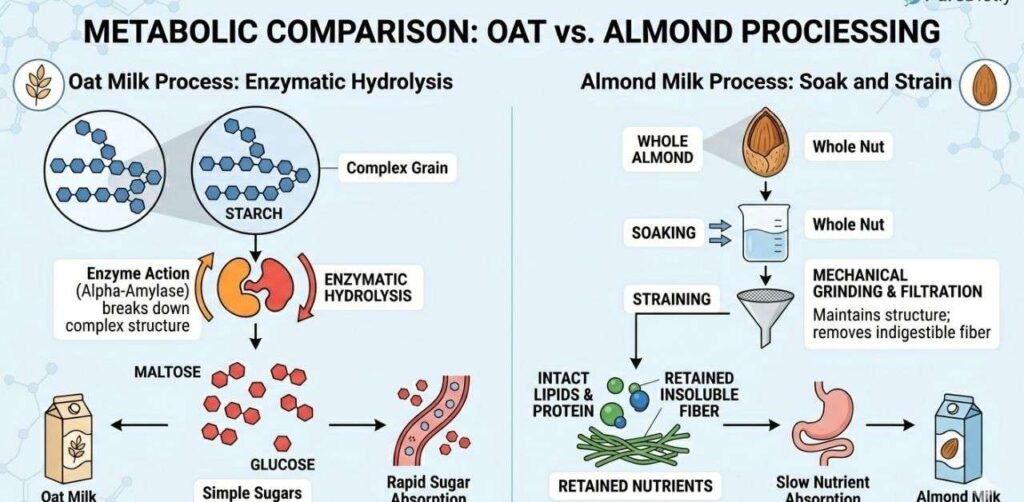
- Added Sugars: Even products labeled as “plain” can contain hidden sweeteners. Always scan the ingredients list for terms like cane sugar, syrup, or maltodextrin.
“As a researcher, I always encourage my readers to practice “label literacy.” For a deeper understanding of why these additives matter, read my audit on [ ‘Sugar Substitutes’ or ‘Food Additives’ article].”
How Manufacturing Impacts Your Metabolic Response
Many commercial oat milks present a hidden challenge to metabolic health due to their processing methods. During production, manufacturers use a process called “enzymatic hydrolysis.” This technique breaks down oat starch into maltose, a simple sugar, specifically to create a naturally sweet taste and a creamy texture.
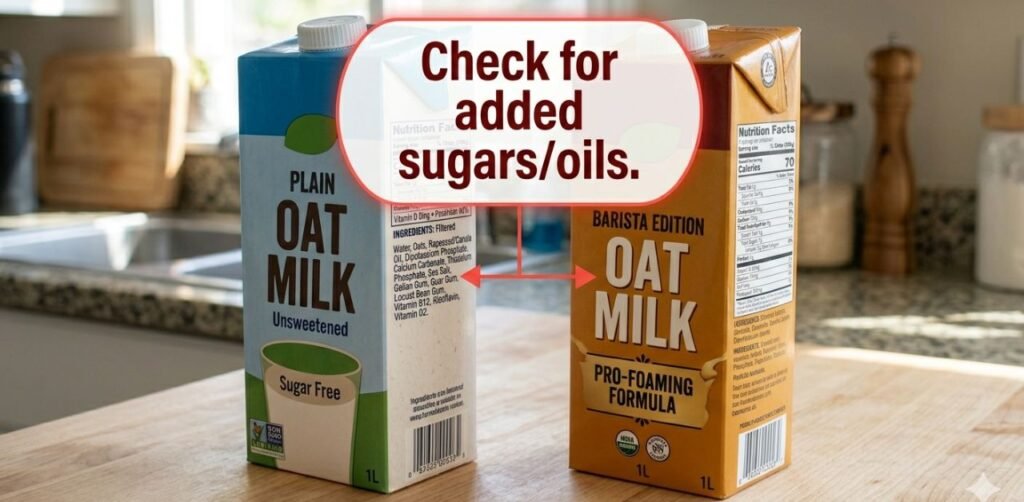
Scientifically, this means that when you consume oat milk, your body does not digest it like a complex carbohydrate. Instead, the maltose is absorbed rapidly into your bloodstream, causing a swift rise in blood glucose. In contrast, the process for creating almond milk is primarily mechanical; almonds are simply soaked, ground, and strained. Because this process does not involve starch conversion, unsweetened almond milk typically maintains a much more stable glycemic response compared to oat milk. As a metabolic health researcher, I consistently advise my readers to avoid “enzyme-treated” products if their goal is to optimize insulin sensitivity.
The Role of Healthy Fats
One of the reasons traditional dairy is often satiating is its fat content. In the plant-based world, fat is a double-edged sword. Almond milk naturally contains healthy monounsaturated fats from the nuts themselves. However, because oats are naturally low in fat, manufacturers add vegetable oils to replicate the creaminess of cow’s milk. If you are looking to support your metabolic health, choosing a milk that relies on the natural fats of the nut rather than added industrial oils is a strategic move.
Which is Better for Your Specific Goals?
If your primary goal is steady blood sugar, unsweetened almond milk is generally the superior choice. It provides the texture you need without the glucose-spiking carbohydrates found in oat-based products.
On the other hand, if you are an athlete or someone with higher caloric needs, the protein content in oat milk might be more beneficial. However, remember that “more protein” in oat milk is often negligible compared to a high-protein diet. Regardless of your choice, the best product is always the one with the shortest ingredient list ideally just the nut/grain and water.
- Strategic Tip: Check out my deeper dive into [Link to my article on food additives] to learn why avoiding certain emulsifiers is vital for long-term health and gut integrity.
Environmental and Quality Considerations
Many consumers choose plant milks for sustainability. While almonds require significant water to produce, oats are generally considered more environmentally friendly. However, from a metabolic health standpoint, the environmental impact shouldn’t outweigh your personal health requirements. If oat milk causes you significant blood sugar instability, it is not a “sustainable” choice for your body, regardless of its carbon footprint.
How to Integrate These Milks Safely
If you love the taste of oat milk but fear the glucose spike, try these methods:
- Pairing: Never consume oat milk on an empty stomach. Pair it with a high-protein or high-fiber snack to buffer the glucose response.
- Dilution: Mix half a cup of oat milk with half a cup of water or unsweetened almond milk to reduce the total carbohydrate load.
- Homemade: Making your own almond milk at home is remarkably simple and ensures there are no hidden inflammatory oils or gums in your diet.
Frequently Asked Questions (FAQs)
- How do these metabolic strategies work?
- Our strategies focus on “glucose buffering”—the practice of pairing nutrients like proteins or acids (such as vinegar) with carbohydrates to minimize blood glucose spikes and improve overall metabolic stability.
- Is this advice suitable for everyone?
- While our content is rooted in metabolic science, individual physiological responses vary. We recommend consulting with your healthcare provider before making significant changes to your diet, especially if you have pre-existing metabolic conditions.
- What criteria do you use for your research?
- We prioritize peer-reviewed studies and clinical data. Every recommendation is filtered through our internal E-E-A-T protocol to ensure reliability and trust for our readers.
Bio-hacking Your Dairy Intake: Practical Tips for Stable Glucose
If you enjoy the taste of oat milk and prefer not to eliminate it from your diet entirely, you can utilize a technique called “glucose buffering.” This method allows you to enjoy your favorite beverages while minimizing their impact on your metabolic health by neutralizing the effects of carbohydrates.

- Pairing with Protein: Never consume oat milk on an empty stomach. Always combine it with a protein-rich snack, such as hard-boiled eggs or Greek yogurt, as protein effectively slows down the rate of glucose absorption.
- The Acid Strategy: If you enjoy oat milk in your coffee, consider drinking one tablespoon of apple cider vinegar diluted in water beforehand. Studies suggest that the acetic acid found in vinegar can help reduce glucose spikes by as much as 30%.
- Reading the ‘Barista’ Label: Always be cautious with “Barista Edition” milks. These are specifically formulated with added oils and sugars to achieve better foam for coffee, making them potentially detrimental to your metabolic health. Ultimately, true metabolic freedom is found by reading the ingredient label rather than trusting marketing claims on the front of the carton.
Conclusion: Making Informed Choices
Ultimately, the debate regarding oat milk vs almond milk does not have a “one size fits all” answer. By prioritizing clean labels and understanding how your own body responds to carbohydrates, you can make an informed decision that supports your metabolic goals. Remember, being a savvy shopper means looking past the marketing on the front of the carton and checking the ingredients on the back.
Your health is a journey, and every small switch like choosing an unsweetened, additive-free almond milk is a step toward metabolic freedom. Continue to audit your pantry, question the labels, and listen to how your body responds to the fuel you provide it.
“Curious about other plant-based staples? Don’t miss my deep-dive audit: [ ‘Corn Tortilla Carbs’ article] to see how ancient grains compare to modern dairy alternatives.”
About the Author
Gohar Fatima | Metabolic Health Researcher Gohar Fatima is an independent metabolic health researcher and the founder of PureDietly. With a professional focus on nutritional science and evidence-based bio-hacking, Gohar specializes in translating complex glucose-buffering strategies and metabolic data into accessible guidance for the health community. Through PureDietly, she empowers individuals to optimize their metabolic health using research-backed dietary frameworks.
Medical disclaimer
Disclaimer: This information is for educational purposes and is based on current nutritional research. Always consult with a healthcare professional regarding your specific health needs before making significant dietary changes.