

By Gohar Fatima, Metabolic Health Researcher
Editor’s Note:
This metabolic audit is based on the latest nutritional research as of 2026. While citrus fruits provide vital micronutrients, metabolic health is deeply personal. All strategies, especially concerning fruit consumption, should be calibrated based on your specific glucose monitoring data. Please consult your healthcare provider before making significant dietary changes.
Introduction
Managing insulin resistance often feels like navigating a maze of conflicting advice. Among the most common questions I receive from the PureDietly community is: are oranges good for diabetics? It is a fair question, as many individuals are told to avoid fruit entirely when dealing with blood sugar concerns. However, the reality of nutrition is rarely black and white. In this 2026 audit, we will look beyond the fear-mongering and examine the metabolic reality of citrus. By understanding the fiber-to-sugar ratio and the science of food pairing, you can potentially enjoy oranges while maintaining the stable blood glucose levels required for long-term [Metabolic Autonomy].
The Nutritional Profile of Oranges
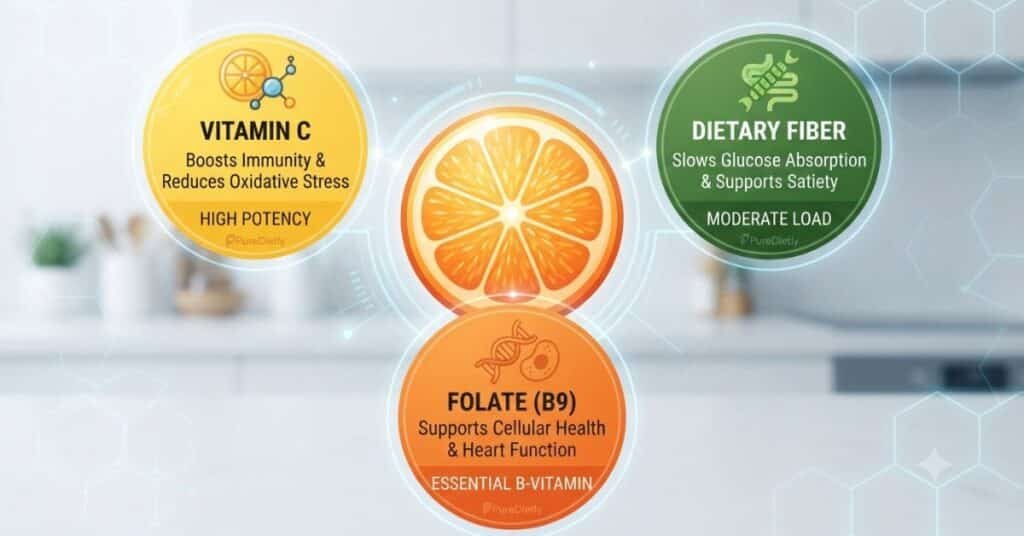
To understand why this question matters, we must look at what is actually inside an orange. Oranges are more than just their sugar content; they are concentrated sources of essential nutrients that play a massive role in reducing systemic inflammation, which is often a root cause of metabolic dysfunction.
- Vitamin C: Beyond immunity, this antioxidant helps reduce oxidative stress, which is often elevated in those with type 2 diabetes.
- Dietary Fiber: Oranges contain both soluble and insoluble fiber. Fiber is the most effective tool we have for slowing down the rate at which glucose enters the bloodstream.
- Folate and Potassium: These are vital for heart health—a critical consideration since individuals with diabetes are at a higher risk for cardiovascular complications.
The Glycemic Index (GI) and Metabolic Reality
When asking are oranges good for diabetics, we have to discuss the Glycemic Index (GI). The GI is a ranking of how quickly a food raises blood glucose levels. Oranges generally have a GI score between 35 and 40.
In the world of metabolic health, any food with a GI below 55 is considered “low.” Because oranges have a low GI, they do not typically cause the massive, destructive glucose spikes that processed snacks or refined grains might trigger.
| Nutrient/Metric | Value/Status | Metabolic Impact |
| Glycemic Index | ~35-40 | Low (Steady Release) |
| Fiber Content | Moderate (~3g) | High (Glucose Buffer) |
| Natural Sugars | Fructose/Glucose | Balanced by Fiber Matrix |
Whole Fruit vs. Orange Juice: Why the Distinction Matters
As a researcher, I emphasize one golden rule: Always eat the whole fruit.
When you consume orange juice, you are essentially drinking the fruit’s sugar without its structural defense system the fiber. By stripping away the fiber, the glucose is absorbed into your bloodstream almost immediately. This leads to the very spikes we work so hard to avoid.
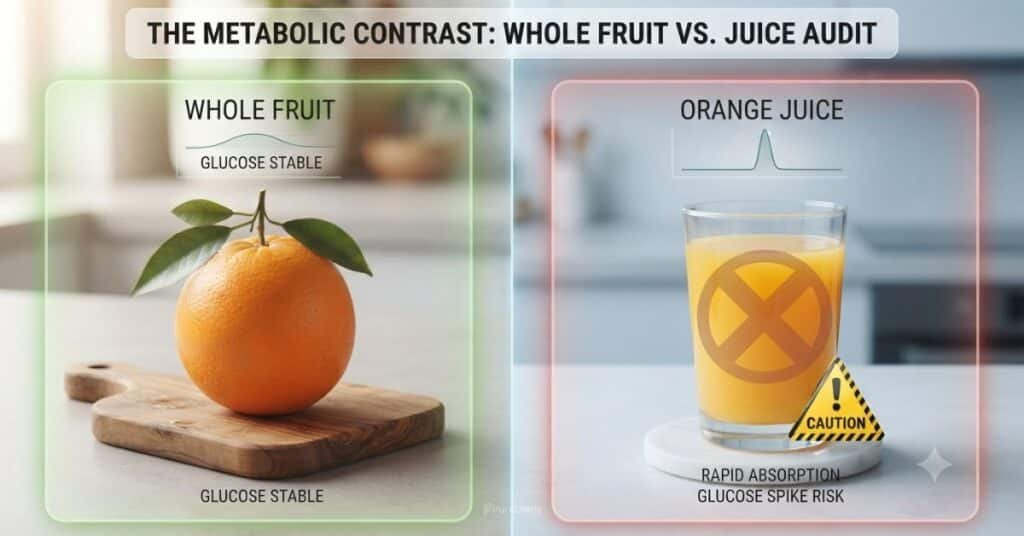
When you eat a whole orange, you are forced to chew, which slows down digestion. Furthermore, the fiber matrix within the pulp acts as a natural barrier, ensuring that the fructose and glucose are released slowly into the small intestine. For anyone seeking [Glucose Stability], the difference between juice and whole fruit is massive.
The Science of Fructose Metabolism
A common point of confusion involves fructose. While fructose does not raise blood glucose as aggressively as glucose, it is processed primarily in the liver. Excessive consumption of isolated fructose (like that found in high-fructose corn syrup) can contribute to fatty liver, which negatively impacts overall insulin sensitivity. However, when consumed within the package of a whole orange, the amount of fructose is relatively small and accompanied by fiber, antioxidants, and water, making it a much safer metabolic choice.
The PureDietly Pairing Strategy
Even with a low-GI food like an orange, eating it in isolation can sometimes be risky if you have high insulin resistance. To ensure oranges remain a metabolic asset, use these pairing strategies:

- Pair with Healthy Fats: Eat your orange slices with a handful of raw walnuts or almonds. Fats slow down gastric emptying, further blunting any potential rise in blood sugar.
- Add Protein: A few slices of aged cheddar or a small bowl of Greek yogurt paired with an orange makes for a balanced snack. Protein provides satiety and keeps your metabolic rate steady.
- Timing is Everything: Many of my readers find that eating fruit after a meal (that already contains protein and fat) results in a much flatter glucose curve than eating it as a standalone snack on an empty stomach.
Pantry Audit: What to Look For
If you are wondering are oranges good for diabetics in your own home, it comes down to the quality of the product.
- Avoid Processed Canned Oranges: These are almost always soaked in heavy syrups. Even “light syrup” versions contain enough added sugar to trigger an insulin spike. Always put these back on the shelf.
- Check the Label: If you are buying pre-cut fruit, ensure there are no added ingredients. You are looking for a [Whole-Food] product where the only ingredient is “orange.”
- Audit Your Habits: If you find that eating an orange makes you crave more sugar, it might be a sign that your body is currently too sensitive to even small amounts of fructose. In that case, use your CGM to track your response and consider adjusting your intake.
The Gut Microbiome Connection
We do not just feed our cells; we feed our gut bacteria. The fiber in whole oranges serves as a prebiotic, nourishing the beneficial bacteria in your colon. A healthy microbiome is essential for maintaining insulin sensitivity. By choosing whole oranges over juice, you are supporting your gut health, which in turn supports your metabolic health.
How to Use Your CGM to Decide
I am frequently asked: “Gohar, is this orange actually safe for me?”
Because every individual has a unique biological makeup, I cannot give you a universal “yes.” Instead, I advocate for Metabolic Autonomy. Wear your Continuous Glucose Monitor (CGM) and eat a small orange paired with protein. Note your glucose reading before eating, 30 minutes after, and one hour after. If you see a spike that exceeds your comfort zone, you now have the data to decide whether to reduce the portion size or change your pairing strategy.
Common Myths Debunked
- Myth: “Diabetics should never eat fruit.”
- Fact: Many fruits are rich in fiber and antioxidants that support metabolic function. The key is portion control and pairing.
- Myth: “All citrus fruits have the same impact.”
- Fact: While similar, the sugar content varies. Oranges offer a balanced fiber-to-sugar ratio compared to more concentrated dried fruits.
Conclusion
To finally answer the question: are oranges good for diabetics? Yes, they can be a healthy, nutrient-dense part of your diet. However, they must be consumed in their whole form, paired with healthy fats or proteins, and monitored based on your body’s specific needs.
Nutrition is about empowerment through data, not restriction through fear. By auditing your ingredients, understanding your glycemic response, and choosing whole-food versions, you move one step closer to [Metabolic Autonomy]. Every informed decision you make is a victory for your long-term health.
Add Seaweed Salad to your daily carb limit in 30 seconds!
About the Author
Gohar Fatima is a dedicated Metabolic Health Researcher and the founder of PureDietly. With a mission to simplify the complex world of metabolic science, Gohar helps individuals achieve Metabolic Autonomy through data-driven, whole-food strategies.
Unlike conventional diet advice, Gohar’s approach is rooted in rigorous auditing and evidence-based nutrition. She specializes in helping readers understand how different food choices impact glucose stability, insulin sensitivity, and long-term metabolic health. By turning complex research into actionable “Pantry Audits” and practical guides, she empowers her audience to take control of their health without the confusion of restrictive or fad-based dieting.
Medical Disclaimer
This content is for educational purposes only and does not constitute medical advice, diagnosis, or treatment. The information provided by PureDietly is not intended to replace the professional judgment of a healthcare provider. Always seek the advice of your physician or a qualified healthcare professional with any questions you may have regarding a medical condition or before making any significant dietary or lifestyle changes. Never disregard professional medical advice or delay in seeking it because of something you have read on this website.