
By Gohar Fatima, Metabolic Health Researcher

Editor’s Note
This article is based on the latest metabolic research and nutritional data as of 2026. At PureDietly, our goal is to provide data-driven insights that prioritize glucose stability and long-term metabolic health. All recommendations regarding pantry audits and dietary swaps are intended for educational purposes and should be personalized based on your individual glucose monitoring data. Please consult with your healthcare provider before making significant changes to your diet, especially if you are managing insulin resistance or other metabolic conditions.
In the world of nutrition, few ingredients are as misunderstood as the humble dried plum. Often relegated to the back of the pantry and associated primarily with digestive aid, this fruit has undergone a significant branding shift in the last two decades. Whether you find it labeled as a “prune” or a “dried plum,” it is the same biological entity: the dried fruit of the Prunus domestica tree. But for those of us focused on metabolic health, the label on the bag is less important than what happens to your glucose levels after you eat it.
In this 2026 audit, we are going beyond the marketing labels to look at the metabolic reality of this fruit. We will examine why it behaves differently than other sugary snacks and how you can integrate it into a [Metabolic Plate] that favors stability over spikes.
The Semantic Shift: Why the Name Change?
To understand the confusion, we have to look at history. In the early 2000s, the California Prune Board made a strategic marketing decision to rebrand “prunes” as “dried plums.” The reason was simple: consumer perception. The word “prune” was indelibly linked to “constipation relief” in the minds of American consumers, particularly older generations. By shifting to “dried plums,” the industry hoped to position the fruit as a modern, healthy snack.
From a botanical and nutritional standpoint, there is zero difference between a prune and a dried plum. They are the same product. However, if you are reading labels in a USA grocery store, you might notice that some “dried plums” are marketed as being juicier or softer, while “prunes” are sometimes sold in bulk, less processed forms. Always look past the name and straight to the ingredient list. If the label says “prunes” or “dried plums” and contains nothing but fruit, you are looking at the same metabolic asset.
Nutritional Breakdown: An Audit of Density
When we evaluate any food, we look at nutrient density vs. caloric load. Prunes are unique because they are a concentrated source of energy, yet they possess a fiber matrix that changes how that energy is released into your bloodstream.
The Metabolic Profile (Per 100g)
| Nutrient | Amount | Metabolic Impact |
| Dietary Fiber | ~7g | High (Satiety & Glucose Buffer) |
| Natural Sugars | ~38g | Moderate (Balanced by Fiber) |
| Glycemic Index | ~29 | Low (Steady Release) |
| Vitamin K | ~60mcg | High (Bone & Blood Health) |
| Potassium | ~730mg | High (Electrolyte Balance) |
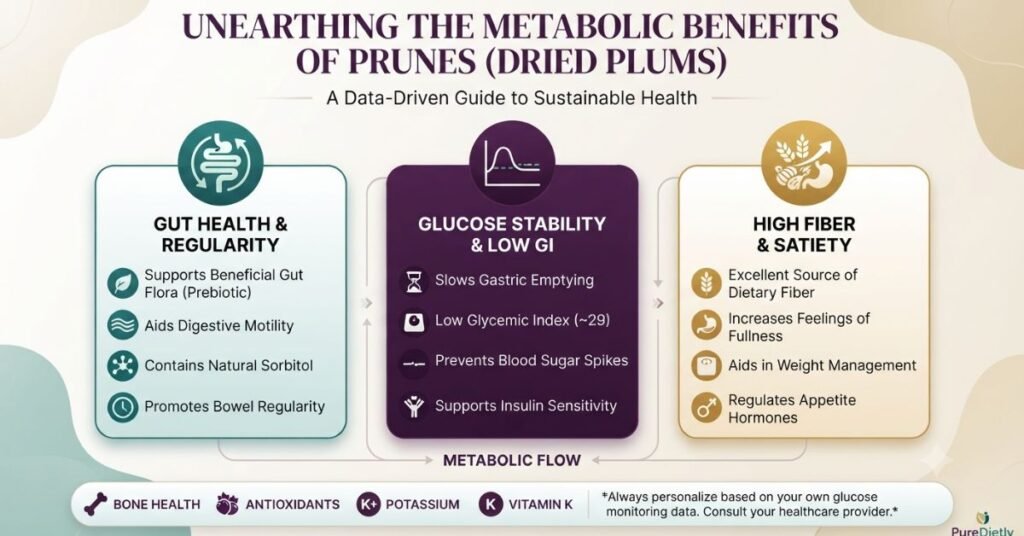
Data Note: Unlike refined snacks, prunes contain polyphenols and sorbitol, which fundamentally alter their digestion process.
Why Prunes Function Differently: The Sorbitol Factor
A common question is: “If prunes are high in sugar, why don’t they spike my glucose like a candy bar?” The answer lies in two key components: Fiber and Sorbitol.
- The Fiber Matrix: Prunes contain both soluble and insoluble fiber. When you eat them, this fiber slows down the gastric emptying rate. In practical terms, this means the glucose from the fruit is released into your small intestine slowly, preventing the sharp, destructive spike we try to avoid when striving for [Metabolic Autonomy].
- The Sorbitol Effect: Prunes are naturally rich in sorbitol, a sugar alcohol that is not fully absorbed by the body. Because sorbitol is not broken down into glucose, it provides sweetness without the corresponding glycemic impact. This is a critical distinction when you are auditing your [Dried Fruits] intake.
The Gut Microbiome Connection
As a researcher, I am constantly emphasizing that we don’t just feed our cells; we feed our gut bacteria. The fiber and polyphenols in prunes act as prebiotics. They survive digestion in the small intestine and travel to the colon, where they are fermented by beneficial bacteria. This fermentation process produces short-chain fatty acids (SCFAs), which are vital for maintaining the integrity of your gut lining and reducing systemic inflammation.
If you have been struggling with digestive regularity, adding a small amount of prunes to your diet might be more effective than relying on over-the-counter supplements. However, because they contain sorbitol, I always recommend starting slow. If you consume too many, the osmotic effect of the sorbitol can lead to digestive discomfort.
Prunes vs. Dried Plums: The Pantry Strategy
When you are auditing your kitchen, here is how to select the best quality product:

- Avoid “Coated” Varieties: Many commercial prunes are treated with potassium sorbate or vegetable oils to prevent clumping and maintain moisture. While generally recognized as safe, they are unnecessary additives.
- Check for Added Sugar: This is the most critical step. Some manufacturers add high-fructose corn syrup or sugar to “dried plums” to make them even sweeter. If you see sugar added to the ingredient list, put it back. You are looking for a [Whole-Food] product.
- The Texture Test: If you want a snack that feels like candy but stabilizes your blood sugar, choose the naturally softer varieties. If you are adding them to stews or savory dishes, the harder, more traditional prunes work just as well.
Integrating Prunes into Your Metabolic Plate
I often get asked if prunes are “safe” for those with insulin resistance or type 2 diabetes. The answer is data-driven. Because every individual has a unique glucose response, you must use your CGM (Continuous Glucose Monitor) to test how a standard serving (4–6 prunes) affects your blood sugar.

3-Step Action Plan for Your Pantry
- The Audit: Go to your pantry and pull out your dried fruits. Read the back labels. If the only ingredient is “dried plums” or “prunes,” it passes the audit. If it contains “sugar,” “syrup,” or “sulfites,” it is a candidate for removal.
- The Pairing Strategy: Never eat prunes alone as a snack if you have high blood sugar. Pair them with a healthy fat or protein—such as a handful of walnuts or a few slices of cheese. This pairing further blunts the glucose response, ensuring that the fruit remains a metabolic asset rather than a disruptor.
- The Texture Swap: Instead of using refined thickeners in your morning porridge or savory stews, consider blending a few soaked prunes. They add natural sweetness, fiber, and a rich texture that stabilizes the meal’s overall glycemic load. For more, read our guide on [Why Wheat Consumption Needs a Metabolic Audit].
Add Seaweed Salad to your daily carb limit in 30 seconds!
Conclusion: Data-Driven Choices
In the debate of prunes vs. dried plums, there is no winner because there is no difference. They are the same fruit, harvested from the same trees, and dried using the same methods. The real “hack” here is not the name on the package, but your ability to incorporate this fiber-rich, nutrient-dense food into a lifestyle that prioritizes glucose stability.
Nutrition is about empowerment through data. By auditing your ingredients, choosing whole-food versions, and monitoring your body’s specific response, you move one step closer to [Metabolic Autonomy]. You have the power to decide what enters your pantry, and every informed decision you make About the Author: Gohar Fatima
About Author
Gohar Fatima is a dedicated Metabolic Health Researcher and the founder of PureDietly. With a mission to simplify the complex world of metabolic science, Gohar helps individuals achieve Metabolic Autonomy through data-driven, whole-food strategies.
Unlike conventional diet advice, Gohar’s approach is rooted in rigorous auditing and evidence-based nutrition. She specializes in helping readers understand how different food choices impact glucose stability, insulin sensitivity, and long-term metabolic health. By turning complex research into actionable “Pantry Audits” and practical guides, she empowers her audience to take control of their health without the confusion of restrictive or fad-based dieting.
Medical Disclaimer:
This content is for educational purposes only and does not constitute medical advice, diagnosis, or treatment. Always seek the advice of your physician or a qualified healthcare provider regarding your specific medical condition or before making any significant dietary changes.