
By Gohar Fatima | June 10, 2026

Editor’s Note
In a world obsessed with the 10,000-step marketing myth, we often lose sight of the real goal: Metabolic Health. At PureDietly, we don’t just count steps; we audit how movement impacts your glucose and insulin sensitivity. This guide translates clinical movement data into a simple, sustainable protocol for 2026.
The 10,000-Step Myth: A Marketing Legacy
For decades, the “10,000 steps a day” mantra has dominated the fitness landscape. It is plastered on our fitness trackers, promoted by insurance companies, and treated as a gold standard for wellness. But from a metabolic standpoint, this number is arbitrary. It originated in the 1960s as a marketing campaign for a Japanese pedometer (the Manpo-kei), not through clinical physiological research.
While achieving 10,000 steps generally correlates with better cardiovascular health, focusing solely on the total number ignores the temporal dynamics of your movement the “when” and “how” of your activity which are the true master switches for glucose control.
Why Movement Matters: The “Glucose Sink” Effect
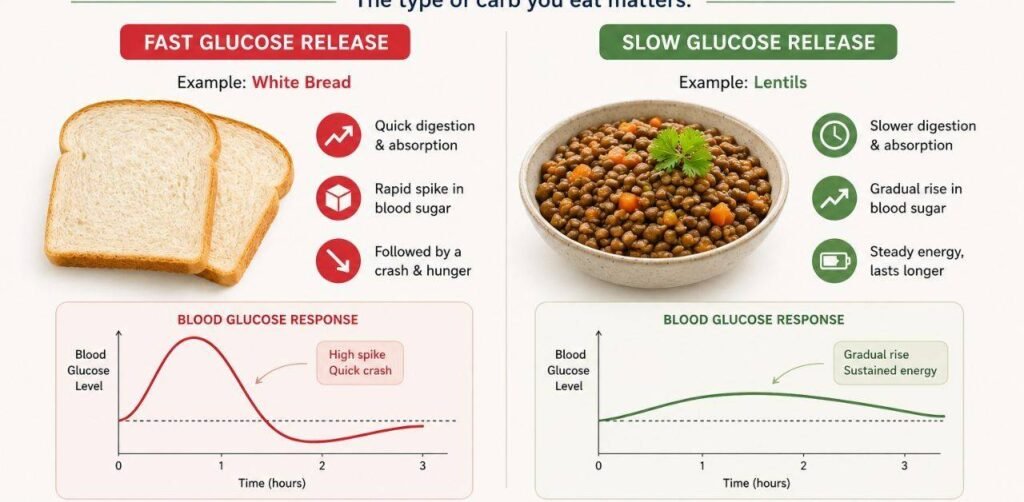
To understand why walking is a metabolic intervention, we must look at how the body manages blood sugar. When you consume carbohydrates, your digestive system breaks them down into glucose, which enters your bloodstream.
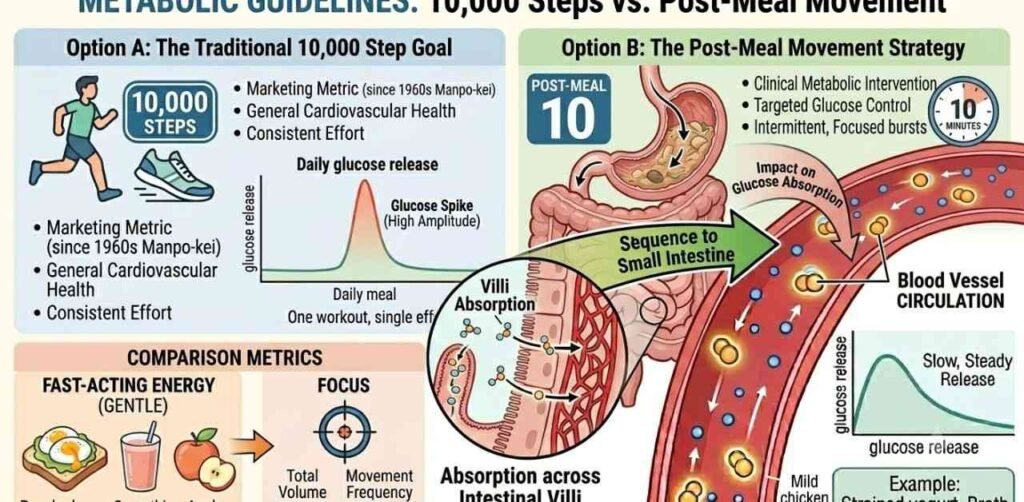
If you are sedentary sitting at a desk, commuting in a car, or lounging on the couch that glucose remains in circulation. Your pancreas must work overtime to dump insulin into your blood to drive that glucose into your cells.
Walking serves as a “Glucose Sink.“ When your muscles contract during a walk, they undergo a mechanical process that allows them to take up glucose from the bloodstream independently of insulin. This process, known as insulin-independent glucose uptake, is the most powerful tool in your metabolic toolkit. By walking, you are effectively “mopping up” the excess sugar before it can trigger an inflammatory insulin response.
The 2026 Metabolic Walking Protocol: Frequency Over Volume
Instead of focusing on a daily total, we must prioritize frequency. A 2026 clinical focus reinforces that moving for just 2 to 5 minutes immediately after a meal is significantly more effective at controlling glycemic variability than one single, high-intensity workout performed hours later.
Your Metabolic Step Targets (The Audit Framework)
| Goal | Metabolic Strategy | Clinical Benefit |
| Glucose Blunting | 3 x 10-min walks post-meal | Immediate spike reduction; insulin stability |
| Insulin Sensitivity | 6,000 – 8,000 steps daily | Improved long-term metabolic flexibility |
| Metabolic Repair | 10,000+ steps (consistent) | Enhanced fat oxidation and mitochondrial health |
The Physiology of Postprandial Movement
The two-hour window following a meal is the “danger zone” for glucose spikes. When you remain sedentary, your blood glucose levels may surge, leading to the notorious “afternoon slump.” This crash is not just about fatigue; it is a clinical marker of metabolic stress. By initiating a “Post-Meal 10” protocol, you are lowering the peak height of the glucose curve, which reduces the demand on your beta cells and promotes longevity.
5 Metabolic Walking Hacks for Busy Professionals
You don’t need a gym membership to improve your metabolic age. Use these “on-the-go” hacks to integrate movement into your day without disruption:

- The “Post-Meal 10” Ritual: Make it a non-negotiable rule to walk for 10 minutes immediately after your largest meal of the day. If you are at work, a simple lap around the office building is sufficient.
- Meeting Movement: If you have a phone call or a virtual meeting where you aren’t screen-sharing, keep walking. Pacing while on a call is a powerful, passive way to rack up 2,000+ steps without “finding time” for exercise.
- The “Staircase Audit”: If you’re in an office building, take the stairs twice a day. Stairs provide a high-intensity stimulus that forces your muscles to recruit more fiber, further improving insulin receptor sensitivity compared to flat-ground walking.
- Before-Work Brisk Walk: A 15-minute brisk walk before your first meal can prime your body’s metabolic machinery, making your insulin receptors more responsive for the rest of the day.
- Nature Reset: Walk in nature whenever possible. Clinical data shows that walking in green spaces significantly lowers cortisol (your body’s primary stress hormone). Because cortisol triggers glucose release from the liver, keeping stress low is as important as the movement itself.
The Gut Microbiome & Gastrocolic Connection
Did you know that walking also aids the gastrocolic reflex?
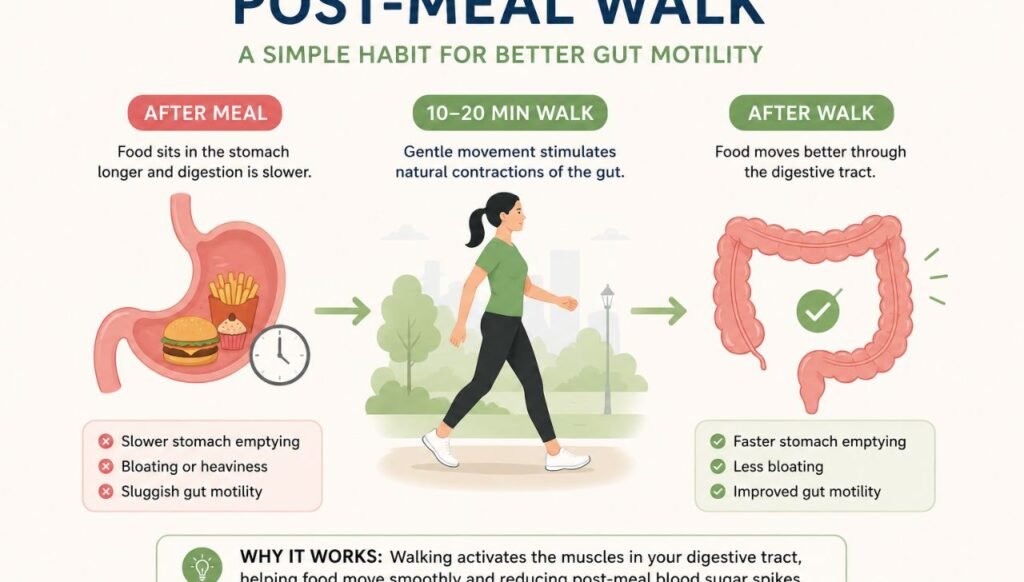
Gentle movement helps stimulate gut motility, ensuring efficient transit of food through the digestive tract. If you struggle with chronic bloating, constipation, or indigestion, consistent walking is your most reliable, free, and effective remedy. A happy gut is a metabolically flexible gut.
Add Seaweed Salad to your daily carb limit in 30 seconds!
Addressing Common Questions (FAQ)
Q: Is walking enough to reverse insulin resistance?
A: Walking is the foundation. When combined with fiber-rich eating and proper food sequencing, it is highly effective at improving insulin sensitivity. However, it works best as part of a holistic metabolic audit where diet and sleep are also optimized.
Q: Does speed matter for glucose control?
A: For glucose blunting, no. Even a slow, leisurely stroll is significantly more effective than sitting. However, moving at a “brisk” pace where your heart rate increases slightly offers secondary cardiovascular benefits.
Q: Can I split my steps throughout the day?
A: Absolutely! In fact, we recommend it. Splitting your steps ensures your body stays in a state of “metabolic alertness” throughout the day, preventing the prolonged inactivity that leads to lipid storage.
Conclusion: Take the Next Step
Your metabolic vitality isn’t measured by a watch; it’s measured by how your energy feels two hours after your meal. Stop stressing about hitting 10,000 steps at 10 PM just to fill a ring on your phone. Instead, shift your focus to the “Post-Meal 10“ protocol and watch your glucose stability transform.
Consistency is the hidden key to metabolic vitality. Start by auditing your current daily movement, identify your sedentary windows, and replace them with short, intentional bursts of activity.
Ready to optimize your metabolic health?
[Download My Free Metabolic Audit Checklist] and start tracking your movement alongside your meals today.
About the Author
Gohar Fatima is a Metabolic Health Researcher and the founder of PureDietly.com. She specializes in simplifying complex clinical nutrition data into actionable, science-backed protocols. Through her signature “Metabolic Audit” approach, Gohar empowers individuals to overcome insulin resistance and regain their metabolic vitality by focusing on biochemistry rather than just calories.
Medical Disclaimer:
Medical Disclaimer: The information provided in this article is for educational purposes only. Always consult your physician before starting a new exercise regimen, especially if you are managing diabetes or other metabolic conditions.